
The State Has No Right to Regulate Sexual Conduct of Adult Women
Leader of Opposition Rahul Gandhi has written to Maharashtra Chief Minister Devendra Fadnavis, demanding an end to the reported practice of requiring female Adivasi students returning after an absence to undergo pregnancy tests before being readmitted to government hostels. No student should have to prove that she is not pregnant or has not had sex to retain her accommodation and continue her education.
Niti Aayog Finds 87 Million Young Indians Not Studying, Working or Training
More than 87 million (8.7 crore) Indians age 15 to 29 are not studying, working or getting any training, according to report by NITI Aayog, the Indian government’s policy think tank.
Why the Reported Attack on CJP’s Ashutosh Ranka During a Rajasthan School Visit Is a Serious Incident
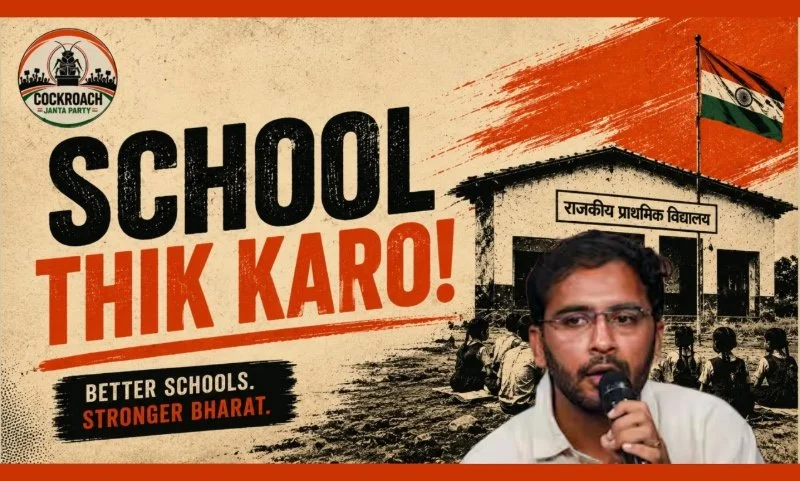
Cockroach Janta Party (CJP) co-convener Ashutosh Ranka and his team travelled to Rampura-Kanwarpura village in Jaipur district on August 21 to investigate a government primary school reportedly operating from a cattle enclosure because its building was unsafe. According to reports, members of the delegation, including a woman, were chased, beaten and pelted with stones, while their vehicles and phones were damaged. Ranka said his clothes were torn and that one volunteer suffered a fractured hand. The incident is serious for at least five reasons.
Storm Could Be Brewing for Officials Across India as CJP Turns Focus to Govt Schools
The Cockroach Janta Party (CJP) has called on citizens, parents and village leaders nationwide to inspect government schools, film video evidence of missing facilities and submit the findings to the group, an nationwide initiative to begin on India’s Independence Day on August 15. This exercise could put every part of the school system on the spot, from the village panchayat to the education ministry.
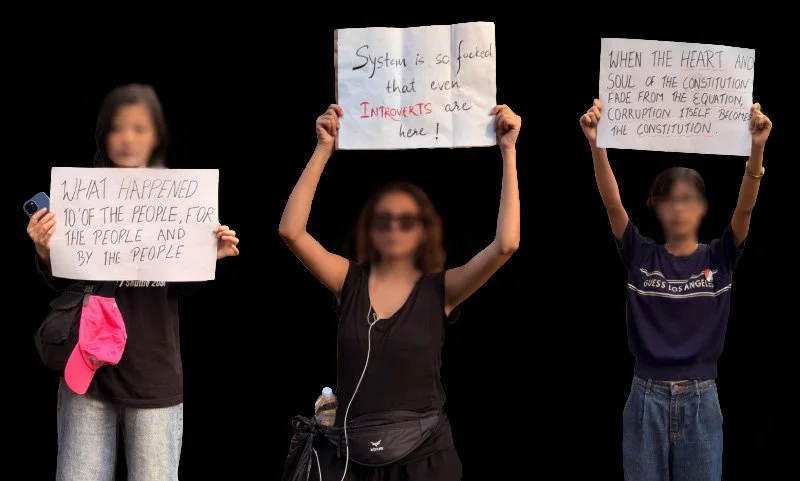
Why Governments Feel Threatened by Women Protesters
After the Cockroach Janta Party (CJP) protests ended in Delhi’s Jantar Mantar on July 25 following Education Minister Dharmendra Pradhan’s resignation, women and girls who had participated publicly and visibly in the agitation became the principal targets of a doxxing and harassment campaign. The campaign reveals that those behind it see women protesters as a threat and want to push them into roles defined by their own patriarchal beliefs.
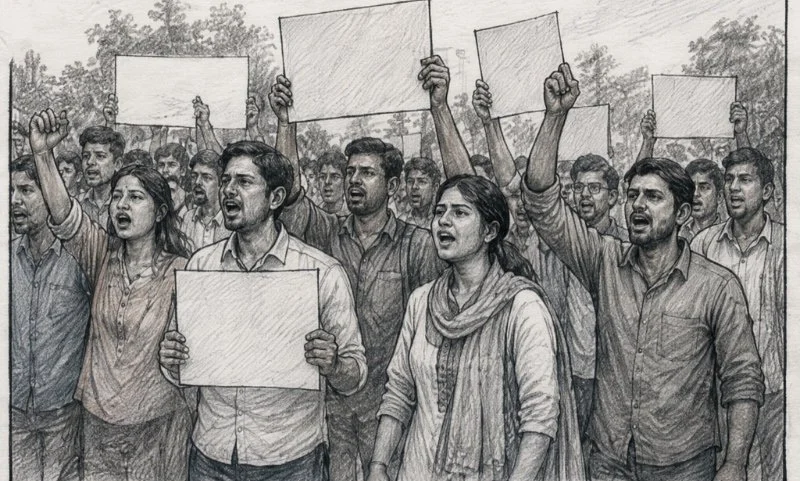
See Jharkhand Protests From Students’ Perspective, Not Politicians’
While government-job aspirants without party affiliations appear to constitute the principal base of the ongoing protests in Ranchi, Jharkhand, the agitation is not organisationally unified. This distinction is important because attempts by political groups to influence the protests risk diverting attention from young people’s genuine concerns about education, recruitment and institutional reform, and from their attempt to raise these concerns democratically.
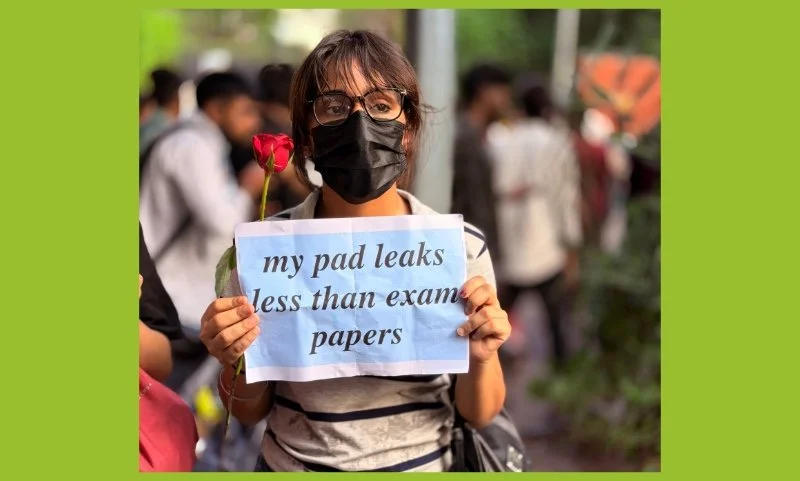
Government’s Disconnect With Gen Z Is Visible in Its Three Miscalculations
A protest movement built and led by India’s youngest citizens forced Education Minister Dharmendra Pradhan to resign, following weeks of hunger strikes and mass demonstrations. The government’s police crackdown subsequently backfired. Relying on its past successes in curbing protests and dissent, the administration led by officials decades older than the protesters tried to use silence and force during those weeks. However, the government and its advisors failed to realise that this time they were dealing with a generation they had no experience managing.
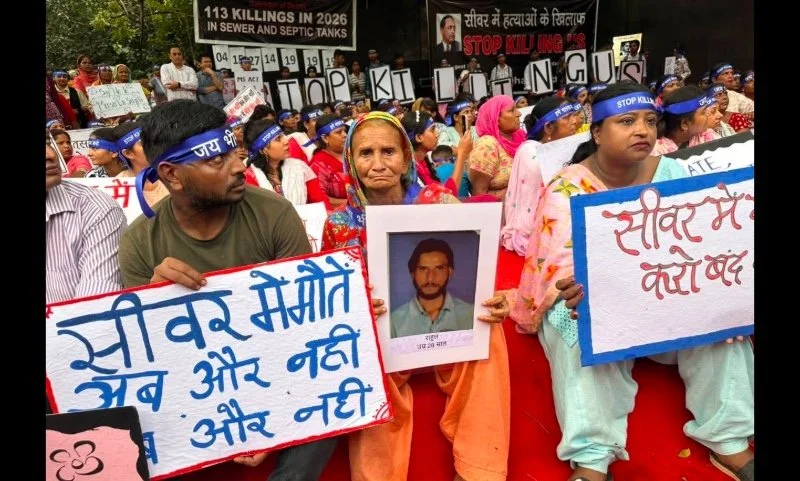
Another Protest at Jantar Mantar, This Time Over Deaths No One Is Counting
The Cockroach Janta Party has decided, for now, to remain a movement rather than register as a political party, leaving the final word to a leadership meeting set for August 5 and 6 in Chhatrapati Sambhajinagar in Maharashtra. The choice admits that a movement’s power can disappear the moment it starts competing for votes instead of making demands from the government.

Three Reasons CJP Is Right Not to Form a Political Party, for Now
The Cockroach Janta Party has decided, for now, to remain a movement rather than register as a political party, leaving the final word to a leadership meeting set for August 5 and 6 in Chhatrapati Sambhajinagar in Maharashtra. The choice admits that a movement’s power can disappear the moment it starts competing for votes instead of making demands from the government.

Research Suggests 5 Things Gen Z Should Do After a Successful Protest
Young protesters have helped remove political leaders, forced governments to abandon unpopular policies and made corruption and bad governance major political issues in countries around the world. Securing major concessions from a government, however, is only the first step toward lasting change, which requires five more tasks, according to an analysis by political scientists Erica Chenoweth and Matthew Cebul.
How Gen Z Outsmarted the Govt With a New Version of ‘Gandhigiri’
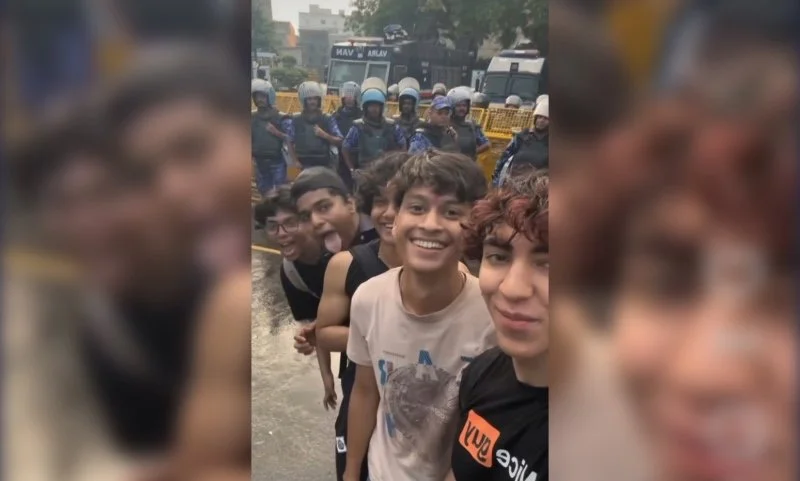
In the days after police used batons and tear gas on thousands of young protesters at Delhi’s Jantar Mantar on July 20, the youngsters responded with “reactance,” not the reaction authorities expected. Knowing their audience was on social media, especially Instagram, they posted videos of themselves joking, staged photographs beside the same officers who had charged them, and made reels that turned a shy Mumbai police constable into a viral heartthrob. While a crackdown is built to produce fear, they answered it with laughter instead: a version of “Gandhigiri” that turned the very officers meant to intimidate them into props for their own campaign.
How Political Ego Made the CJP Protests a Crisis for the Government
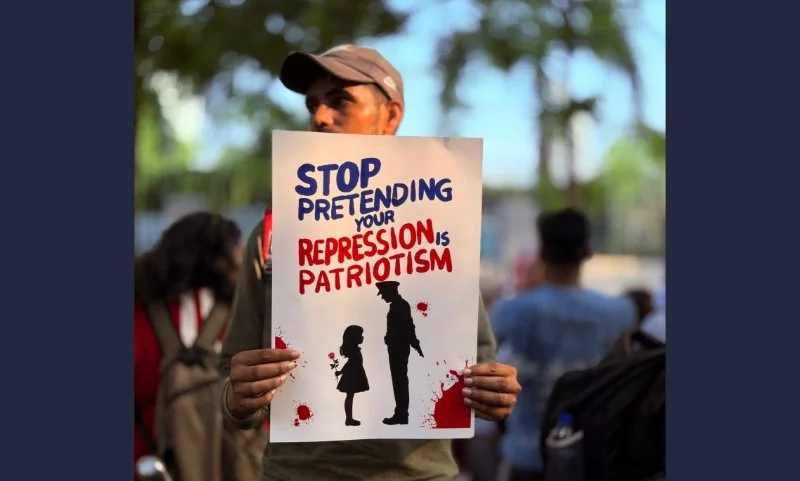
The government could have prevented the Cockroach Janta Party (CJP) protests from becoming a national political crisis for itself. It had several opportunities to do so but missed each one, apparently because key decision-makers treated compromise as weakness and dissent as a challenge to their authority. Political ego ended up putting at risk not only the government’s standing, but also public confidence in institutions acting on its behalf.
Sri Lankan Youth, Groups Rally in Solidarity with India’s Student Protesters
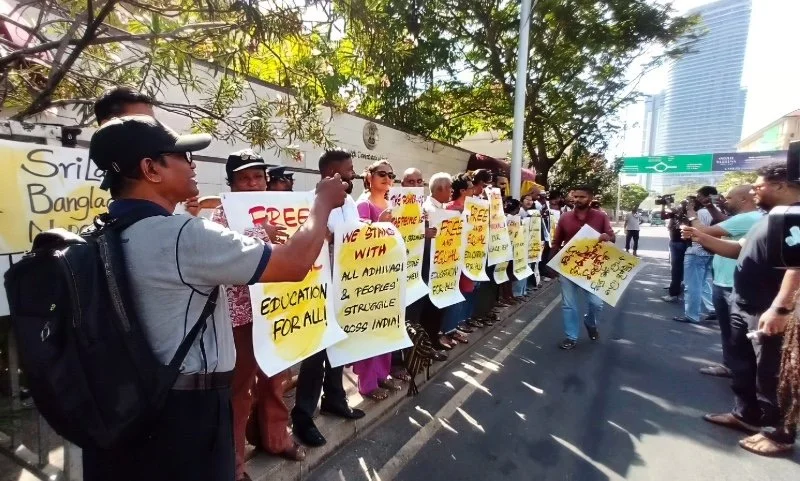
Youth activists, organisations and trade unions in Sri Lanka expressed solidarity with student protesters in India by holding a peaceful demonstration outside the Indian High Commission in Colombo in support of weeks-long protests against exam-paper leaks and alleged police violence.
CJP Protests: Key Developments After Dharmendra Pradhan’s Resignation
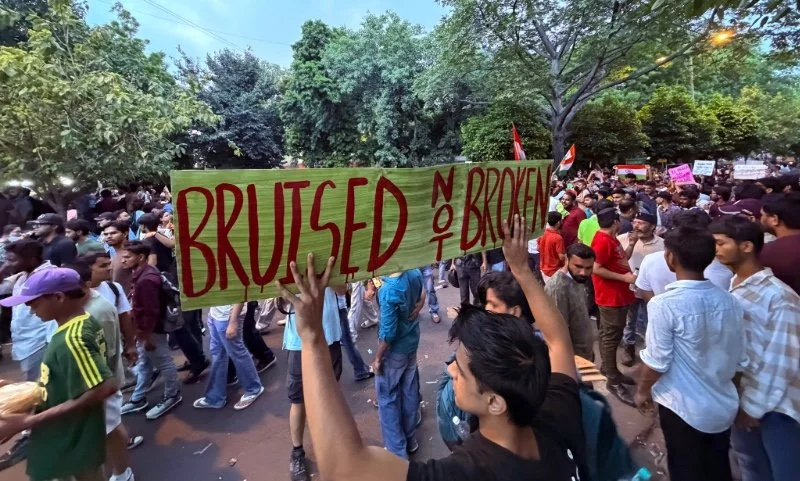
Dharmendra Pradhan stepped down as Union education minister on July 25, bringing to an end 36 days of protests initiated by the Cockroach Janta Party (CJP). Two days later, as of noon on July 27, key developments included a police investigation into the firing of pellet guns at protesters, Supreme Court petitions alleging police excesses against students, violent unrest in Bihar, an angry response from Central University of Kerala students to social media posts praising Pradhan, and activist Sonam Wangchuk’s planned visit to Rajghat in Delhi.
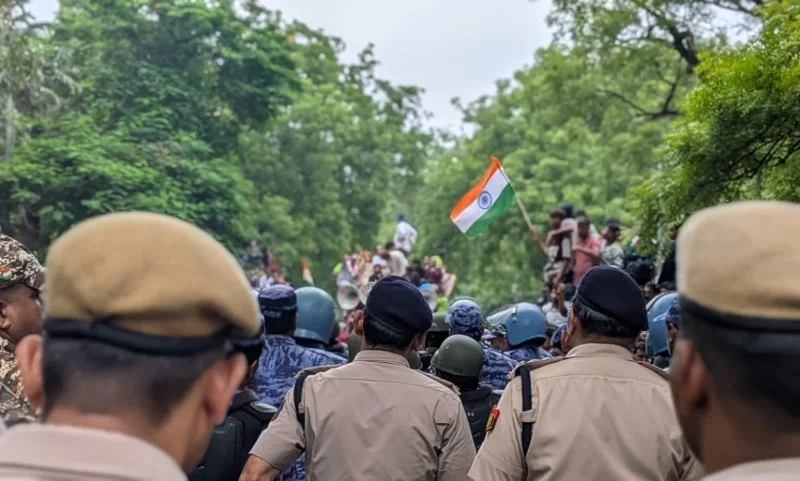
On the Day the Govt Promised Wangchuk No Cases Against Protesters, Police Went After a Volunteer’s Family
Hours after the Centre assured activist Sonam Wangchuk that no cases would be filed against those who had protested at Jantar Mantar and marched to Parliament on 20 July, one volunteer’s family was learning that the assurance did not extend to them, Newsreel Asia has been told.
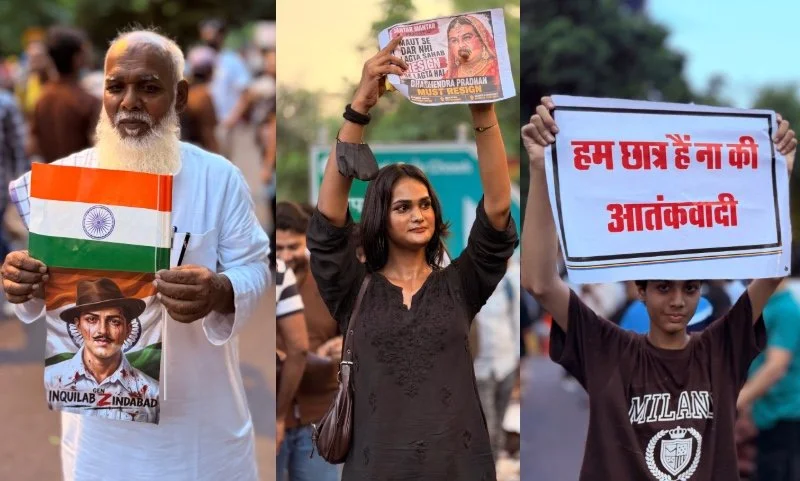
Delhi’s ‘Jantar Mantar Republic:’ the India Its Youngsters Want, and Are Building
A huge, leaderless crowd of protesters has been gathering at Connaught Place in Delhi alongside the organised Cockroach Janta Party (CJP) protest at a designated site at Jantar Mantar. By July 23, it looked at least four times the size of the CJP protest. Even without any leadership, except a few self-appointed volunteers doing crowd management, they seem to be living out the India they want, one they seem to be building themselves, an India where your identity and agency are never questioned but accepted with mutual trust and protection for one another.
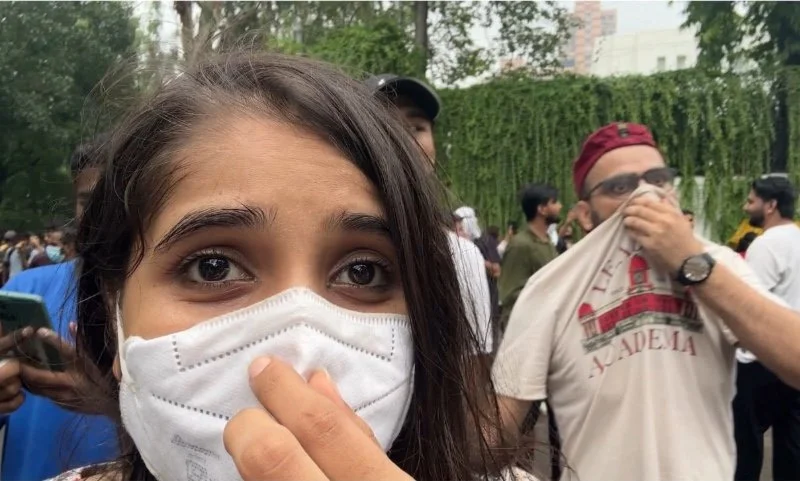
As a Woman Journalist, I Felt Safe Amid Thousands of Stranger Men at CJP Protest
Thousands of men have been filling the Cockroach Janta Party (CJP) protest ground at Jantar Mantar in Delhi for nearly a month. In the initial days, each time I walked into that crowd I expected to feel unsafe, as I always have as a woman in this city. What I soon found instead, as I covered the ongoing youth movement, is a kind of safety I had almost stopped believing was possible in a public space in the capital city, despite the area being dense with strangers.
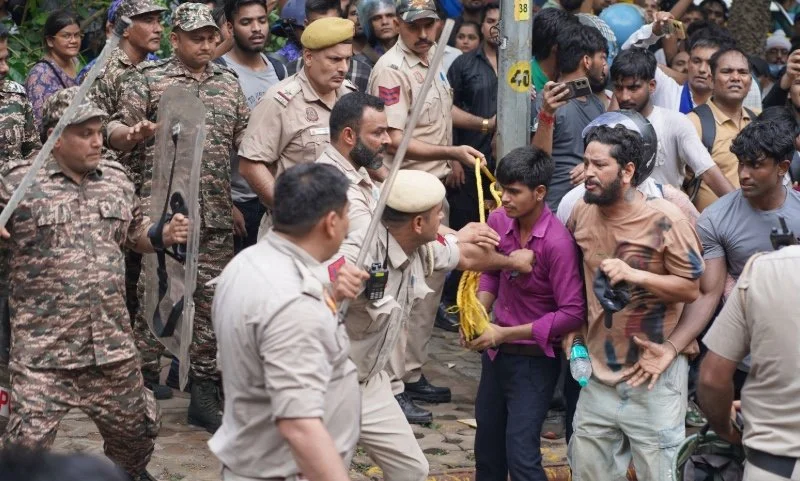
5 Forms of Unlawful, Punitive Force Delhi Police May Have Used Against CJP Protesters
Delhi Police and Rapid Action Force (RAF) personnel used batons and tear gas against thousands of protesters during the Cockroach Janta Party’s (CJP) “Chalo Sansad” march on July 20, leaving scores injured and dozens detained. Eyewitness accounts from journalists covering the protest, including those from Newsreel Asia, and videos circulating on social media point to at least five serious forms of possibly unlawful and punitive force.
July 20 CJP Protest Defies Government Narrative of Who Dissenters Are
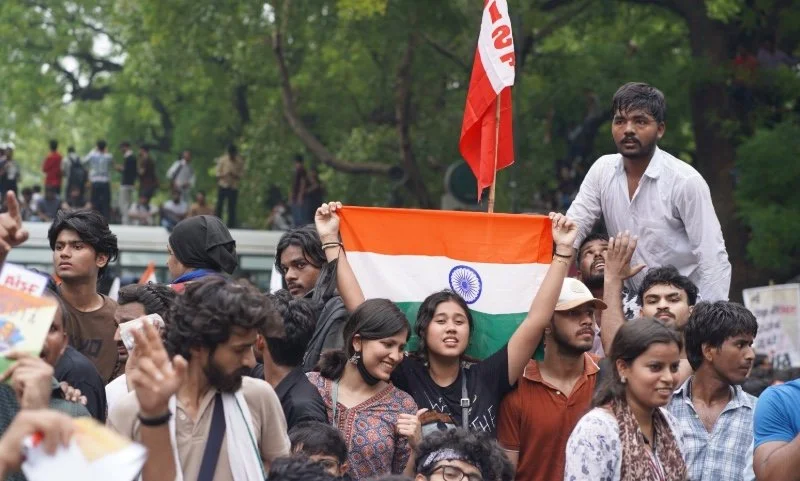
Tens of thousands of young people converged around Delhi’s Connaught Place area on July 20, responding to a call by the Cockroach Janta Party (CJP) for its “Chalo Sansad” march towards Parliament. Most of them belonged to no party, community or movement the government could name, and their active participation appeared to shatter its claim that dissent or grievances in India are confined to a few groups that can be conveniently bracketed into Muslims, Christians, communists, left-leaning civil society, farmers and independent journalists.
Cockroach Janta Party’s Protest Calls for Crowd Management, Not a Law and Order Confrontation
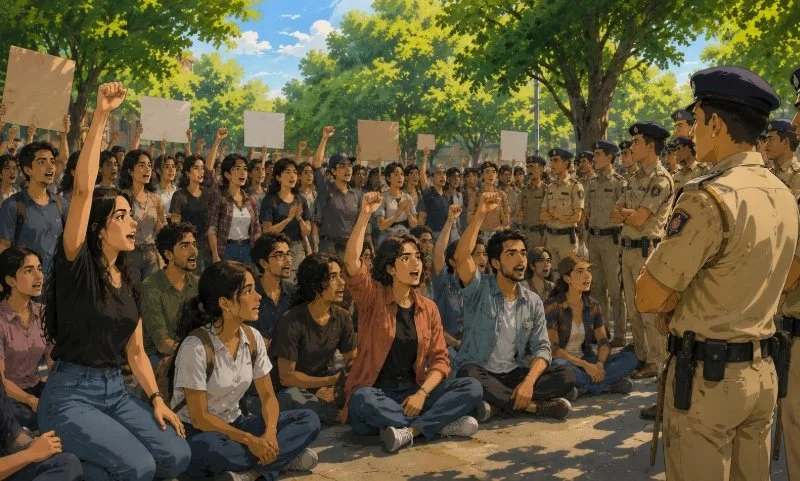
The Cockroach Janta Party (CJP), a youth-driven satirical movement that emerged online last month, is set to hold its first on-ground protest at New Delhi’s Jantar Mantar on June 6, demanding the resignation of Education Minister Dharmendra Pradhan over examination failures that the group says affected more than 10 million (one crore) students. It’s difficult to predict how the government will respond. However, treating the protest as primarily a law and order issue rather than a crowd management exercise could carry significant political and administrative costs.