
How Gen Z Outsmarted the Govt With a New Version of ‘Gandhigiri’
By Vishal Arora
July 30, 2026
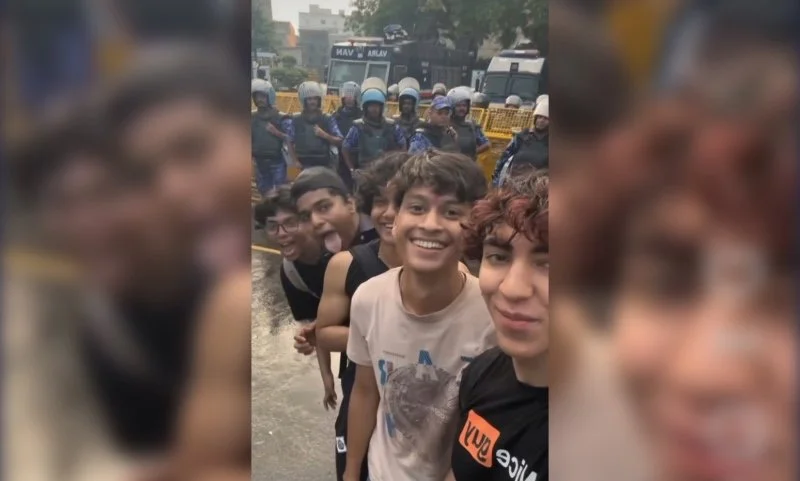
A screenshot from Instagram
In the days after police used batons and tear gas on thousands of young protesters at Delhi’s Jantar Mantar on July 20, the youngsters responded with “reactance,” not the reaction authorities expected. Knowing their audience was on social media, especially Instagram, they posted videos of themselves joking, staged photographs beside the same officers who had charged them, and made reels that turned a shy Mumbai police constable into a viral heartthrob. While a crackdown is built to produce fear, they answered it with laughter instead: a version of “Gandhigiri” that turned the very officers meant to intimidate them into props for their own campaign.
Gandhigiri
Let’s first understand the two terms. “Gandhigiri” became popular after the 2006 Bollywood film “Lage Raho Munna Bhai,” and it means a modern, often cheeky reworking of Mahatma Gandhi’s method of resisting an opponent through non-violence and moral pressure rather than confrontation. “Reactance,” in psychology, means the pull people feel to reassert their freedom once they sense it is being restricted or threatened, often by doing more of the very thing an authority is trying to stop. Gen Z appeared to combine reactance with Gandhigiri.
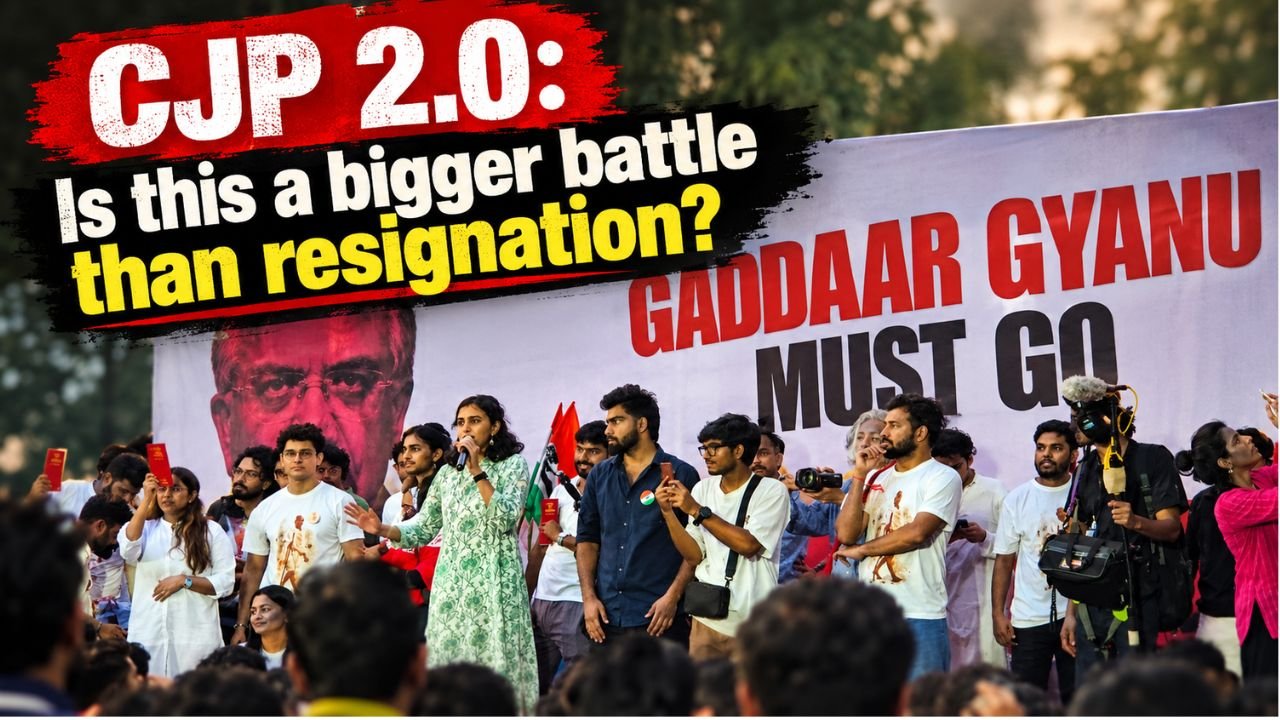
Let’s acknowledge that the protests, especially after the crackdown, drew in far more people than the Cockroach Janta Party (CJP) had originally organised, and the grievances driving them were not confined to the NEET paper leak. All kinds of people were there, including rogue elements who used abusive language at the protest, and some even appeared to attack the police. We do not know if they were angry about the crackdown or simply looking for an excuse to turn violent. But peaceful and well-intentioned protesters vastly outnumbered the rogue ones.
On July 20, thousands of protesters, most of them students, marched from Jantar Mantar toward Parliament, defying police orders to disperse. Delhi Police has denied allegations of excessive force, although footage of officers striking a female protester, using pellet guns for the first time in the capital, and tripping students fleeing tear gas appeared on Instagram. During clashes, two assistant commissioners of police and four other personnel were also injured.
Memes
From July 21 to 25, until Education Minister Dharmendra Pradhan’s resignation, protesters at Jantar Mantar in Delhi and at protest sites in Mumbai posed with flowers for the officers stationed nearby, reminding them on camera of the batons police had allegedly used against them days earlier. Some carried the Indian flag and copies of the Constitution alongside the flowers. Posts such as “Thanks for the cardio, Delhi Police,” videos set to the “Subway Surfers” soundtrack as protesters ran from police, and a reel declaring “I am totally safe here. There are a lot of police around me. Nobody can hit me,” all mocked the crackdown’s apparent attempt to intimidate.
Delhi-based content creator Abhinav Bisht, known on Instagram as Isaac, covered the protests by filming himself inside the demonstrations and cutting the footage into trending Reels and TikTok-style formats, instead of posting speeches or political commentary. One reel showed him running from a police officer on July 20, edited to resemble the mobile game Subway Surfers. His other videos mixed dance trends and informal exchanges with protesters and police recorded at the site. Meta suspended his account on July 26, only to restore it the following day.
In Mumbai, a Maharashtra Police constable, Vinod Kalukhe, became an online sensation after a content creator, Shreya Chadda, filmed a light-hearted exchange with him at Shivaji Park set to an unreleased Lana Del Rey track. It became a trend within days, with other creators approaching officers at their own protest sites for similar reels. Each one caught a policeman off guard and turned his reaction into content.
Humour as Political Work
Handing flowers to the officers who had allegedly hit them was Gandhigiri. A flower forces the officer holding it to face what they did days earlier, on camera, in front of an audience that could run into millions, and the shame lands on them personally, not only on the department. The gesture appeared aimed at showing that the order they were carrying out sat badly with them even as they followed it.
An institution may survive criticism of its policy without much damage. But thousands of videos of its own officers looking sheepish or charmed hurt its authority more than a bad headline does. They spread through the same networks the force is meant to police, reaching officers’ families and neighbours before any official response. This is presumably why officers were seen noting protesters’ Instagram handles at the site.
The jokes and viral videos were part of the youngsters’ reactance. Joking about being surrounded by police was a way of staying at the protest site AND enjoying it, the direct opposite of what the crackdown was supposed to produce. The message was that the fear had not taken hold.
CJP founder Abhijeet Dipke had told supporters that cockroaches are never afraid. By remaining calm in front of riot police, the protesters gave substance to Dipke’s claim.
Success
Pradhan’s resignation is the clearest evidence that the humour did political work. Seeing footage of the crackdown next to the youngsters’ Gandhigiri made ordinary people angrier at the government, and that anger made the protest politically costly for the ruling Bharatiya Janata Party.
The ruling party answered in the same format it was losing to, posting gym-set videos that credited the resignation to democratic institutions and said nothing about the movement’s pressure. The omission suggests the party saw the reels themselves as something it needed to answer, not just the street protests. Responding with casual video sketches rather than formal statements is a quiet admission that the argument was fought mostly on a phone screen.
You have just read a News Briefing, written by Newsreel Asia’s text editor, Vishal Arora, to cut through the noise and present a single story for the day that matters to you. We encourage you to read the News Briefing each day. Our objective is to help you become not just an informed citizen, but an engaged and responsible one.
On October 12, opposition leaders, MPs, MLAs, student organisations and political workers came together in a massive march against Chief Election Commissioner Gyanesh Kumar, raising serious concerns over the Special Intensive Revision (SIR) of electoral rolls and the alleged mass deletion of voters’ names. The march brought together a broad coalition, including the INDIA bloc, AISA, SFI and other student unions, as part of a wider nationwide mobilisation against the SIR exercise and concerns surrounding electoral integrity.