
CJP Protests: Key Developments After Dharmendra Pradhan’s Resignation
From the Editor’s Desk
July 27, 2026
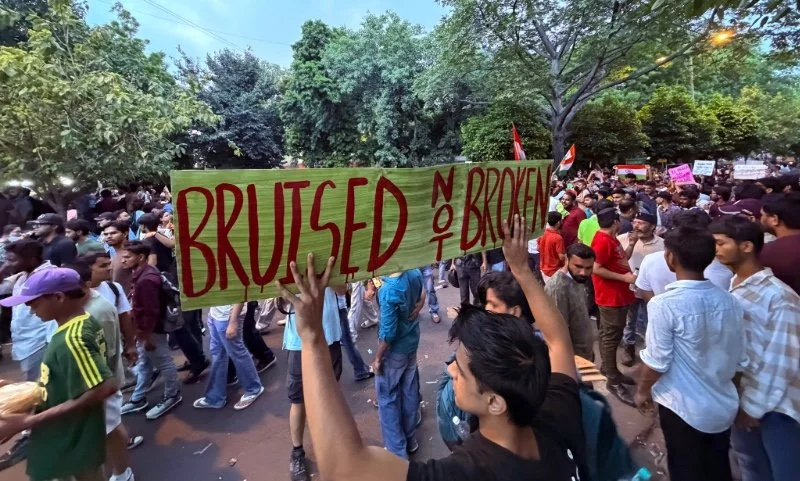
Photo by Newsreel Asia
Dharmendra Pradhan stepped down as Union education minister on July 25, bringing to an end 36 days of protests initiated by the Cockroach Janta Party (CJP). Two days later, as of noon on July 27, key developments included a police investigation into the firing of pellet guns at protesters, Supreme Court petitions alleging police excesses against students, violent unrest in Bihar, an angry response from Central University of Kerala students to social media posts praising Pradhan, and activist Sonam Wangchuk’s planned visit to Rajghat in Delhi.
An internal finding by the Central Reserve Police Force (CRPF) has allegedly concluded that one of its Rapid Action Force (RAF) officers stationed near Connaught Place in Delhi opened fire with a pellet gun seven times as demonstrators marched toward Parliament on July 20, with five pellets striking protesters and two landing on the ground, according to The Indian Express.
At least three people needed hospital care for pellet wounds suffered in the march, among them a 25-year-old man, a 19-year-old studying at Delhi University and a 28-year-old reporter for the Indian news magazine Outlook.
CRPF Director General Gyanendra Pratap Singh was quoted as saying that his force would carry out its usual “professional post-event assessment” now that the demonstration had ended.
RAF Inspector General Seema Dhundhia had privately acknowledged that the crowd-control approach used on July 20 fell short of standard training, a conclusion an internal review reached after flagging several operational lapses, sources reportedly told the Express.
RAF personnel had been deployed alongside Delhi Police on July 20.
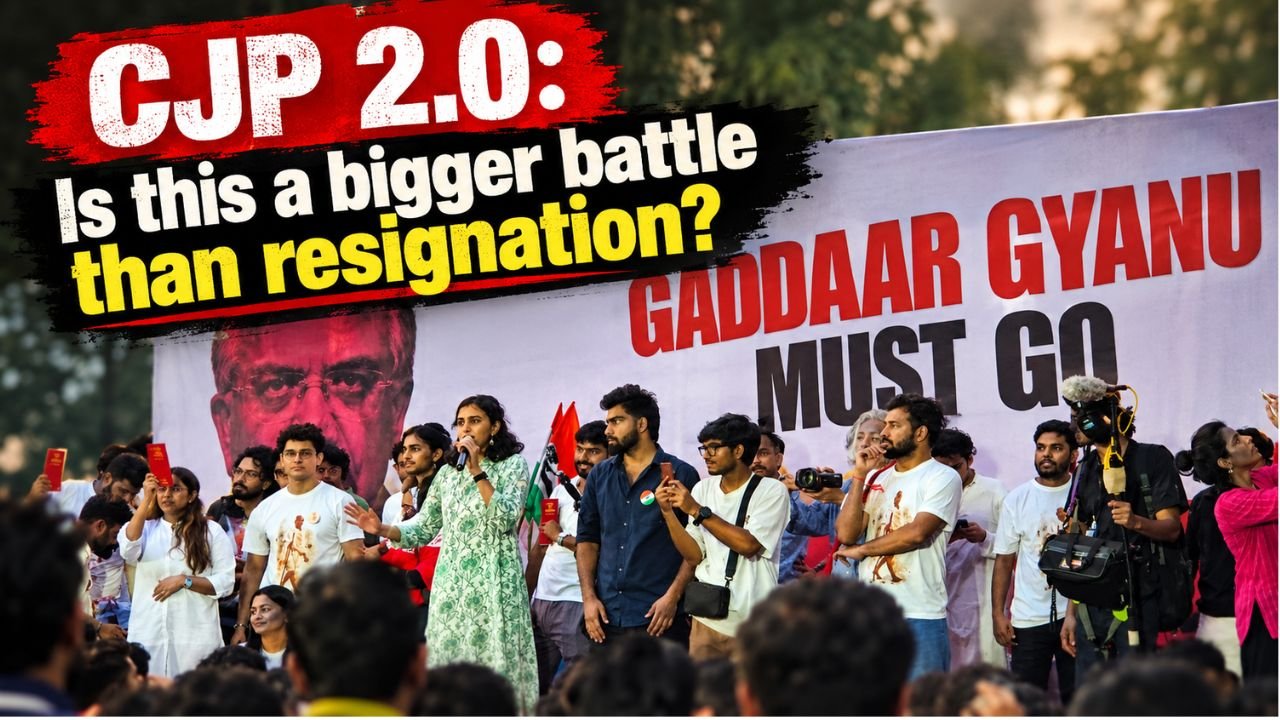

The Supreme Court was set to hear petitions on July 27 alleging heavy-handed police conduct toward student demonstrators, The Tribune reported.
Chief Justice of India Surya Kant had agreed on July 24 to place the petitions on the docket after advocate Gopal Sankaranarayanan urged the bench to intervene, telling justices that force was being used against children.
Among the filings was a request for formal criminal complaints to be opened against Delhi Police and RAF officers over the treatment of students at Jantar Mantar in Delhi.
The CJI reportedly pushed back on claims that he had earlier declined to fast-track a separate brutality complaint, dismissing those accounts as false and reckless and noting no such filing existed.
Meanwhile, police in Bihar’s Siwan district admitted on July 26, the day after violent clashes during similar protests there, that officers had opened fire into the air, claiming that protesters struck first, according to The Indian Express. Officials said three people were wounded by bullets, several officers including Superintendent of Police Puran Kumar Jha were injured, and police detained over 400 people.
One wounded man was quoted as saying he had simply been passing through Siwan from his village for a certificate and was headed to the district magistrate’s office when a round struck his leg.
The Central University of Kerala, a federal university in Kasaragod, posted a note on its official social media accounts praising Pradhan’s record in government and in higher education, pointing to his backing for growing the university’s degree programs and upgrading its facilities while he held the education portfolio. The note credited him with driving major changes to the sector through the National Education Policy (NEP) and wished him well in his future endeavours.
Students used the comment sections to push back, and reaction on Instagram and Facebook turned into a wave of sarcastic remarks and ridicule, as reported by Mathrubhumi. The university had not withdrawn the posts or explained them, as of noon on July 27.
In Delhi, on July 27, activist Sonam Wangchuk was set to leave Gurugram’s Medanta Hospital and head to Rajghat, the memorial honoring Mahatma Gandhi. The activist had ended a 26-day hunger strike days earlier.
At the Jantar Mantar protest site, barricades and guards remained as of noon on July 27, despite the CJP's departure. It suggests officials remain unsure whether the wider movement could flare again.
The people’s movement started by the CJP had been demanding accountability over leaked papers in the National Eligibility-cum-Entrance Test (NEET), including compensation for families whose relatives died by suicide over the leaked NEET papers, along with a pledge to drop criminal cases brought against protesters.
Crowds had rallied in numerous cities in the weeks leading up to the resignation. The unrest appeared to provide an outlet for wider frustration with government policies and its handling of dissent. The CJP mainly served as the spark for a separate, unaffiliated protest movement that grew after Wangchuk was taken to hospital during his fast. This movement appeared to be several times larger than the CJP’s own following and directed most of its anger at the government at large, and not just the NEET paper leak.
You have just read a News Briefing, written by Newsreel Asia’s text editor, Vishal Arora, to cut through the noise and present a single story for the day that matters to you. We encourage you to read the News Briefing each day. Our objective is to help you become not just an informed citizen, but an engaged and responsible one.
On October 12, opposition leaders, MPs, MLAs, student organisations and political workers came together in a massive march against Chief Election Commissioner Gyanesh Kumar, raising serious concerns over the Special Intensive Revision (SIR) of electoral rolls and the alleged mass deletion of voters’ names. The march brought together a broad coalition, including the INDIA bloc, AISA, SFI and other student unions, as part of a wider nationwide mobilisation against the SIR exercise and concerns surrounding electoral integrity.