
Research Suggests 5 Things Gen Z Should Do After a Successful Protest
From the Editor’s Desk
July 31, 2026
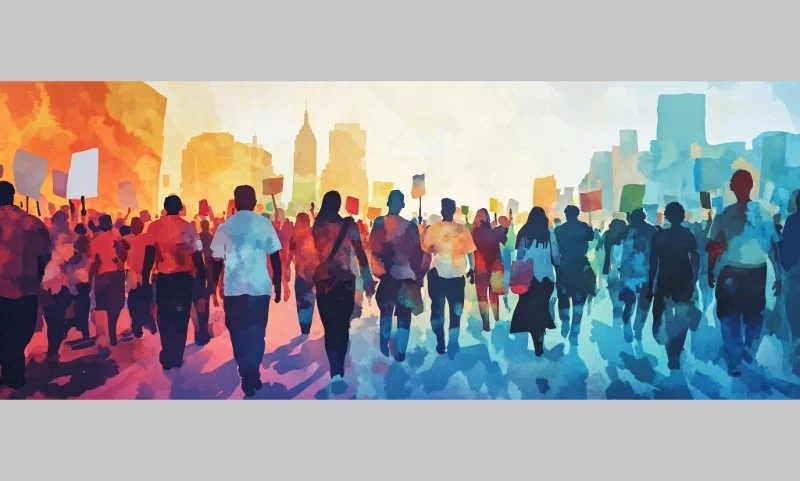
Young protesters have helped remove political leaders, forced governments to abandon unpopular policies and made corruption and bad governance major political issues in countries around the world. Securing major concessions from a government, however, is only the first step toward lasting change, which requires five more tasks, according to an analysis by political scientists Erica Chenoweth and Matthew Cebul.
The analysis, published in the Journal of Democracy in January 2026, identifies the five tasks as staying mobilised, keeping protests nonviolent, developing leaders who represent the movement, building a coalition among different groups, and taking the movement’s demands into elections and government institutions.
Their essay, titled “Why Gen Z is Rising,” uses previous research into nonviolent resistance and democratic transitions, along with recent Gen-Z movements in Asia, Africa, Latin America and elsewhere, to argue that youth participation makes protest campaigns more powerful and that democratic reform and improvements in young people’s lives require more than youth participation alone.
The analysis argues that getting a government to agree to major demands is often easier than changing the political and economic system that produced the protests in the first place. Even after major concessions are secured, the same weak institutions, entrenched interests, corruption networks and economic constraints may continue to obstruct reform, it explains.
(1) Remain mobilised after the government concedes
The first task is to stay politically active during the transition period that follows a government’s concession, says the analysis.
The analysis found that powerful people who benefited from the old system, along with others who want to undo any changes, can block reforms once protesters leave the streets. Reforms can stall even after a government has already agreed to change. It found that protesters need to remain peacefully engaged after a government makes major concessions. Sustained peaceful pressure can help a country move towards stable democracy.
The authors point to Serbia, where young protesters kept protesting for more than a year while demanding accountability. Their persistence showed that neither limited concessions nor a prolonged wait would make them abandon their remaining demands.
Staying mobilised does not have to mean holding continuous marches or demonstrations. It could entail watching the transition closely, keeping local networks active, checking whether promises are kept, pushing for transparency and protesting again if officials block agreed reforms.
The larger goal is to keep public pressure on the government until new rules and promises turn into institutions that actually work, according to the analysis.
(2) Preserve nonviolent discipline
The second task is to keep protests nonviolent, even when protesters face provocation or a government crackdown.
Studies of protest movements have found that nonviolent campaigns tend to draw in more people, according to the analysis. People who would avoid taking up arms, including older citizens, families, workers, professionals and members of religious communities, can still take part in marches, strikes, boycotts and other actions that are nonviolent.
That wider participation gives a movement legitimacy in the public eye and makes it harder for the government to dismiss protesters as a violent fringe. It can also build relationships between different social and political groups, helping them work together to protect and strengthen democracy.
Violence tends to have the opposite effect, the analysis found. It can drive away potential supporters, make the public more accepting of a crackdown, and let authorities turn public attention away from the protesters’ demands and toward the disorder on the streets. Chenoweth and Cebul also warn that violence can cause damage regardless of who started it or why.
Organisers of a movement can lose control once people acting in its name start attacking opponents or destroying property. More radical groups may take over the streets. Political moderates who support reform may pull back because they fear prolonged disorder. Authorities may also use isolated acts of violence as an excuse to crack down on the whole movement, including peaceful participants, the analysis says.
Keeping protests nonviolent takes more than asking people to stay calm, it adds. It also requires agreed rules of conduct, people trained to prevent violence from escalating, reliable ways to communicate, and methods for distancing the movement from anyone who turns violent.
(3) Develop representative leadership
The third task is to build leadership that can represent the movement, without letting a small group take control of it.
Many recent Gen-Z movements have deliberately avoided traditional leadership structures, the analysis notes. Young activists tend to organise through social media and informal networks rather than political parties, unions or other organisations with fixed hierarchies. This loose structure lets a movement respond quickly to public anger, makes it harder for authorities to shut down the campaign by arresting a few leaders, and gives ordinary participants a greater sense of ownership.
However, the same loose structure can become a problem once the movement wins an initial concession, the analysis warns. A leaderless movement may struggle to decide who is authorised to negotiate, which compromises are acceptable, or whether an agreement truly matches what participants demanded. It may also find it hard to enforce nonviolent conduct or to make promises that government negotiators and other political players can trust.
Research cited in the analysis suggests that agreements reached through negotiation are more likely to endure than changes decided by one side alone. To influence those agreements, however, movements need clear representatives at the negotiating table.
Representative leadership does not have to mean copying the rigid structures young protesters distrust. A movement could elect temporary representatives, set up clear and open decision-making procedures, limit how much authority its negotiators have, and require major agreements to be approved by the larger movement, the analysis suggests.
What is essential is having some way for a large and varied movement to make decisions together and negotiate, without handing control to people nobody elected.

(4) Build a broad social coalition
The fourth task is to unite different generations and social groups – people from different economic classes, regions and social groups, including women and minorities – in a lasting coalition. Research by political scientist Sirianne Dahlum, cited in the analysis, found that socially diverse nonviolent movements are more likely to secure democratic reforms and ensure that those reforms endure. Otherwise, the movement may remain confined to one generation, class or city instead of growing into a larger demand for political change.
Building a coalition does not mean simply inviting other groups to support a program that young activists have already decided on. The concerns of these allies need to influence the movement’s demands, leadership and negotiations.
(5) Turn protest momentum into institutional influence
The fifth task is to carry the movement’s demands into elections, lawmaking and other political institutions.
Protests can disrupt normal government, change public debate and pressure officials to act, though the power created by mass mobilisation is often short-lived, the analysis stresses. Lasting reform usually requires changes to laws, budgets, election rules, public institutions and systems of accountability, it explains.
Elections are one of the main ways that movements in democratic systems can turn the pressure they built on the streets into policies that outlast the protests themselves, the analysis adds.
That leaves Gen Z with a difficult choice, the authors warn. Many young activists distrust political parties, seeing them as corrupt, unresponsive and controlled by older elites. Joining party politics can also expose a movement to internal rivalry and compromise, and to the risk that well-known activists will chase personal careers instead of the group’s shared demands.
Staying out of institutions altogether carries its own risk. Established parties and political networks will keep contesting elections, writing laws and running state institutions, and protesters who refuse to take part will have little say over those decisions, the analysis says. The political system may then absorb the shock of the protests without making the deeper changes the movement wanted, it warns.
You have just read a News Briefing, written by Newsreel Asia’s text editor, Vishal Arora, to cut through the noise and present a single story for the day that matters to you. We encourage you to read the News Briefing each day. Our objective is to help you become not just an informed citizen, but an engaged and responsible one.
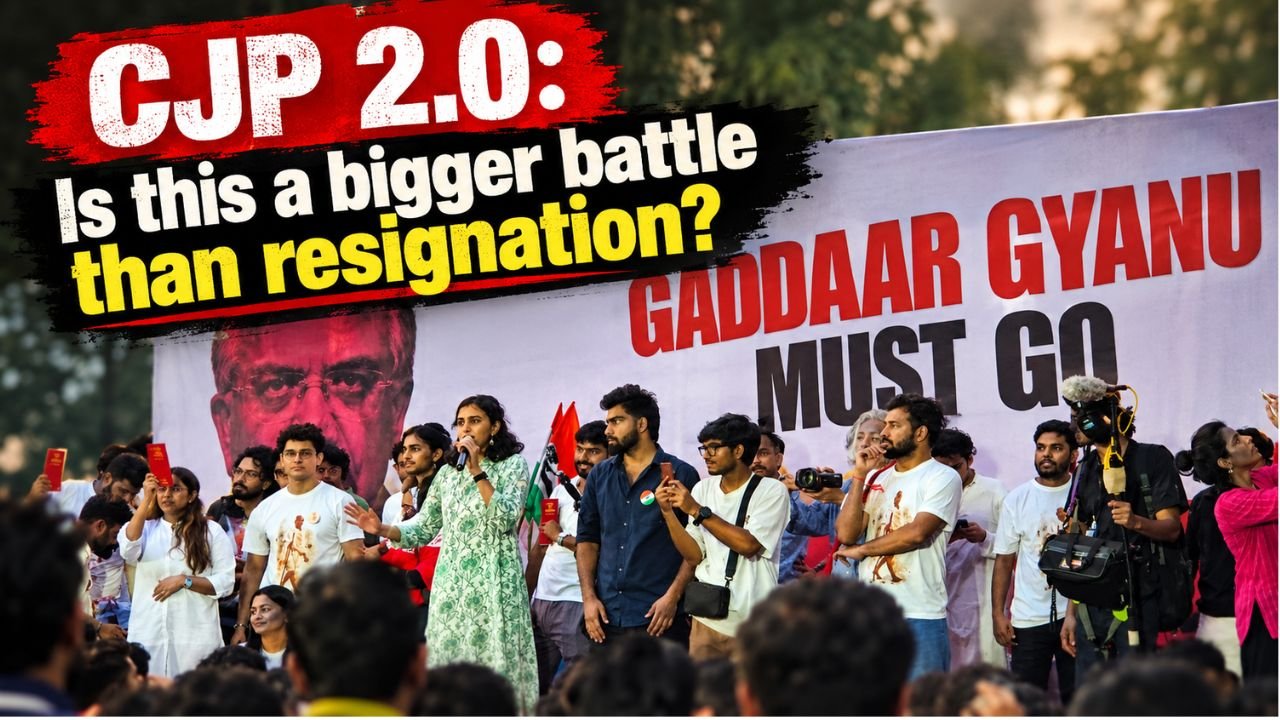
On October 12, opposition leaders, MPs, MLAs, student organisations and political workers came together in a massive march against Chief Election Commissioner Gyanesh Kumar, raising serious concerns over the Special Intensive Revision (SIR) of electoral rolls and the alleged mass deletion of voters’ names. The march brought together a broad coalition, including the INDIA bloc, AISA, SFI and other student unions, as part of a wider nationwide mobilisation against the SIR exercise and concerns surrounding electoral integrity.