

Research Suggests 5 Things Gen Z Should Do After a Successful Protest
Young protesters have helped remove political leaders, forced governments to abandon unpopular policies and made corruption and bad governance major political issues in countries around the world. Securing major concessions from a government, however, is only the first step toward lasting change, which requires five more tasks, according to an analysis by political scientists Erica Chenoweth and Matthew Cebul.
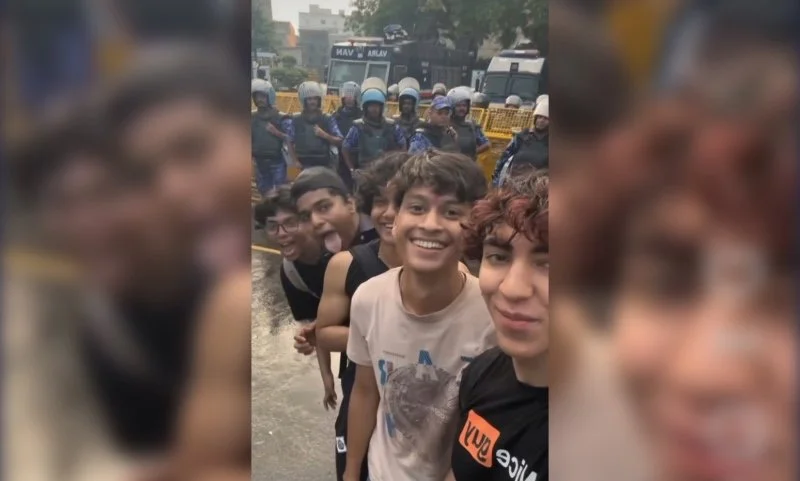
How Gen Z Outsmarted the Govt With a New Version of ‘Gandhigiri’
In the days after police used batons and tear gas on thousands of young protesters at Delhi’s Jantar Mantar on July 20, the youngsters responded with “reactance,” not the reaction authorities expected. Knowing their audience was on social media, especially Instagram, they posted videos of themselves joking, staged photographs beside the same officers who had charged them, and made reels that turned a shy Mumbai police constable into a viral heartthrob. While a crackdown is built to produce fear, they answered it with laughter instead: a version of “Gandhigiri” that turned the very officers meant to intimidate them into props for their own campaign.
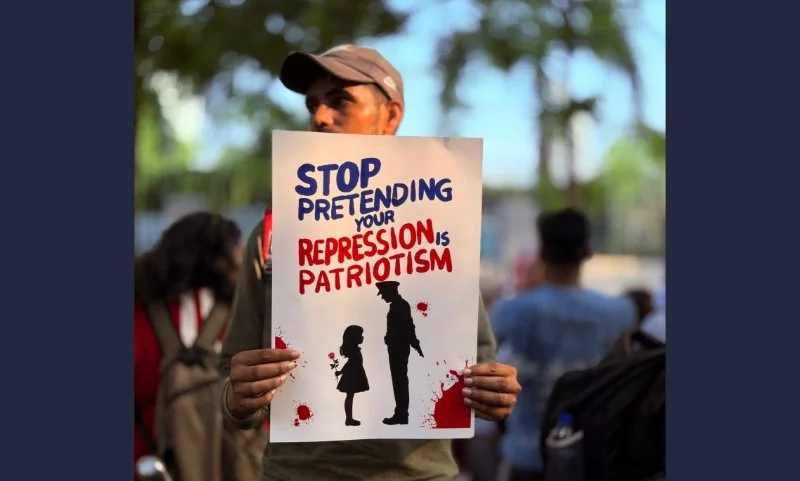
How Political Ego Made the CJP Protests a Crisis for the Government
The government could have prevented the Cockroach Janta Party (CJP) protests from becoming a national political crisis for itself. It had several opportunities to do so but missed each one, apparently because key decision-makers treated compromise as weakness and dissent as a challenge to their authority. Political ego ended up putting at risk not only the government’s standing, but also public confidence in institutions acting on its behalf.
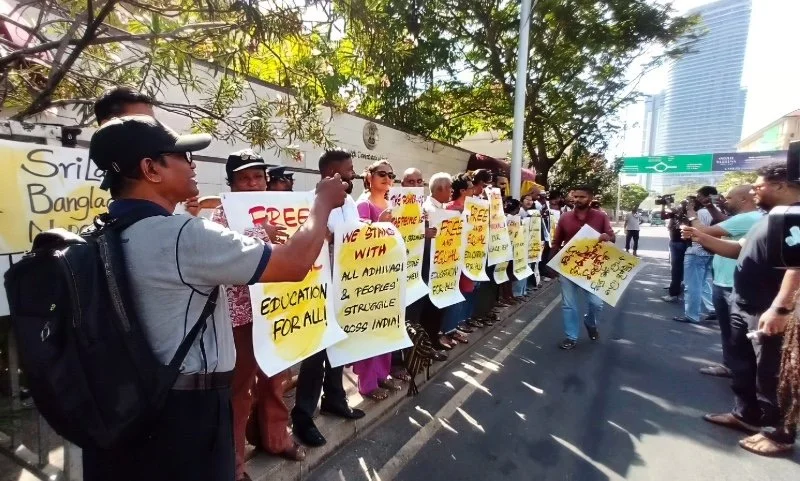
Sri Lankan Youth, Groups Rally in Solidarity with India’s Student Protesters
Youth activists, organisations and trade unions in Sri Lanka expressed solidarity with student protesters in India by holding a peaceful demonstration outside the Indian High Commission in Colombo in support of weeks-long protests against exam-paper leaks and alleged police violence.
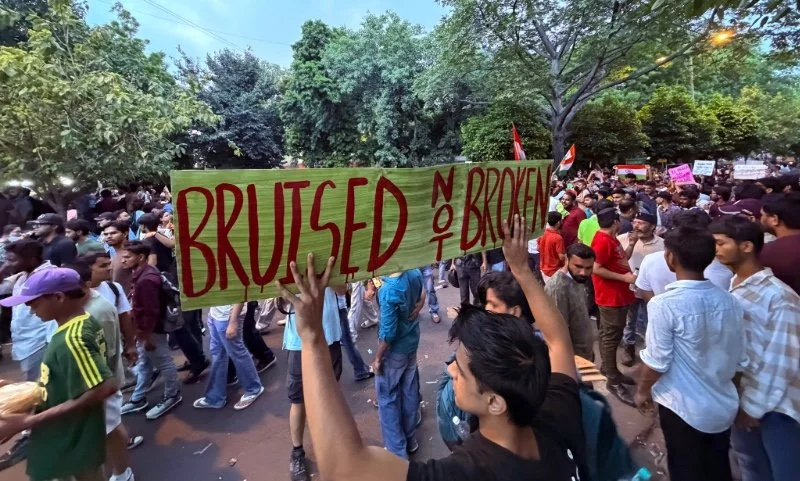
CJP Protests: Key Developments After Dharmendra Pradhan’s Resignation
Dharmendra Pradhan stepped down as Union education minister on July 25, bringing to an end 36 days of protests initiated by the Cockroach Janta Party (CJP). Two days later, as of noon on July 27, key developments included a police investigation into the firing of pellet guns at protesters, Supreme Court petitions alleging police excesses against students, violent unrest in Bihar, an angry response from Central University of Kerala students to social media posts praising Pradhan, and activist Sonam Wangchuk’s planned visit to Rajghat in Delhi.
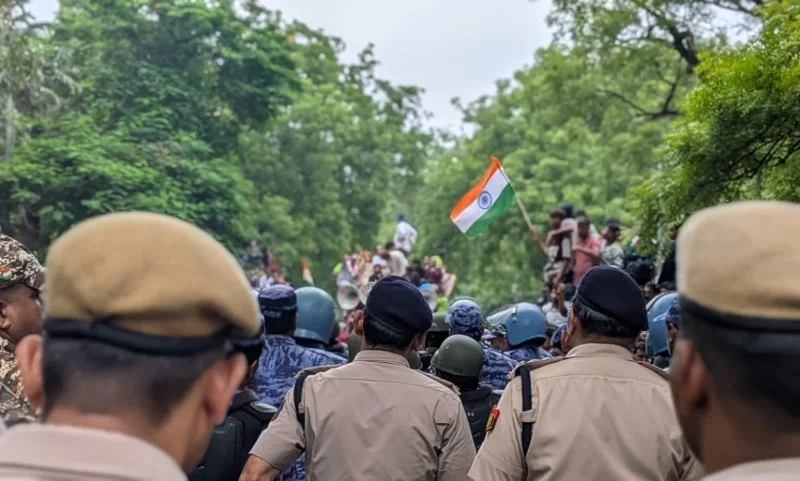
On the Day the Govt Promised Wangchuk No Cases Against Protesters, Police Went After a Volunteer’s Family
Hours after the Centre assured activist Sonam Wangchuk that no cases would be filed against those who had protested at Jantar Mantar and marched to Parliament on 20 July, one volunteer’s family was learning that the assurance did not extend to them, Newsreel Asia has been told.
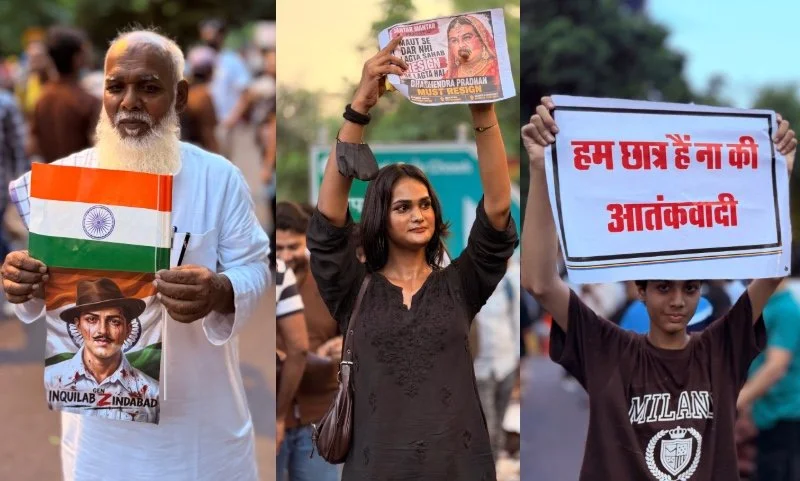
Delhi’s ‘Jantar Mantar Republic:’ the India Its Youngsters Want, and Are Building
A huge, leaderless crowd of protesters has been gathering at Connaught Place in Delhi alongside the organised Cockroach Janta Party (CJP) protest at a designated site at Jantar Mantar. By July 23, it looked at least four times the size of the CJP protest. Even without any leadership, except a few self-appointed volunteers doing crowd management, they seem to be living out the India they want, one they seem to be building themselves, an India where your identity and agency are never questioned but accepted with mutual trust and protection for one another.
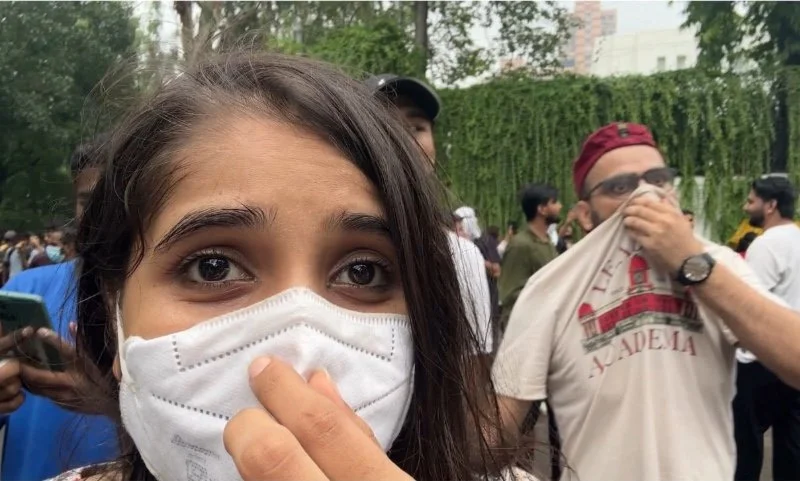
As a Woman Journalist, I Felt Safe Amid Thousands of Stranger Men at CJP Protest
Thousands of men have been filling the Cockroach Janta Party (CJP) protest ground at Jantar Mantar in Delhi for nearly a month. In the initial days, each time I walked into that crowd I expected to feel unsafe, as I always have as a woman in this city. What I soon found instead, as I covered the ongoing youth movement, is a kind of safety I had almost stopped believing was possible in a public space in the capital city, despite the area being dense with strangers.
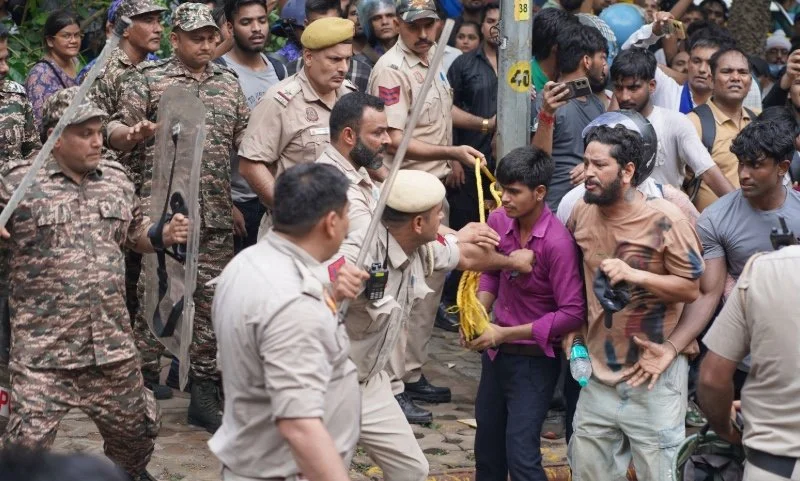
5 Forms of Unlawful, Punitive Force Delhi Police May Have Used Against CJP Protesters
Delhi Police and Rapid Action Force (RAF) personnel used batons and tear gas against thousands of protesters during the Cockroach Janta Party’s (CJP) “Chalo Sansad” march on July 20, leaving scores injured and dozens detained. Eyewitness accounts from journalists covering the protest, including those from Newsreel Asia, and videos circulating on social media point to at least five serious forms of possibly unlawful and punitive force.
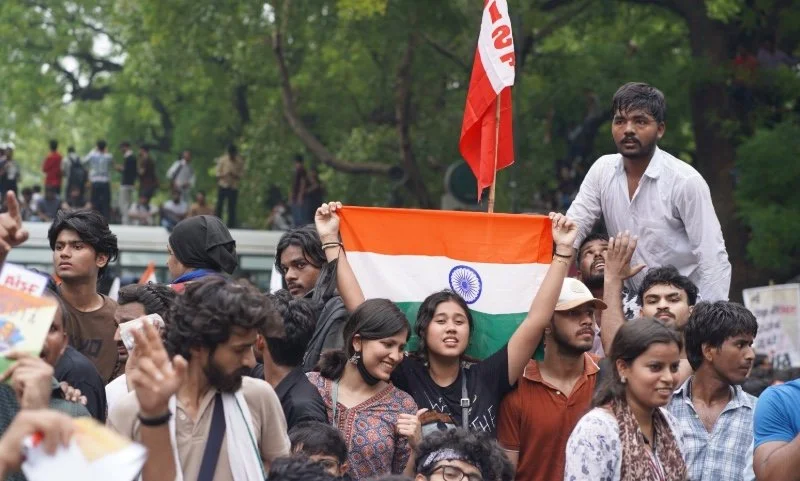
July 20 CJP Protest Defies Government Narrative of Who Dissenters Are
Tens of thousands of young people converged around Delhi’s Connaught Place area on July 20, responding to a call by the Cockroach Janta Party (CJP) for its “Chalo Sansad” march towards Parliament. Most of them belonged to no party, community or movement the government could name, and their active participation appeared to shatter its claim that dissent or grievances in India are confined to a few groups that can be conveniently bracketed into Muslims, Christians, communists, left-leaning civil society, farmers and independent journalists.
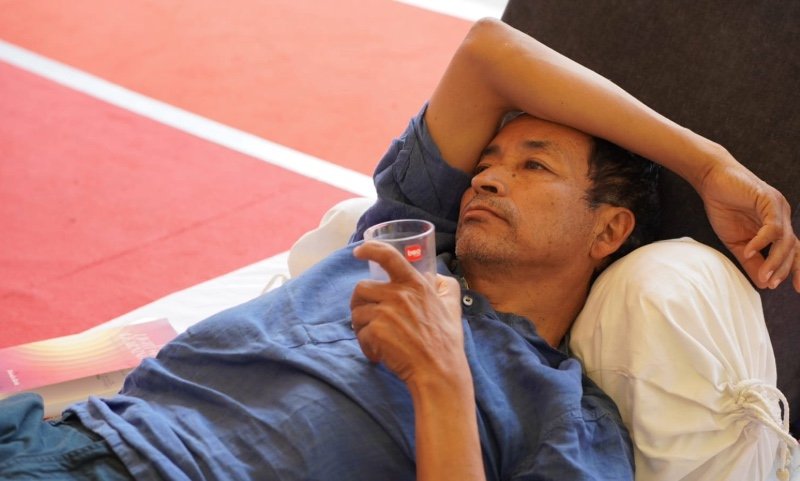
CJP’s Ideological Emptiness Is Its Most Effective (and Riskiest) Asset
The Cockroach Janata Party’s protest at Jantar Mantar in Delhi has held together for 19 days because “cockroach” means something different to everyone under the tarpaulins, I found when I visited the site on July 16. My biggest concern now is that what could end this diverse coalition is the deteriorating condition of the fasting man on the mattress on the stage. Let me explain how.

Nepal-Led Coalition Seeks UN Endorsement for Dignified Menstruation Day
An international advocacy network is pressing the United Nations to formally endorse December 8 as International Dignified Menstruation Day, an observance it has held for seven years without official recognition from the world body.
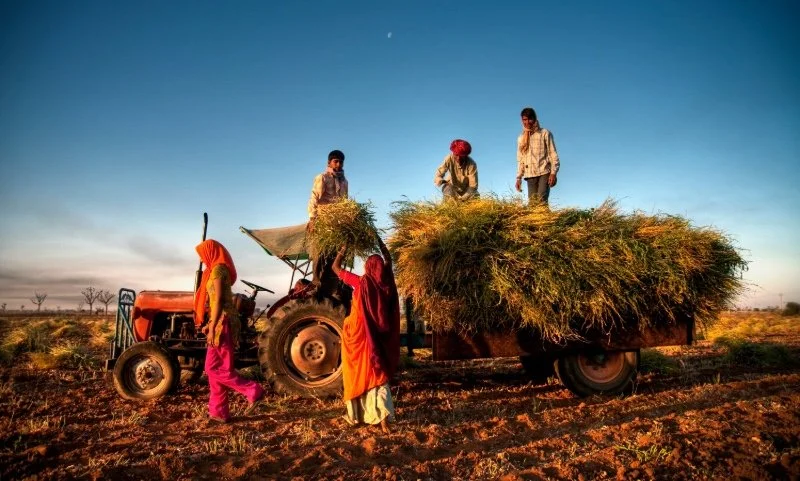
Explained: Why Farmers Are Opposing the India-US Trade Agreement
Farmers in Punjab and Haryana have been protesting against a proposed bilateral trade agreement between India and the United States. They are concerned that opening India’s agricultural market further to American products could place millions of Indian farmers at a serious disadvantage because the two agricultural systems are very different in size, costs and government support.
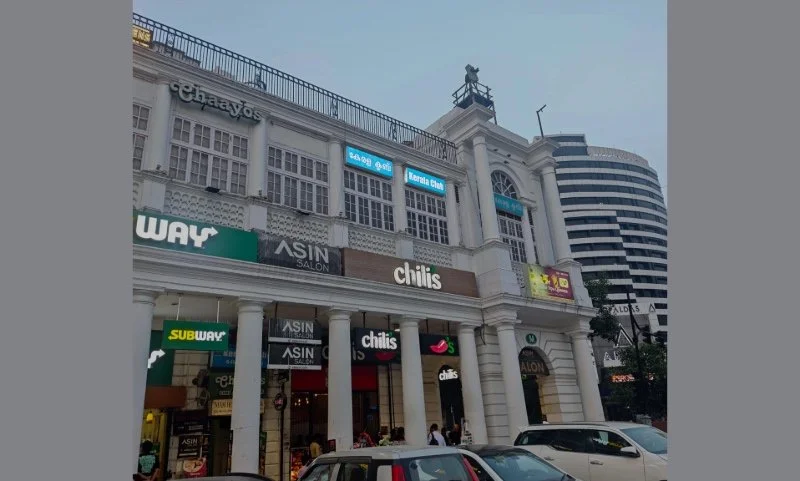
Historic Kerala Club Fights Eviction Notice For Its Delhi Premises
The Kerala Club, an 87-year-old socio-cultural institution founded by V.P. Menon, the civil servant who helped unite India’s princely states, is fighting eviction proceedings brought by its landlord in a dispute the club says rests on a false claim that it stopped paying rent.

Obesity Rising Alongside Malnutrition in India’s Poor Urban Communities
Obesity could be emerging alongside persistent undernutrition among children in India’s poor urban communities, suggests a long-running study of one such neighbourhood, which found that a rising number of children were overweight or obese by age nine while a larger number were dangerously underweight.

‘Satluj’ Ban Erases the Line BJP Drew Against Congress in Punjab
The Bharatiya Janata Party (BJP) has spent years accusing the Congress party of grave human rights failures in Punjab during the militancy period. Every reference to the killings, disappearances, and unmarked cremations of the late 1980s and early 1990s has come from BJP platforms as an indictment of Congress rule. The party has positioned itself as the one willing to name events that Congress preferred to leave unspoken. The recent removal of the film “Satluj” from ZEE5 has undone that position.

Why Have We Stopped Caring About Dowry Killings? A New Study Explains
A new academic study argues that India has built an “infrastructure of inattention” around dowry killings, referring to legal and cultural processes that once made such deaths the focus of mass public protest but now allow such murders to pass with little public attention.

Citizens Have 5 Economic Reasons to Oppose the Government’s E25 Petrol Plan
The central government is reportedly considering delaying its plan to increase the amount of ethanol mixed with petrol from the current 20% to 25%. The government’s rationale is that the move would reduce India’s dependence on imported crude oil, lower some vehicle emissions and create a bigger market for Indian farmers. However, these stated public policy objectives overshadow several economic principles that lie behind citizens’ opposition to the proposal.

AI is Changing How Indian Newsrooms Reach Audiences
Artificial intelligence is changing how Indian newsrooms reach their audiences, and the way outlets handle that change will affect what news people see, how well they can trust it and whether independent journalism can survive on platforms it no longer controls. This came out at a panel discussion at the India launch of the Digital News Report 2026, an annual study of global news consumption by the Reuters Institute for the Study of Journalism at the University of Oxford.

India’s Growing Creator Economy Is Changing Society for Better and Worse
Millions of Indians now create videos, podcasts, photographs and social media content for online audiences. A new study suggests that content creation is spreading to smaller cities, growing more professional and occupying an increasingly important place in young people's lives. This growth brings significant social benefits. It could also bring problems of mental health, misinformation and a culture increasingly driven by the pursuit of attention.