
Sri Lankan Youth, Groups Rally in Solidarity with India’s Student Protesters
From the Editor’s Desk
July 28, 2026
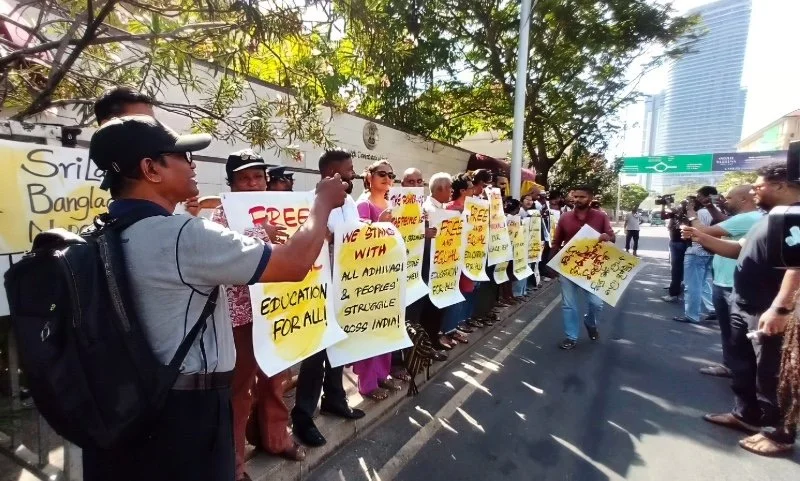
Youth activists, organisations and trade unions in Sri Lanka expressed solidarity with student protesters in India by holding a peaceful demonstration outside the Indian High Commission in Colombo in support of weeks-long protests against exam-paper leaks and alleged police violence.
“The Protest is not ‘Anti-National’; Your Silence is,” read a placard held by a young woman standing on the pavement in front of the Indian High Commission on the afternoon of July 27, as seen in a photo one of the participants sent to Newsreel Asia.
The group also released a statement signed by 162 individuals, 19 Sri Lankan organisations and movements, and nine trade unions. The individual signatories included lawyers, university lecturers, journalists, activists and Christian clergy, including priests and nuns from congregations in Jaffna, Vavuniya and Kilinochchi.
The statement praised the Indian protesters for sustaining their campaign despite alleged police brutality and for winning several immediate demands, among them the resignation of Union Education Minister Dharmendra Pradhan, compensation for victims of the leaked exam papers, and assurances that no First Information Reports (FIRs) would be filed against protesting students.

The group urged the protesters to remain vigilant and keep pressure on the Indian government to honour its promises, pointing to Sri Lanka’s own experience with prolonged legal action against demonstrators in 2022 as a warning.
The signatories drew parallels between the Indian protests and Sri Lanka’s 2022 uprising, known there as the Aragalaya(People’s Struggle), as well as student-led movements in Bangladesh and Nepal.
They also cited other protests in India over land, displacement and environmental damage. They referred to Madhya Pradesh’s Chhatarpur district, where tribal villagers say the Ken-Betwa river-linking project threatens their homes and land, and are demanding fair compensation and rehabilitation. Near Kaziranga National Park in Assam, Adivasi (tribal) farmers allege that land they have cultivated for generations is being taken for a luxury hotel. Farmers in Bidadi, near Bengaluru in Karnataka, reportedly oppose the acquisition of fertile land for an AI-based township. Residents of Thane, near Mumbai in Maharashtra, fear that a proposed Amazon data centre will consume vast amounts of water and electricity and cause noise and other environmental harm.
The statement accused Indian police of using tear gas, water cannons and batons on several occasions on July 20 to stop protesters from marching toward Parliament. It called for officers involved in the violence to be identified and prosecuted, and accused the authorities of “fascist methods of governance.”
The protests in Delhi began over repeated leaks of papers for the National Eligibility cum Entrance Test (NEET), a medical school entrance exam. The statement said a few students allegedly died by suicide following the 2026 leak that triggered the current unrest, which had spread from Delhi in June to other cities, including Mumbai.
According to The Indian Express, an internal Central Reserve Police Force (CRPF) inquiry traced pellet-gun injuries during the July 20 march towards Parliament to a an officer of its Rapid Action Force (RAF) unit deployed near the Connaught Place area in Delhi. The officer allegedly fired seven rounds, two into open ground and five directly at protesters, while RAF personnel were working alongside Delhi Police. Pellet injuries were also reported.
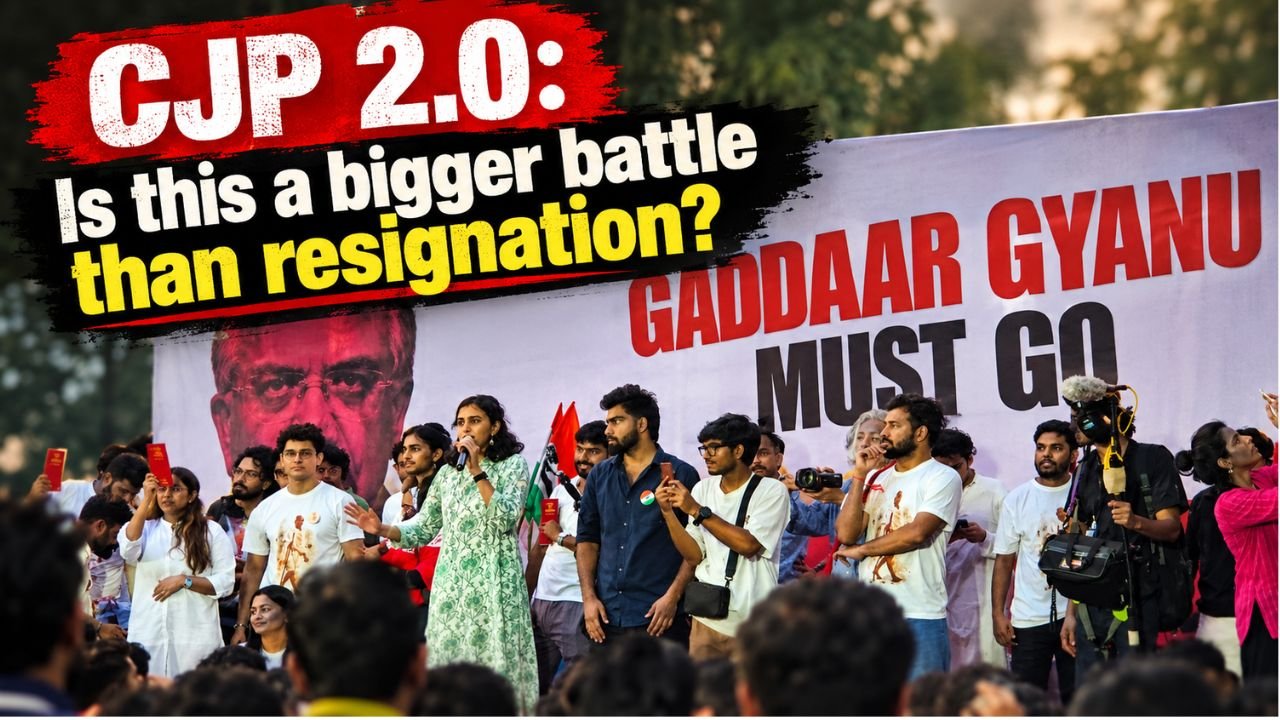
Pradhan stepped down as education minister on July 25, ending 36 days of protests led by the youth-led satirical Cockroach Janta Party (CJP). Slogans chanted and placards displayed during the protests suggested that much of the anger ran deeper than the exam scandal, reflecting wider resentment over the government’s treatment of dissent and its record in office.
You have just read a News Briefing, written by Newsreel Asia’s text editor, Vishal Arora, to cut through the noise and present a single story for the day that matters to you. We encourage you to read the News Briefing each day. Our objective is to help you become not just an informed citizen, but an engaged and responsible one.
On October 12, opposition leaders, MPs, MLAs, student organisations and political workers came together in a massive march against Chief Election Commissioner Gyanesh Kumar, raising serious concerns over the Special Intensive Revision (SIR) of electoral rolls and the alleged mass deletion of voters’ names. The march brought together a broad coalition, including the INDIA bloc, AISA, SFI and other student unions, as part of a wider nationwide mobilisation against the SIR exercise and concerns surrounding electoral integrity.