
As a Woman Journalist, I Felt Safe Amid Thousands of Stranger Men at CJP Protest
July 23, 2026
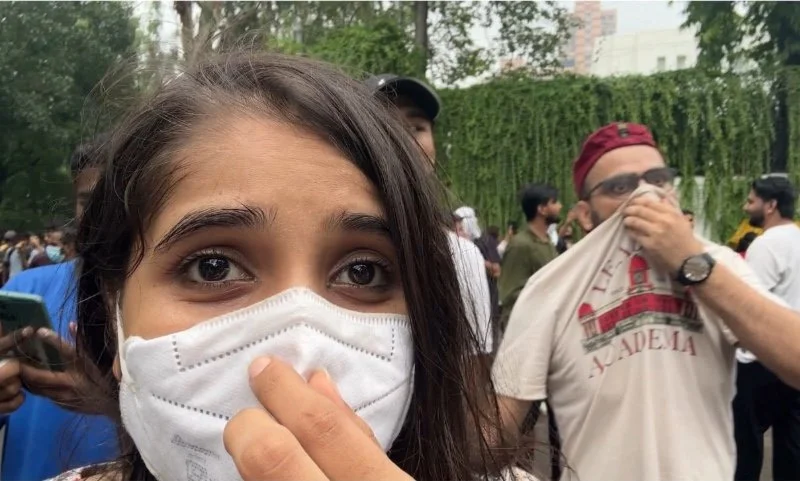
Harshita Rathore at the protest site in Delhi
Thousands of men have been filling the Cockroach Janta Party (CJP) protest ground at Jantar Mantar in Delhi for nearly a month. In the initial days, each time I walked into that crowd I expected to feel unsafe, as I always have as a woman in this city. What I soon found instead, as I covered the ongoing youth movement, is a kind of safety I had almost stopped believing was possible in a public space in the capital city, despite the area being dense with strangers.
As you know, the movement I had come to film began in May 2026, after the Chief Justice of India, Surya Kant, likened unemployed young people to cockroaches and parasites during a Supreme Court hearing. A 30-year-old public relations graduate, Abhijeet Dipke, turned the insult into a question on X, asking what would happen if all the cockroaches came together, and within days a satirical party carrying that name had drawn hundreds of thousands of sign-ups and more than 20 million followers on Instagram.
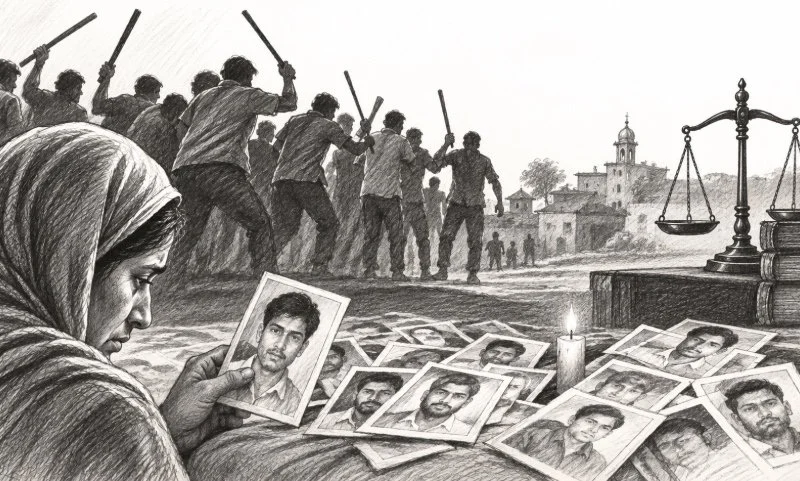
The joke soon hardened into a genuine grievance about jobs, exams and a government that many young Indians feel has stopped listening. And so did the behaviour of Delhi Police and the Rapid Action Force, whose personnel, on July 20, beat young men, women, children and the old, with some alleged incidents of inappropriate touching by those in uniform. More than ten thousand people had tried to march towards Parliament that day, but none of the women protesters is known to have said they felt unsafe because of the crowding.
On July 20, I made my way through hundreds of men to reach the spot where I could shoot my videos. Not once did a hand reach for me. Not once did a gaze linger where it should not. At one point that day I needed to climb onto a platform set too high for me, and I asked a man nearby to help. He held my hand, steadied me up, and let go. He did not turn my raised hand into an opening for conversation. He helped, and he walked on.
Sitting shoulder to shoulder with men I had never met, I felt no discomfort. The Connaught Place area was under a heavy security cordon, with paramilitary personnel on patrol and barricades narrowing the roads. Signal jammers had cut every phone off from the internet, so any payment, for a cab or a water bottle, had to run on trust alone.
That is how I ended up giving the Rapido driver my number. He let me leave, trusting that a stranger would settle the fare once she was home and connected again. When I could finally access the internet that night, I sent him double the amount, wanting to thank him for a kindness I had not expected to receive that day. He called me back.
He told me I had paid too much and offered to return the extra. I told him it was deliberate, that I knew exactly what the ride had cost. Then he said something that has stayed with me since. He said he hesitated to call me, worried I might read the call as a man being desperate rather than a person being decent.
These are small things. They may sound like nothing to some, but they feel enormous to a woman who has spent her days trained to stay alert simply for existing in a body that men in public so often treat as theirs to comment on or touch.
At least at the protest, in a crowd of thousands of men, I am only doing my work. And I am safe. It speaks volumes about this protest and its protesters.
You have just read a News Briefing, written by Newsreel Asia’s text editor, Vishal Arora, to cut through the noise and present a single story for the day that matters to you. We encourage you to read the News Briefing each day. Our objective is to help you become not just an informed citizen, but an engaged and responsible one.
What happened in Mumbai on October 2 may have been only one day of protest, but the issues behind it are unlikely to disappear with the dispersal of the crowd. The protest was centred around concerns over the Election Commission, electoral rolls and the Special Intensive Revision (SIR) exercise, with protesters demanding accountability from Chief Election Commissioner Gyanesh Kumar. At the same time, similar mobilisation has been taking place across different parts of the country, with student groups, Opposition parties and civil society organisations raising concerns over the electoral process. Newsreel Asia spent the day at Mumbai Protest capturing the preparations, the police presence, conversations with protesters, the atmosphere on the streets and how the day unfolded. The speech of Cockroach Janta Party's leaders and sentiment of protestors seemed larger than the concerns regarding the electoral process. Will this lead to something bigger?