
Cockroach Janta Party’s Protest Calls for Crowd Management, Not a Law and Order Confrontation
From the Editor’s Desk
June 5, 2026
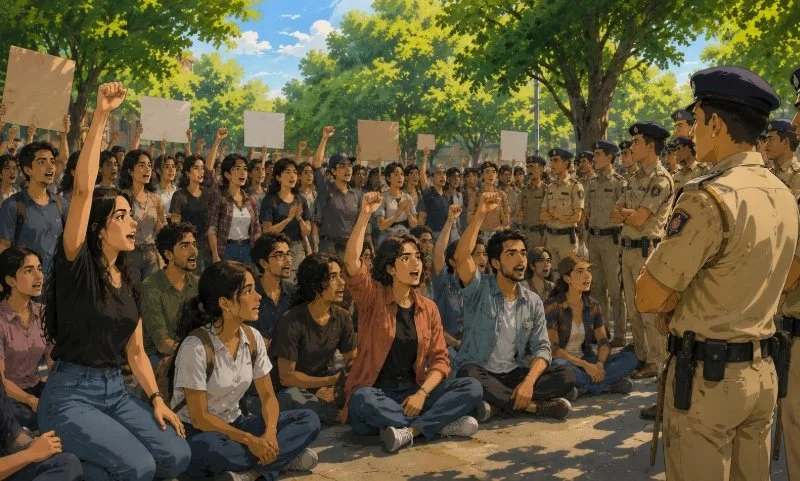
The Cockroach Janta Party (CJP), a youth-driven satirical movement that emerged online last month, is set to hold its first on-ground protest at New Delhi’s Jantar Mantar on June 6, demanding the resignation of Education Minister Dharmendra Pradhan over examination failures that the group says affected more than 10 million (one crore) students. It’s difficult to predict how the government will respond. However, treating the protest as primarily a law and order issue rather than a crowd management exercise could carry significant political and administrative costs.
CJP founder Abhijeet Dipke, returning from Boston, United States, where he completed a master’s degree in public relations, is scheduled to land in Delhi at 8 am on June 6. Dipke has said he and his colleagues, including Ladakh-based activist Sonam Wangchuk, plan to go straight to the Parliament Street police station to seek permission for the protest.
The group has chosen not to follow the standard advance-intimation procedure that Delhi Police requires for protest permits. “We are against the way protests happen in this country. Seeking permission weeks prior to a protest and waiting for approval is not acceptable to us, and we are against this,” India Today quoted CJP’s chief spokesperson Saurav Das as saying. Das added that the group was hopeful that Delhi Police, having taken note of the public announcements, would grant permission on the day.
Dipke, for his part, has publicly asked supporters to stay away from the airport after an unexpectedly large response to his earlier call to receive him there, citing security concerns and the need to act responsibly. He also responded to some videos that circulated on social media showing a person, with no link to the CJP, urging protesters to carry pepper spray and sticks. Dipke disowned these videos in a statement on X, calling them an attempt to derail the movement, and stressed that the CJP would protest only through peaceful and constitutional means.

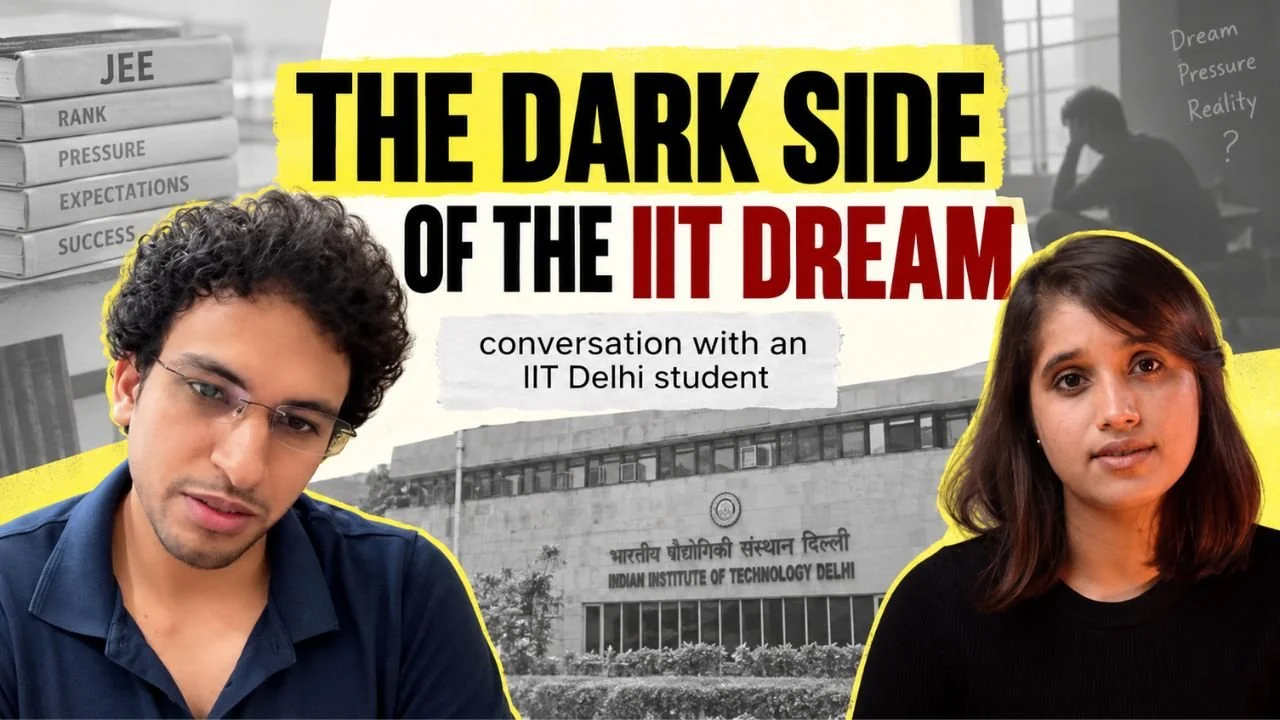
The group, which now calls itself “A political party for the people the system forgot to count” on its website, has attracted over 22.1 million followers Instagram account. And support for the protest has come from a number of public figures.
Actor Atul Kulkarni addressed young people in an open message, writing, “My generation, and a few before and after, have not always lived up to their responsibilities. We have made mistakes and left behind challenges that you now inherit. For that, I ask your pardon.” Wangchuk called June 6 a test of “Love, peace & Flower Power.” Actor Prakash Raj also expressed support for the movement, saying he was trying to reach Delhi on June 6 and urging young supporters to attend.
Given its popularity and support, the protest is expected to attract a big crowd, which is leading to questions about how the government will respond through the police.
The police’s instinct in situations like this tends to run toward control rather than facilitation. That instinct, in this case, would be a clear political and operational mistake. The CJP has done everything that a movement with a legitimacy claim should do. Dipke’s made a public announcement on June 1, a press conference was held at the Constitution Club on June 4, a public statement distanced the group from the violent videos, and a personal appeal was made asking supporters to stay away from a sensitive zone like the airport.
The movement has given Delhi Police advance notice of the protest, even if it has not followed the exact procedure prescribed for seeking permission. This procedural difference should not be used as grounds for confrontation. The focus should remain on the larger responsibility of maintaining public order and protecting the right to peaceful protest.
After all, Jantar Mantar is a designated protest site precisely because the Indian state has accepted, at least in principle, that cities must absorb dissent. The CJP is not proposing to assemble at a monument, a government building, or a restricted zone. It has explicitly distanced itself from any intention to disrupt public life.
The standard that should apply is crowd management, which means barricades to structure the space, adequate water access, medical support, women police personnel for a gathering that will include large numbers of young people including women, videography for evidence preservation, and a direct communication channel between the officer in charge and CJP’s named spokespersons and representatives.
If any individual in the crowd produces a weapon, engages in violence, or incites others, the response should be targeted, based on documented evidence of that individual’s conduct, and proportionate to the specific act. Dispersing or detaining the gathering as a whole because of the conduct of a small number of actors would produce the kind of footage that would do the government considerably more damage than anything Abhijeet Dipke could say from a makeshift stage at Jantar Mantar.
Further, the right to assemble peacefully is guaranteed under Article 19(1)(b) of the Constitution, subject to reasonable restrictions under Article 19(3), and a demand for a minister’s resignation falls well within the scope of legitimate political speech. The government’s position would be considerably stronger if it acknowledged both of those things publicly.
If authorities remain silent about whether the protest is allowed, and leave people uncertain about their plans, the risk of confrontation will increase. Any gathering that is intended to be peaceful can quickly turn tense if police officers and protesters arrive without a clear understanding of what is permitted and how the situation will be managed.
The examination controversies that triggered the CJP protest are sensitive. More than 800,000 (8 lakh) students have signed a petition on the CJP’s website, the group claims, according to Mint. NEET-UG 2026 was cancelled and rescheduled over alleged paper leaks. The CBSE’s re-evaluation process generated its own controversy.
The government needs to understand that it has already faced political criticism over these controversies and the way they were handled. Behind the mobilisation of the protest is public frustration over examination failures and concerns about accountability. Acknowledging that anger openly, at least now, is unlikely to create any significant new political cost.
You have just read a News Briefing, written by Newsreel Asia’s text editor, Vishal Arora, to cut through the noise and present a single story for the day that matters to you. We encourage you to read the News Briefing each day. Our objective is to help you become not just an informed citizen, but an engaged and responsible one.
What happened in Mumbai on October 2 may have been only one day of protest, but the issues behind it are unlikely to disappear with the dispersal of the crowd. The protest was centred around concerns over the Election Commission, electoral rolls and the Special Intensive Revision (SIR) exercise, with protesters demanding accountability from Chief Election Commissioner Gyanesh Kumar. At the same time, similar mobilisation has been taking place across different parts of the country, with student groups, Opposition parties and civil society organisations raising concerns over the electoral process. Newsreel Asia spent the day at Mumbai Protest capturing the preparations, the police presence, conversations with protesters, the atmosphere on the streets and how the day unfolded. The speech of Cockroach Janta Party's leaders and sentiment of protestors seemed larger than the concerns regarding the electoral process. Will this lead to something bigger?