
See Jharkhand Protests From Students’ Perspective, Not Politicians’
By Vishal Arora
August 11, 2026
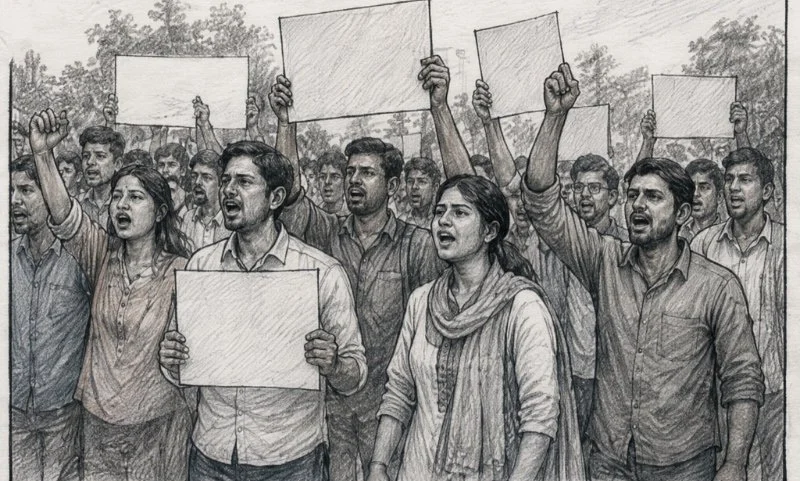
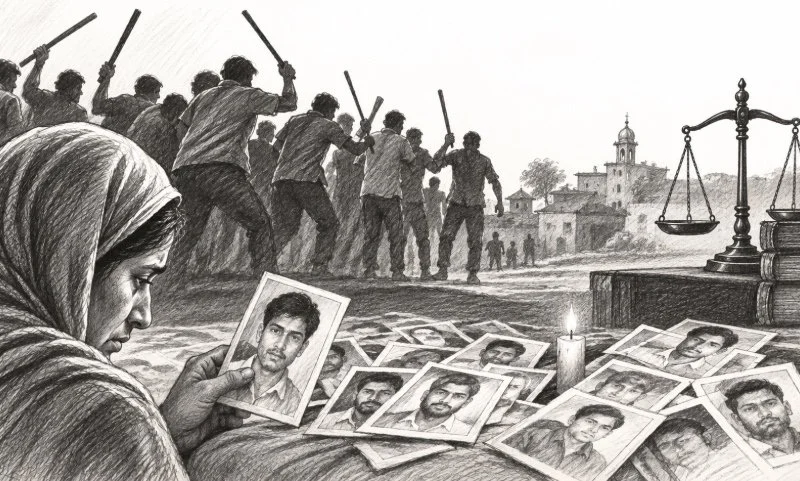
An AI-generated sketch
While government-job aspirants without party affiliations appear to constitute the principal base of the ongoing protests in Ranchi, Jharkhand, the agitation is not organisationally unified. This distinction is important because attempts by political groups to influence the protests risk diverting attention from young people’s genuine concerns about education, recruitment and institutional reform, and from their attempt to raise these concerns democratically.
First, let us briefly look at why the protesters are demonstrating and what they are demanding.
The protests concern alleged irregularities in recruitment examinations conducted by the Jharkhand Public Service Commission (JPSC) and the Jharkhand Staff Selection Commission (JSSC). The state government says it has accepted most of the protesters’ demands, including the cancellation of the 14th JPSC preliminary examination and the JPSC Backlog 2023 and 2025 examinations, which were intended to fill vacancies left unfilled during previous recruitment rounds.
The principal disagreements concern the government’s refusal to cancel the JSSC Combined Graduate Level examination, which it says is under judicial supervision and has already resulted in appointments, and its refusal to transfer the investigation into alleged examination irregularities to the Central Bureau of Investigation (CBI). The government has instead offered an inquiry led by a retired judge, which the protesters have not accepted.
Now, let us look at four groups involved in the protests.
(1) JPSC-JSSC Reforms Manch
The JPSC-JSSC Reforms Manch, a group of government-job aspirants, has been the principal organisation leading the Ranchi protests. It began its protest at Bapu Vatika on July 25, the same day Union Education Minister Dharmendra Pradhan resigned following prolonged Cockroach Janta Party-led protests in and around Delhi’s Jantar Mantar. The Manch moved its protest to Jaipal Singh Munda Stadium for a continuous sit-in on July 29. Its representatives, including student leader Ravindra Paswan, formed a delegation that met the state government on August 7.
(2) JPSC-JSSC Abhyarthi Nyay Manch
Another group, called the JPSC-JSSC Abhyarthi Nyay Manch, developed around Devendra Nath Mahto, who began an indefinite hunger strike at the same stadium on August 2. His fast supported much the same set of demands. Activist Sonam Wangchuk, whose hunger strike played an important role during the Delhi Jantar Mantar agitation, spoke to Mahto during his fast and urged the Jharkhand protesters to continue peacefully.
Mahto’s group, however, maintained a separate identity and sent its own eight-member delegation to meet the government on August 8. Mahto is associated with the Jharkhand Loktantrik Krantikari Morcha and contested the 2024 Jharkhand Assembly election as an independent candidate, although his political background does not make his fast insincere.

(3) AISA
The left-wing All India Students’ Association (AISA), led by Neha Bora, established a separate platform at Jaipal Singh Munda Stadium. Its representatives said the platform should not be treated as a separate protest and that AISA supported the candidates’ principal demands. AISA is affiliated with the Communist Party of India (Marxist-Leninist) Liberation, so it is not politically neutral. Its activities, however, have mainly involved joining the existing agitation and seeking a place within it.
(4) ABVP
The intervention of the right-wing Akhil Bharatiya Vidyarthi Parishad (ABVP) stands out because of its affiliation with the Rashtriya Swayamsevak Sangh and close association with the Bharatiya Janata Party (BJP), Jharkhand’s principal opposition party.
ABVP’s role gained visibility on August 7, when its members organised their own march from Dr Shyama Prasad Mukherjee University towards Chief Minister Hemant Soren’s residence. Police stopped them near Sidho Kanho Park, about 500 metres from the residence. Police said some participants tried to cross the barricades and scuffled with officers, after which eight to 10 ABVP members were detained.
CJP’s Role
CJP founder Abhijeet Dipke publicly supported the Ranchi protests on August 2, and a CJP delegation later visited the protest site. The CJP movement did not start the Ranchi protests, but it provided an example that Ranchi’s candidates could follow. Its success demonstrated that sustained student mobilisation could force a government to concede. The CJP’s support also connected a state recruitment dispute with national concerns about paper leaks, examination integrity, unemployment and government accountability.
Key Developments
The JPSC-JSSC Reforms Manch has accused the state government, led by a coalition of the Jharkhand Mukti Morcha (JMM) and the Congress, of trying to divide the protesters by allowing several organisations to present separate demands. The government has held separate discussions with the JPSC-JSSC Reforms Manch, Mahto’s group, the Congress-affiliated National Students’ Union of India (NSUI), the JMM-linked Jharkhand Chhatra Morcha and the Adivasi Chhatra Sangh. The government said it was listening to all interested groups.
On August 10, the JPSC-JSSC Reforms Manch led a large march towards the Jharkhand Assembly after negotiations with the government failed to resolve the remaining disputes. Mahto and members of his group also joined the march.
Thousands marched from the old Assembly area towards the new Assembly, and some participants reportedly crossed several barricades. Police used water cannon, tear gas and batons. Police said stones were thrown and several officers were injured. Protesters accused the police of beating people who had been sitting peacefully.
Reforms Manch representative Paswan told reporters that “a few anti-social elements” were trying to take the protest in another direction, adding that the Manch’s volunteers would examine videos and CCTV footage to identify them.
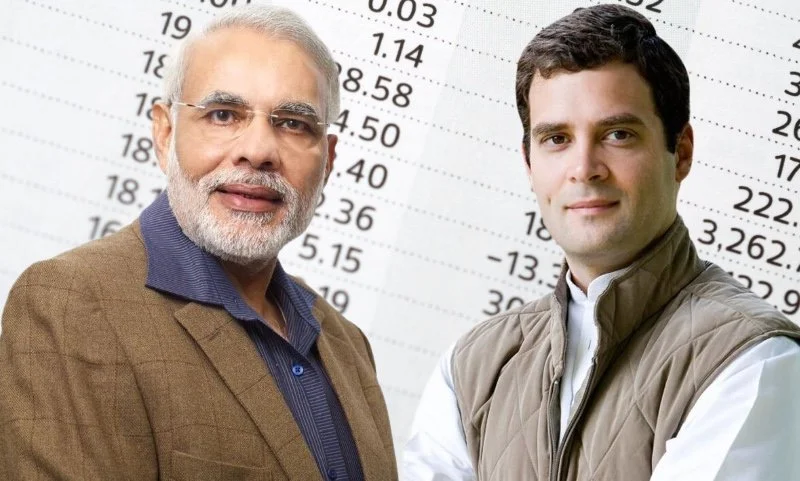
Rahul Gandhi, the Leader of the Opposition in the Lok Sabha and a senior Congress leader, said the use of force against protesting students in Jharkhand was wrong and that students had a right to protest peacefully. Gandhi, whose party is part of the state’s JMM-led governing coalition, urged the Jharkhand government to listen to the students and resolve their grievances through dialogue.
On the evening of August 10, the BJP called for a statewide bandh the following day in protest against the police action during the candidates’ Assembly march. On August 11, ABVP organised another march from the old Assembly area towards the new Jharkhand Assembly. Police detained about 110 members near the starting point, according to Ranchi City Superintendent of Police Paras Rana. A clash followed after protesters prevented the bus carrying those detained from moving.

ABVP May Have the Weakest Claim
The CJP-led movement placed responsibility on the BJP-led central government and forced the resignation of one of its ministers. It also showed that young people could organise outside established political parties and secure a major concession. Such independent mobilisation can weaken a party’s claim to represent dissatisfied students.
By supporting the Ranchi candidates, the BJP may be seeking to present itself as a defender of students rather than as the party leading the government held responsible during the CJP agitation. ABVP’s marches arguably help the BJP associate itself publicly with anger over examination failures and direct that anger towards Hemant Soren’s government.
ABVP’s separate marches suggest that it is not content merely to support decisions made by the JPSC-JSSC Reforms Manch. It appears to be producing images of ABVP members confronting the state government and being detained for a student cause. These images can help the BJP argue that it stands with young people in Jharkhand, even though the BJP-led central government was the target of similar anger during the CJP protests.
ABVP may also be seeking to prevent the CJP, the JPSC-JSSC Reforms Manch or Mahto’s JLKM from becoming the principal political beneficiary of the movement. Student protests generate public attention, organisational networks and leaders with credibility among young people. A party-linked organisation that establishes a visible presence can try to gain some of that credibility, recruit supporters and influence the movement’s language and future direction.
In contrast, government-job aspirants without party affiliations appear to provide most of the movement’s participants and much of its public legitimacy. The involvement of political organisations should not be allowed to obscure the protesters’ demands or turn their movement into a contest among parties.
You have just read a News Briefing, written to cut through the noise and present a single story for the day that matters to you. We encourage you to read the News Briefing each day. Our objective is to help you become not just an informed citizen, but an engaged and responsible one.
What happened in Mumbai on October 2 may have been only one day of protest, but the issues behind it are unlikely to disappear with the dispersal of the crowd. The protest was centred around concerns over the Election Commission, electoral rolls and the Special Intensive Revision (SIR) exercise, with protesters demanding accountability from Chief Election Commissioner Gyanesh Kumar. At the same time, similar mobilisation has been taking place across different parts of the country, with student groups, Opposition parties and civil society organisations raising concerns over the electoral process. Newsreel Asia spent the day at Mumbai Protest capturing the preparations, the police presence, conversations with protesters, the atmosphere on the streets and how the day unfolded. The speech of Cockroach Janta Party's leaders and sentiment of protestors seemed larger than the concerns regarding the electoral process. Will this lead to something bigger?