
How Political Ego Made the CJP Protests a Crisis for the Government
By Vishal Arora
July 29, 2026
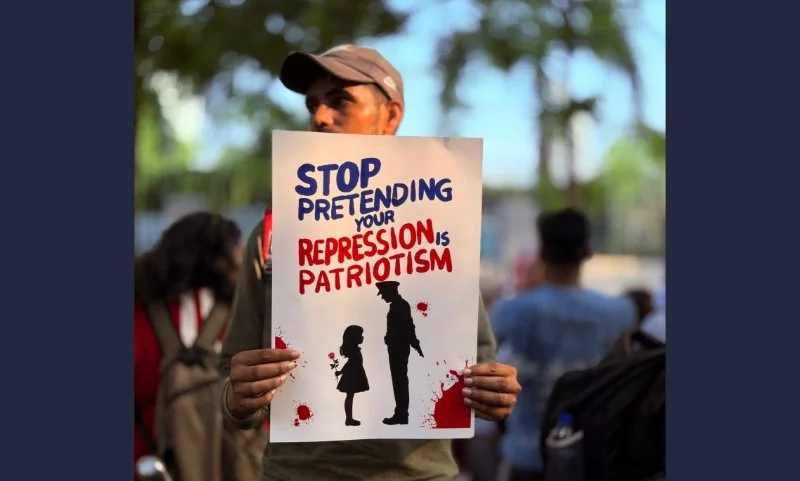
The government could have prevented the Cockroach Janta Party (CJP) protests from becoming a national political crisis for itself. It had several opportunities to do so but missed each one, apparently because key decision-makers treated compromise as weakness and dissent as a challenge to their authority. Political ego ended up putting at risk not only the government’s standing, but also public confidence in institutions acting on its behalf.
The original issue was serious, but not politically unmanageable. The NEET-UG paper leak affected more than two million candidates. It sent an unmistakable message to honest students, that hard work meant little if others could buy access to the question paper. The resulting anger was justified and predictable. But after 12 years in power, the government appeared to have come to see itself as too strong for such public anger to pose a serious political threat.
Accountability Treated as Surrender
Any government with basic political wisdom, and one that cared about the legitimacy of its actions, would have responded quickly. It could have admitted the scale of the failure, met student representatives, ordered an independent investigation and explained how responsibility would be fixed. It should also have considered Education Minister Dharmendra Pradhan’s resignation on its political merits.
Instead, the government acted as though even discussing Pradhan’s resignation would amount to surrender, although many citizens saw it simply as a matter of political accountability. Its failure to offer a meaningful response gave students and other young people the impression that it was indifferent to their concerns.
The First Warning Was Misread
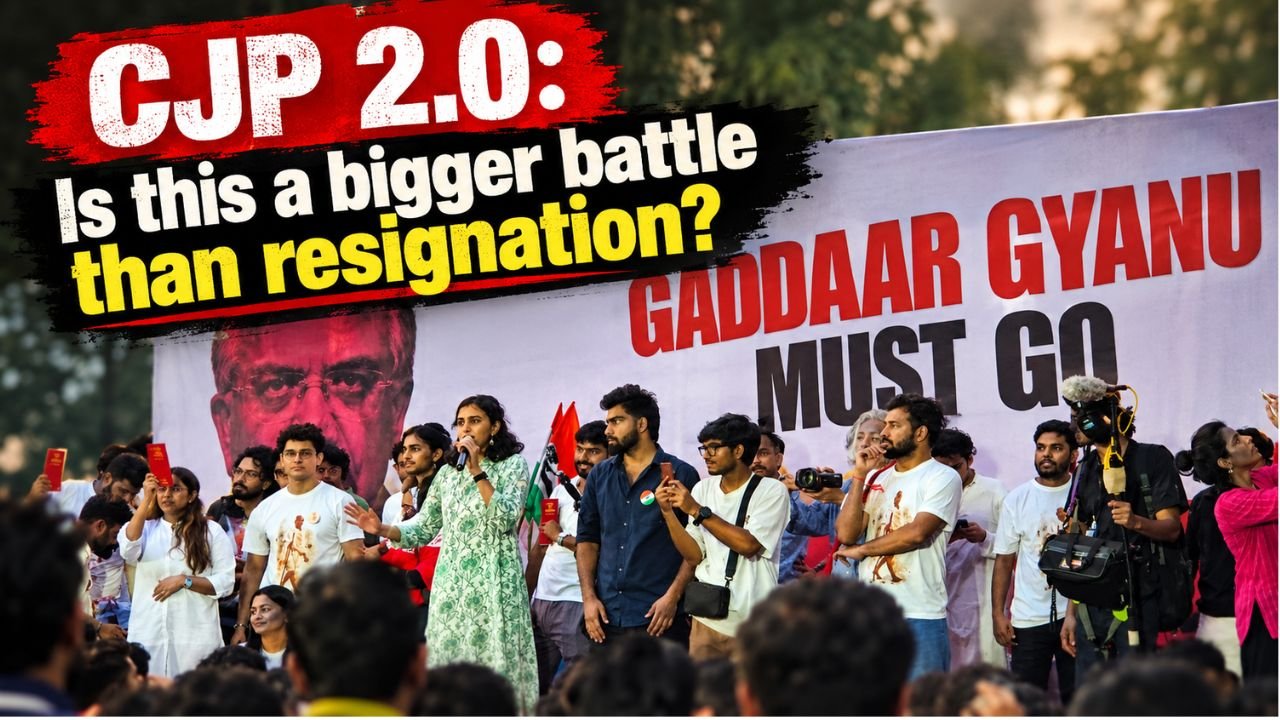
The government also appears to have underestimated the CJP because its first demonstration was relatively small. Fewer than 2,000 people reportedly attended the protest at Jantar Mantar in Delhi on June 6. But the fact that so many people turned up in extreme heat in response to an online call from a new satirical party led by Abhijeet Dipke, a name most of them had probably never heard before, should have warned the government about the depth of anger among young people.
The government seems to have assumed that the CJP’s enormous online response would not reach the streets, particularly in a political environment in which large protests had repeatedly faced restrictions and harsh police action. In any case, the first gathering was not a reliable measure of the movement’s potential; the more important question was how many people recognised the grievance as their own.
The CJP had touched something much larger than the NEET leak. Young people across India had spent years dealing with cancelled examinations, delayed recruitment, paper leaks and allegations of corruption. Many had moved from one coaching centre to another without finding secure employment. Their families had invested money and hope in a system that repeatedly failed them. NEET became a symbol of these shared experiences. It was the trigger, not the full grievance.
The CJP gave that anger a memorable identity, “cockroaches,” adopted after Chief Justice of India Surya Kant allegedly compared a section of unemployed young people to “cockroaches.” The Chief Justice later said his remarks had been misquoted and were directed at people using fake or bogus degrees, not Indian youth generally. But the word had already been reclaimed by young people who felt dismissed by powerful institutions.
The humour helped the movement rise above party politics. The protesters could not easily be reduced to supporters of one opposition party, religion, caste or ideology. Medical candidates, unemployed graduates, applicants for teaching and government jobs, young professionals and their families could all recognise something of their own experience in the protest.
The government was therefore unable to use familiar political labels to discredit the protests.
The government also appears to have placed too much faith in the limited television coverage given to the protests by media organisations widely regarded as supportive of it. The CJP, meanwhile, had reportedly gained more than 25 million Instagram followers within weeks. Its videos were reaching hundreds of millions of viewers, and more than 800,000 people had signed an online petition calling for Pradhan’s removal. The protesters did not need mainstream media to tell people where to gather or what had happened. They had built their own distribution network on Instagram.
NEET Was Only the Trigger
Activist Sonam Wangchuk, who had been detained for 170 days under the National Security Act and released only about three months earlier, joined the protest and began an indefinite hunger strike. This should have told the government that fear was no longer working. The public appears to have read the message clearly, as the CJP movement grew rapidly from that point.
The government still had time to change course, but it did not. Instead, on July 18, after three weeks of Wangchuk’s hunger strike, police took him to hospital against his wishes, just two days before the CJP’s planned march to Parliament. His support had given the protest greater public credibility, while his hunger strike had raised the human cost of continued delay. His removal angered the public, and the already expanding movement swelled on July 20.
On the morning of July 20, before the scheduled march to Parliament, the government appeared, briefly, to show some political maturity by reportedly reaching out to the CJP leadership and offering talks. The CJP soon alleged, however, that the government representatives had merely wasted its leaders’ time. The crowd then began its march towards Parliament.
By then, many in the crowd had no connection with the CJP or any established student or political organisation. The movement had grown far larger than the group that had started it.
The Point at Which Fear Stopped Working
Delhi Police, which had denied permission for the march, sought to stop the protesters from approaching Parliament. The state had the right to protect restricted areas and respond to any immediate violence. But accounts from protesters and journalists suggested that the conduct of Delhi Police and the Rapid Action Force (RAF) amounted to much more than crowd control. They alleged punitive beatings, attacks on women and journalists, arbitrary detentions, the use of stones and sticks fitted with nails, personnel operating without visible identification, and failures to provide prompt assistance to injured people. Protesters also alleged the use of pellet guns. Delhi Police denied using them, although RAF records reported by the media later showed that the force had fired non-lethal plastic pellets.
Apparently to the government’s surprise, but as a predictable result of the violent police crackdown, injured protesters returned to Jantar Mantar. Demonstrations spread rapidly, with families now bringing their children to the protests. Opposition parties joined the protests and raised the crackdown in Parliament, while images and videos of the police action went viral on social media, prompting nationwide criticism. The crackdown also appeared to confirm what protesters had been saying from the beginning, that powerful institutions did not merely fail young people; they treated them with contempt if they complained.
By this stage, many protesters were no longer coming simply because of the CJP, but to express their own anger and show solidarity with others. They appeared to be venting frustration with the overall functioning of the government and its handling of dissent, not just the education system. Their slogans and placards increasingly targeted Prime Minister Narendra Modi rather than Pradhan. Retaining Pradhan by then had become politically untenable.
The Crackdown That Enlarged the Crisis
Pradhan resigned on July 25. The government also accepted demands concerning examination reform, compensation and the withdrawal of cases against protesters.
The crisis began to recede after the government did what it had resisted for weeks. However, the CJP has now accused the government of breaching its assurance that cases against protesters would be withdrawn and no punitive action taken, saying students continue to face arrests, detention, police summons and alleged harassment in several states. It has warned that it will revive its nationwide agitation unless all detained protesters are released, FIRs withdrawn and the government ensures that the Supreme Court’s interim order is not used to target students. The Court allowed investigations into existing FIRs to continue but ordered the release of detained student protesters and barred coercive action against those with no previous criminal record.
One wonders whether the government now realises that delaying the concession did not demonstrate strength. It made the concession more expensive. An early resignation could have been presented as accountability. A resignation after weeks of protests and police violence looked like a retreat forced upon the government. Its refusal to appear weak produced precisely that appearance.
One also wonders whether anyone was, or is, there to offer sound political advice to those at the helm, or to tell them that the cost of their poor decisions would be borne not only by them, but also by their party, organisations associated with it, its supporters and state institutions.
You have just read a News Briefing, written by Newsreel Asia’s text editor, Vishal Arora, to cut through the noise and present a single story for the day that matters to you. We encourage you to read the News Briefing each day. Our objective is to help you become not just an informed citizen, but an engaged and responsible one.
On October 12, opposition leaders, MPs, MLAs, student organisations and political workers came together in a massive march against Chief Election Commissioner Gyanesh Kumar, raising serious concerns over the Special Intensive Revision (SIR) of electoral rolls and the alleged mass deletion of voters’ names. The march brought together a broad coalition, including the INDIA bloc, AISA, SFI and other student unions, as part of a wider nationwide mobilisation against the SIR exercise and concerns surrounding electoral integrity.