
Obesity Rising Alongside Malnutrition in India’s Poor Urban Communities
From the Editor’s Desk
July 10, 2026

Obesity could be emerging alongside persistent undernutrition among children in India’s poor urban communities, suggests a long-running study of one such neighbourhood, which found that a rising number of children were overweight or obese by age nine while a larger number were dangerously underweight.
Most of the children who were part of the study stayed at a normal weight through age five, at 86.6%, according to a paper published in The Lancet Regional Health - Southeast Asia. By age seven, 26.3% had turned thin and 5.2% were overweight or obese. By age nine, thinness had fallen to 21.6% while overweight or obesity had risen to 14.6%.
The authors say the “double burden,” meaning undernutrition and obesity in the same population, became clear only after age five and worsened by age nine, and that no earlier work in India has used the Malnutrition and Enteric Disease cohort, known as MAL-ED, to pin down when it begins in mid-childhood.
The study tracked 251 children living in the urban slums of Vellore, Tamil Nadu. Researchers recruited them between 2010 and 2012 and measured them at age two and again at three, four, five, seven and nine. Of the children enrolled at birth, 205, or 82%, were still in the study at age nine. Most of those who left did so because their families moved away, says the study.
The double burden is common in low- and middle-income countries and has become a growing worry in India. In poor communities, cheap high-calorie processed food and less physical activity now add obesity on top of the undernutrition that poverty already causes.


Because a short child can score a high BMI without carrying extra fat, the researchers checked whether the obesity was real. At age nine, the children with a high BMI were not the stunted ones, so the extra weight was fat, not a false reading from short height, the study confirmed.
About 45% of the children were stunted, meaning too short for their age, by age two, according to the study, which said low birth weight, under 2.5 kilograms, affected 17% of the children.
A child’s weight at birth had effects years later. Children born underweight were thin more often at most ages, at 41.4% by age seven and 40.6% by age nine. Among children born at a normal weight, 21.1% were thin by age seven and 17.3% by age nine, and this group also had the most obesity in the later years.
A mother’s weight had effects on her child’s growth too. Children of thinner mothers were more likely to be thin themselves. For every one point higher a mother’s BMI was, her child’s chance of being thin fell, by about 12% at age five and about 21% at age nine, once birth weight and sex were taken into account.
However, a high maternal weight was not linked to obesity in the children between ages five and nine, which the authors say differs from what other studies have found.

Babies of underweight mothers weighed less at birth, a mean of 2.77 kilograms against 3.02 kilograms for babies of obese mothers.
The authors call for treatment aimed at specific ages and for better maternal health to lower the risk in vulnerable children.
Across India, stunting has been falling for years. National Family Health Survey data show it dropped from 48% to 38% between 2006 and 2016, while childhood overweight and obesity stayed at about 7% to 8%.
In its 2025 Child Nutrition Report, the United Nations Children's Fund (UNICEF) estimated that 20% of the world's children aged five to 19 are overweight or obese. Among the younger five-to-nine group, 147 million were overweight, the most of any age band. That same year, for the first time, more children and adolescents worldwide were obese than underweight, at 9.4% against 9.2%.
You have just read a News Briefing, written by Newsreel Asia’s text editor, Vishal Arora, to cut through the noise and present a single story for the day that matters to you. We encourage you to read the News Briefing each day. Our objective is to help you become not just an informed citizen, but an engaged and responsible one.

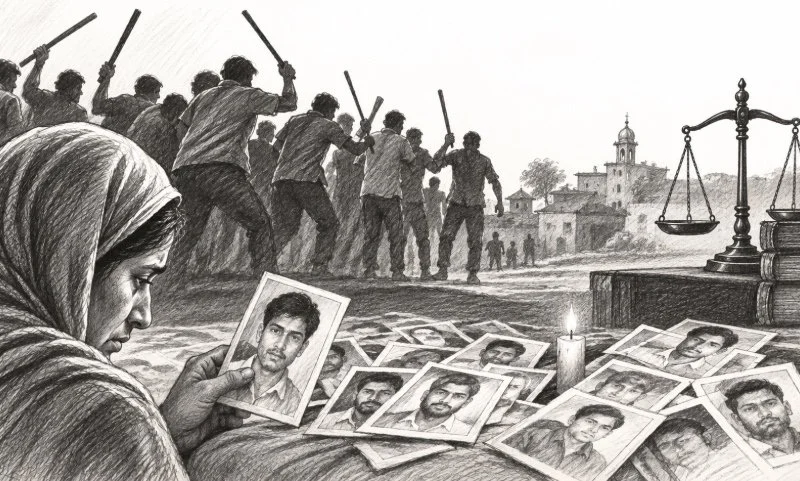

On October 12, opposition leaders, MPs, MLAs, student organisations and political workers came together in a massive march against Chief Election Commissioner Gyanesh Kumar, raising serious concerns over the Special Intensive Revision (SIR) of electoral rolls and the alleged mass deletion of voters’ names. The march brought together a broad coalition, including the INDIA bloc, AISA, SFI and other student unions, as part of a wider nationwide mobilisation against the SIR exercise and concerns surrounding electoral integrity.