
By Asad Ashraf
July 17, 2026
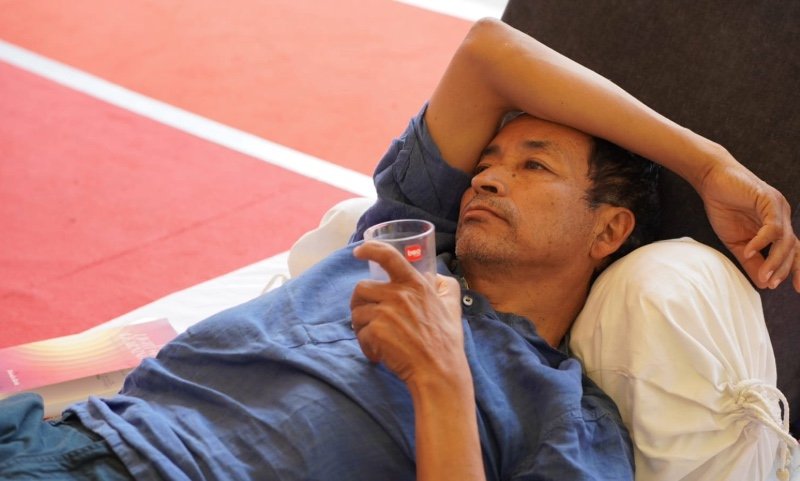
Sonam Wangchuk / By Surabhi Singh, Newsreel Asia
The Cockroach Janta Party’s (CJP) protest at Jantar Mantar in Delhi has held together for 19 days because “cockroach” means something different to everyone under the tarpaulins, I found when I visited the site on July 16. My biggest concern now is that what could end this diverse coalition is the deteriorating condition of the fasting man on the mattress on the stage. Let me explain how.
The heat at Jantar Mantar on Thursday afternoon was past bearable. The thermometer said 42 degrees. Under the shamiana nearest the main stage, volunteers passed out steel tumblers of ORS to anyone who looked unsteady, which by mid-afternoon was most of the camp. On a mattress raised slightly above the crowd, activist Sonam Wangchuk lay on his back, eyes closed, a drip taped to the back of one hand. It was the 19th day he had taken nothing but water and, occasionally, a spoon of glucose solution that his doctors insisted on and that he, by most accounts, resisted.
A few metres off, Neha, Aameen and Manish, students from the All India Students’ Association (AISA), lay under a tarpaulin. They had been fasting since June 28, alongside Wangchuk at the indefinite protest led by CJP founder Abhijeet Dipke to demand the resignation of Education Minister Dharmendra Pradhan over the NEET-UG paper leak and the failure of the National Testing Agency, which conducts the exam, to prevent it.
Neha is a JNU student activist and, by the account of the doctor monitoring her remotely, the most fragile of the three. “Neha can collapse anytime, might also go into coma,” Dr Anjali Chhabria, a Mumbai-based psychiatrist issuing periodic health bulletins on the fasting students, told Newsreel Asia. She spoke of abnormal blood sugar readings and ketone levels high enough that a routine infection could overwhelm the camp’s makeshift medical tent.
This is what 19 days looked like from the ground. Pradhan had not resigned. The National Testing Agency had not been reformed or dissolved. No serving minister had walked the short distance from Parliament to Jantar Mantar to sit across from Wangchuk or from Dipke. What had changed over these 19 days was the composition of the crowd, and the range of reasons each person in it gave for being there.
It is worth remembering how small the original spark was. On 15 May, Chief Justice Surya Kant, addressing a matter unconnected to student politics, allegedly referred to certain unemployed young people as cockroaches and parasites of society. Within a day, Dipke, a political communications strategist who had previously worked for the Aam Aadmi Party (AAP), posted a Google Form and an Instagram graphic with the caption “Main Bhi Cockroach (I Too Am a Cockroach).” The account gained half a million followers within a day and 10 million within four. By June 6, the first in-person CJP protest was held at Jantar Mantar, with several hundred students in cockroach masks, carrying exam guides and national flags in the same hand.
The sit-in began on June 20, when CJP declined to leave once its permitted hours expired and Delhi Police, after an initial attempt to disperse the crowd, withdrew. Eight days later, Wangchuk began his fast. That sequence has produced today’s pavement, a meme that became a protest, a protest that became an occupation, an occupation that became, on June 28, a vigil for one man’s health.
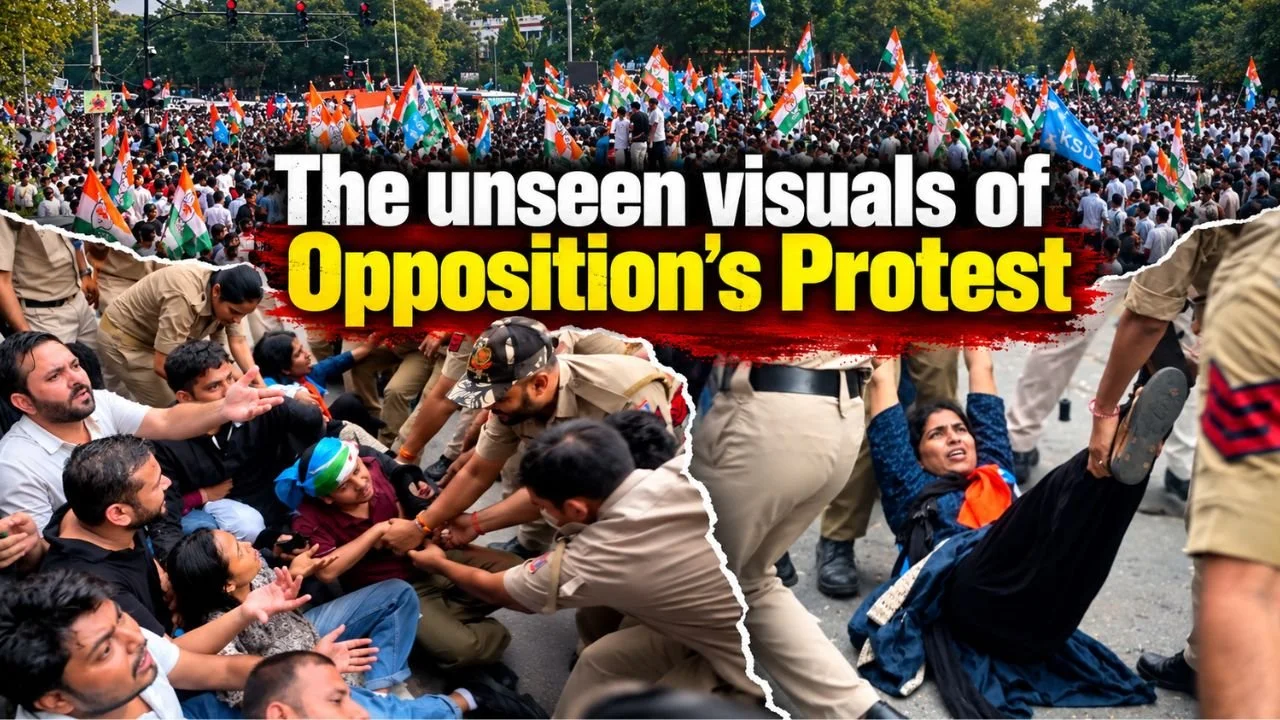
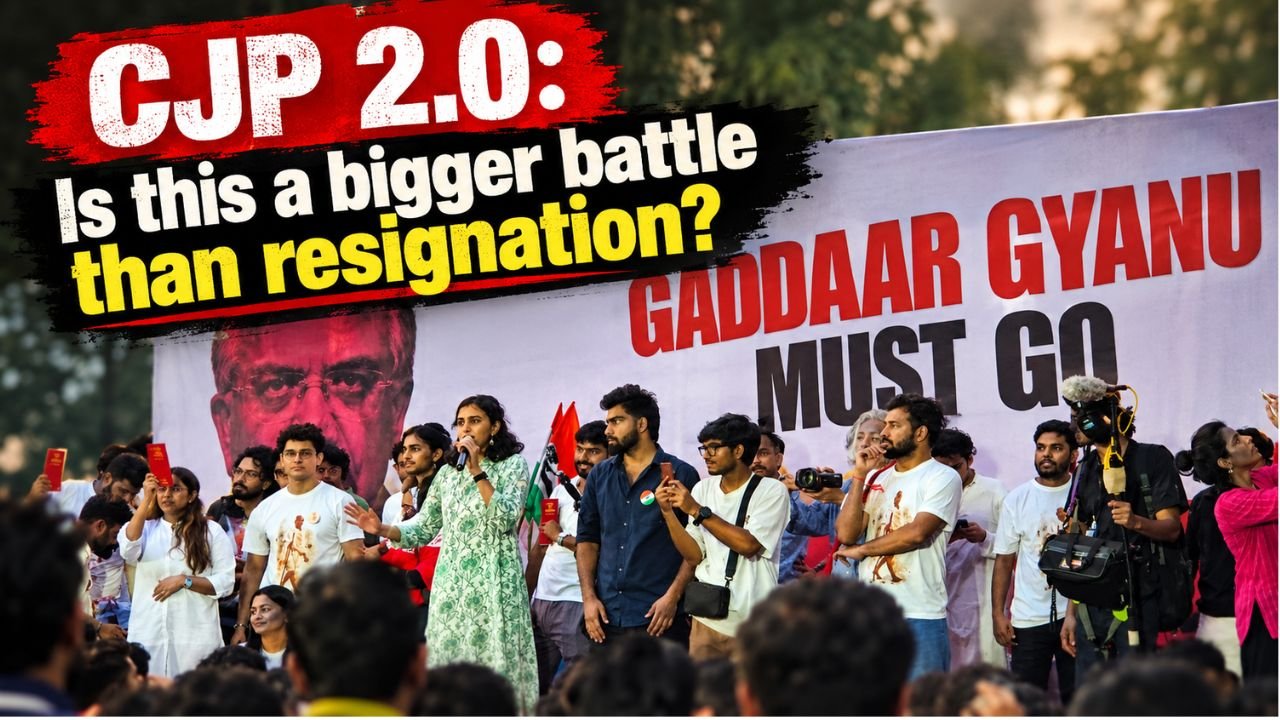
Ask CJP’s organisers what 19 days have achieved, and they point to growing public attention rather than any government concession. Rovin, a master’s student and AISA leader coordinating the contingent’s hunger strike, called it a slow accumulation of public attention. “Despite no response from the government, there has been consciousness among people, and that is visible here,” he said. “People from all walks of life are coming. We are looking forward to the Parliament march on July 20.” He added that AISA had begun with six students on hunger strike and now has three. He did not say what happened to the other three.
Vijay Reddy, CJP’s media coordinator, declined to set a boundary on the protest’s scope. “At the moment this protest is about education,” he said, “but it will not be restricted to it. CJP will evolve with time once accountability is fixed on this question.”
The fast had already hospitalised one participant and was in its 19th day. The spokesperson was saying CJP did not yet know what it would demand once the education demands were met.
Dipke, in remarks to The Associated Press, was more direct about where he places responsibility for Wangchuk’s condition. Asked about the government's silence, he said officials had left Wangchuk to die. He also said his team tried repeatedly to persuade Wangchuk to end the fast and that Wangchuk refused, telling them to direct their concern at the government’s unwillingness to talk rather than at his own health. That places the burden of Wangchuk’s deterioration on the Centre’s refusal to engage, and the government has not answered it.
Twenty metres from the main stage, Students’ Federation of India (SFI) activists had built “Kranti Corner (Revolution Corner),” running cultural events, poetry readings and speeches built around Left movement politics. Sant Kumar, an SFI activist from the Jamia Millia Islamia university, read the paper-leak scandal as something larger than the leak. “We are looking at the paper leak not as an isolated incident but a structural problem of NTA outsourcing its work to private companies,” he said. “We also question the centralisation of exams. Today we are on hunger strike in solidarity with Sonam Wangchuk and other protesters.” For Kumar and Kranti Corner, NEET was an entry point into an older argument about privatisation, and their fast carried that argument as much as it carried Pradhan’s resignation.
Abhigyan, another AISA activist, was the one person at the camp who named the coalition's internal tension without being asked about it. “Yes, there are segments within the protesters at Jantar Mantar, and we have different visions of the world and different understandings of politics,” he said. “But we are together on the question of democratic accountability.”
His sentence is worth sitting with. Abhigyan made no claim to ideological unity. He named the single point of agreement that let everything else stay unresolved.
The range widened the longer I stayed. A representative from PhysicsWallah, the education technology company, arrived to talk about transparency in examinations and called Wangchuk “the Bhagat Singh of today.” Only a protest this loose could put an anti-colonial martyr’s name on a corporate transparency pitch.
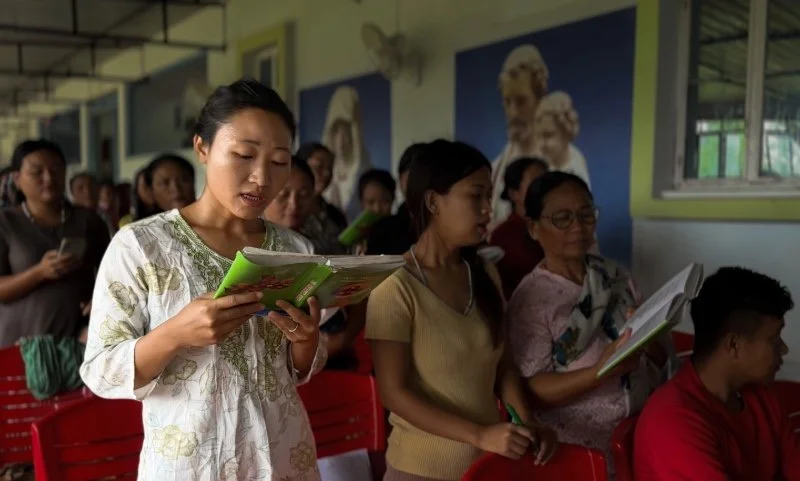
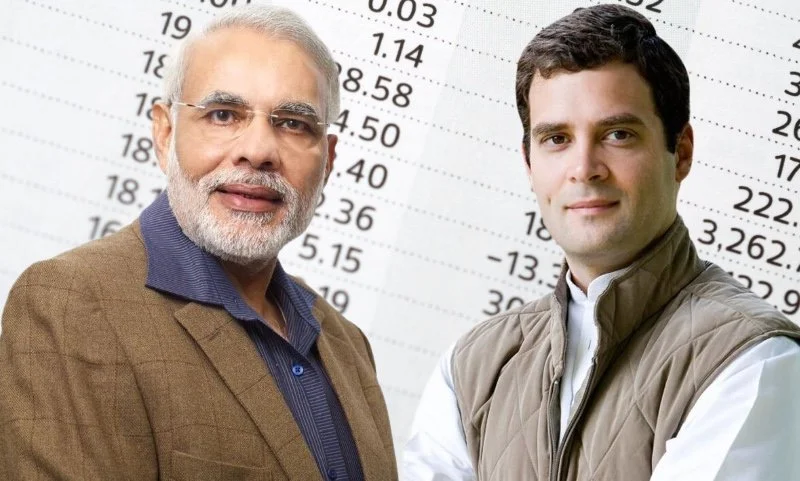
Then there was Anoop, a former schoolteacher from Sangam Vihar area in Delhi, whose presence complicated any assumption that this crowd amounted to an anti-Modi front in disguise. “I am happy with Modi,” he told Newsreel Asia, “but unhappy with the way the education system is going in the country.” He came to Jantar Mantar because of Pradhan, specifically, and he saw no contradiction in saying so on the record, in the middle of a camp where the loudest voices were demanding the minister’s resignation.
Yogendra Yadav, the psephologist-turned-activist who co-founded the Aam Aadmi Party before leaving it and now leads Swaraj India, located the protest’s achievement somewhere else again. “What this protest has done is broken the barriers the government had put on civil rights and dissent,” he said. “That is the protest’s biggest achievement so far.”
Where AISA’s Rovin measured success in public consciousness and Kumar measured it in structural critique, Yadav measured it in precedent, proof that a sustained, unauthorised occupation of a central Delhi protest site could survive 19 days without being cleared.
None of this adds up to one coherent movement, and it does not need to. The Argentine theorist Ernesto Laclau argued that movements rarely form because everyone in them wants the same thing. They form around what he called a chain of equivalence. A tenant’s rent grievance, a worker’s pay grievance and a student’s exam grievance have nothing to do with one another on their own terms. What links them is that the same authority has refused all three.
For that chain to work as a political force, Laclau argued, it needs a word loose enough to stand for every demand in it without naming any one of them. And he called it an empty signifier. The looser the word, the more demands it can hold, and the stronger the coalition becomes. Once someone pins the word down to one meaning, the coalition splits along the divisions the word had been hiding.
Cockroach fits that description closely. A term that began as an insult aimed at unemployed youth has become available to a JNU activist fasting for institutional reform, an SFI organiser fasting against privatisation, a corporate transparency campaigner, and a retired teacher who still supports the prime minister he is implicitly protesting against. None of them needs to agree with the others about what the word means. Abhigyan said this when he spoke of different visions of the world held together by one shared question of accountability. That is a chain of equivalence, and he described it whether or not he has ever read the theory.
The chain also depends on an adversary, someone against whom these unconnected grievances can be read as symptoms of one failure. Reddy declined to name that adversary when asked what CJP becomes once its education demands are settled. Dipke, in his AP remarks, named it more plainly, a government that has, in his words, left a man to die.
Yadav named it as a state that suppresses civic space generally. When you read media commentary aligned with the Hindu right, which has tracked the protest since early July, you find the adversary named differently. The threat is the coalition itself, and Wangchuk’s Ladakh history is offered as evidence for it. Laclau’s framework expects this kind of disagreement. An empty signifier does not decide which of these meanings is correct. It holds all of them at once, for as long as none is forced to become the definitive one.
The chain has held because the demand has stayed narrow, one minister, one agency, one exam scandal, and only one fasting man on the stage. However, how the fast ends is not known, and the outcome will not stay that narrow. Three AISA students who also remain on strike have already been warned about a possible coma.
The chain holds as long as the loose word stays loose. Pin it to a single meaning, and one demand is left standing for the whole movement. Everyone who signed up for a different meaning has no reason to stay. One hopes the fast never ends in a collapse. If it does, cockroach may begin to mean one thing, what the government did to that person, and it may stop meaning everything else it now means to everyone under the tarpaulins.
A collapse would ask all of them the same question. AISA, SFI, Yadav and Anoop came to Jantar Mantar for their own reasons, and none of those reasons covers a person collapsing on a mattress. Each of them would have to say who was to blame, and they would be saying it in public, at the same time, about the same person. Some would blame the government. Some would blame the exam system. Some would blame the fast itself. That is the point at which “we have different visions of the world” stops working as an answer, and a coalition that has held for 19 days on a word nobody defined will have to say what it stands for.
You have just read a News Briefing, written by Newsreel Asia’s text editor, Vishal Arora, to cut through the noise and present a single story for the day that matters to you. We encourage you to read the News Briefing each day. Our objective is to help you become not just an informed citizen, but an engaged and responsible one.
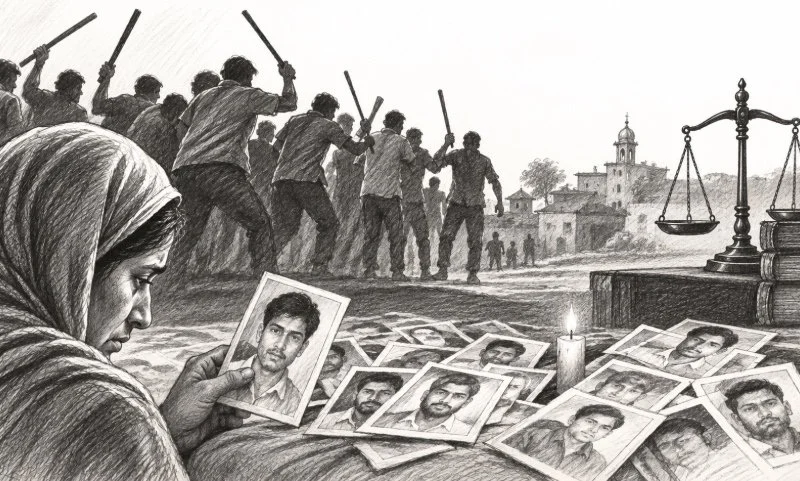
Hundreds of protesters gathered at Bangla Sahib in Delhi at 1 PM on October 23 for a protest called by People Against SIR, a collective of over 100 organisations mobilising against the Election Commission of India’s Special Intensive Revision (SIR) of electoral rolls across the country. Along with detentions and use of force, security personnels are using another tactic - blowing whistles to silence the voices.