
‘Satluj’ Ban Erases the Line BJP Drew Against Congress in Punjab
By Asad Ashraf
July 9, 2026

Screenshot from Zee5
The Bharatiya Janata Party (BJP) has spent years accusing the Congress party of grave human rights failures in Punjab during the militancy period. Every reference to the killings, disappearances, and unmarked cremations of the late 1980s and early 1990s has come from BJP platforms as an indictment of Congress rule. The party has positioned itself as the one willing to name events that Congress preferred to leave unspoken. This week’s removal of the film “Satluj” from ZEE5 has undone that position.
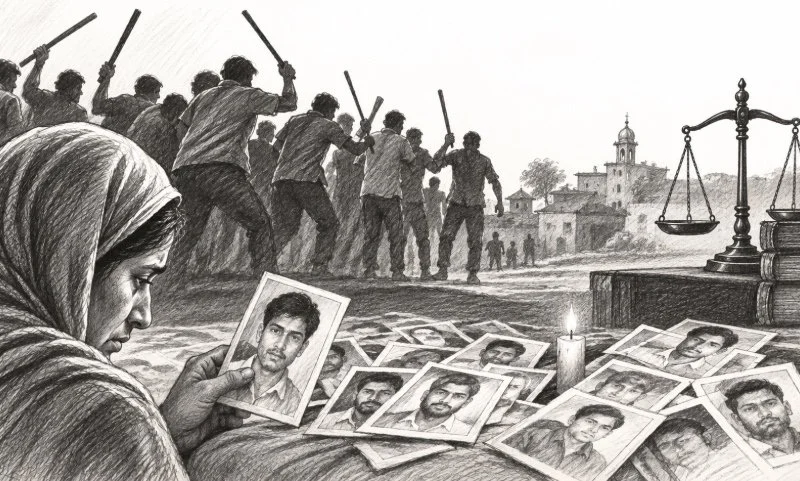
Diljit Dosanjh plays Jaswant Singh Khalra in Honey Trehan’s film, and the story it tells is one BJP itself has invoked for decades. Khalra headed the human rights wing of Punjab’s Sikh political party Akali Dal. He spent years documenting the secret cremation of thousands of unidentified bodies at cremation grounds in Tarn Taran, providing evidence that security forces during the counter-insurgency years had killed people and disposed of them without record or accountability.
Khalra was abducted in 1995 and never seen again. Four Punjab Police personnel were later convicted of his abduction and murder. This record has stood largely undisputed. It is the exact history BJP has cited whenever it needed to remind Punjab which party governed the state through its darkest years.
The Ministry of Information and Broadcasting ordered the film pulled within two days of its release, citing the IT Rules, 2021, without specifying which provision applied. The film had already cleared certification after its makers refused 127 cuts and released it under a new title once the censor board’s objections had run their course through more than three years of delay. A government that had exhausted its formal levers to prevent the film’s release reached for an informal one once it was already streaming.
Leaders from the Aam Aadmi Party (AAP) have compared “Satluj” to films such as “The Kashmir Files,” “The Kerala Story,” and “Dhurandhar,” and the comparison deserves serious attention rather than dismissal as opposition point-scoring. Those films, whatever their factual disputes, were promoted and screened without ministerial obstruction, in some cases with public endorsement from BJP figures at the highest level. Each told a story of victimhood that could be folded into a narrative useful to the party in office.
“Satluj” tells a story of victimhood that cannot be folded into that narrative because the state itself, operating through Congress governments in Punjab and at the Centre during the period in question, is the perpetrator the film identifies. A film blaming Pakistan-linked actors or a previous opposition-run state has cleared the runway. But a film blaming the security apparatus of the Indian state has run into an unexplained overnight removal.
That decision cannot be reconciled with BJP’s own historical argument. A party that built political capital by telling Punjab it alone was willing to confront what happened under Congress cannot then order the removal of the one work bringing this confrontation before a mass audience.
“Satluj” indicts a security and political apparatus that operated under Congress governments in Punjab and at the Centre throughout the period the film covers. Removing it has not protected anybody’s reputation except that of a state preferring the manner of Khalra’s death to remain a footnote in history rather than live on in popular memory. BJP’s condemnation of Congress over Punjab was always, implicitly, a claim about which party trusted the public with the truth. Ordering this film off a streaming platform has surrendered that claim.
Punjab BJP president Kewal Singh Dhillon’s decision to appeal the removal, which led to the formation of a three-member review committee by the ministry, deserves to be read as genuine discomfort within the state unit. That discomfort still leaves the deeper problem in place. A state unit of the ruling party having to appeal to its own central leadership to restore a film about Congress-era atrocities points to something more troubling than a policy disagreement between BJP factions. Whatever disagreements may have existed within the party, the decision that reached the public was the film's removal. That alone suggests the instinct to control this history runs deeper within BJP than its public rhetoric admits.
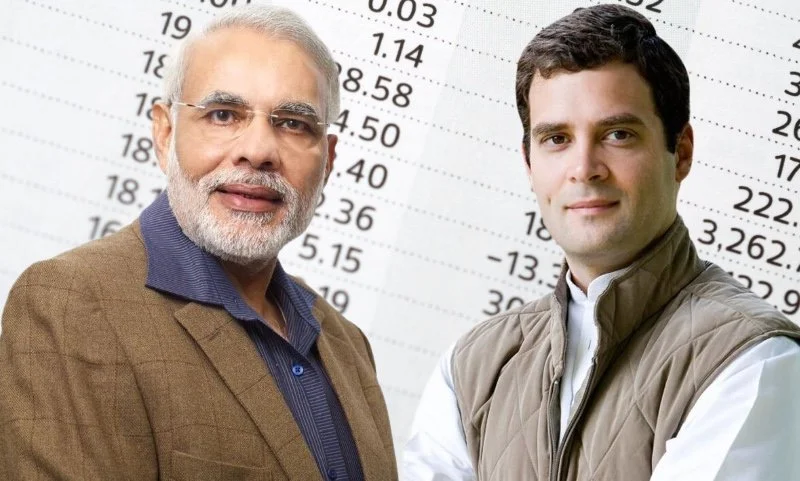
Congress’s own response has stayed muted, with a single MP calling the removal unfortunate and little else from the party’s state or Delhi leadership. That silence is unsurprising, as Congress has little reason to support a film documenting crimes committed under its own governments. What should trouble BJP is that, faced with a chance to let the film reach the public unimpeded, it responded in a way that echoed Congress’s long-standing preference for silence and delay. This time, the response went one step further. It ended in the film’s removal.
This shared reluctance to confront this chapter of Punjab’s history points to something more structural than a rivalry between two parties, and it implicates both rather than only one. The counter-insurgency apparatus Khalra documented took root inside the Punjab Police and the national security establishment. Elements of that security apparatus appear to have continued under successive governments in Delhi and Chandigarh. A film naming individual perpetrators and tracing institutional responsibility raises uncomfortable questions about those institutions regardless of which party currently holds power.
It suggests the BJP’s willingness to identify Congress’s failures in Punjab has stopped exactly where the conduct of the security state itself would need naming. In that respect, its position now appears much closer to Congress’s than its own rhetoric has long suggested.
The claim that BJP tells a different story from Congress on Punjab rested on the premise that the party would let the truth be seen where Congress preferred it to stay buried. “Satluj” was the test of that premise. Its decision to remove the film failed that test in exactly the manner it has spent decades accusing Congress of failing.
You have just read a News Briefing, written by Newsreel Asia’s text editor, Vishal Arora, to cut through the noise and present a single story for the day that matters to you. We encourage you to read the News Briefing each day. Our objective is to help you become not just an informed citizen, but an engaged and responsible one.
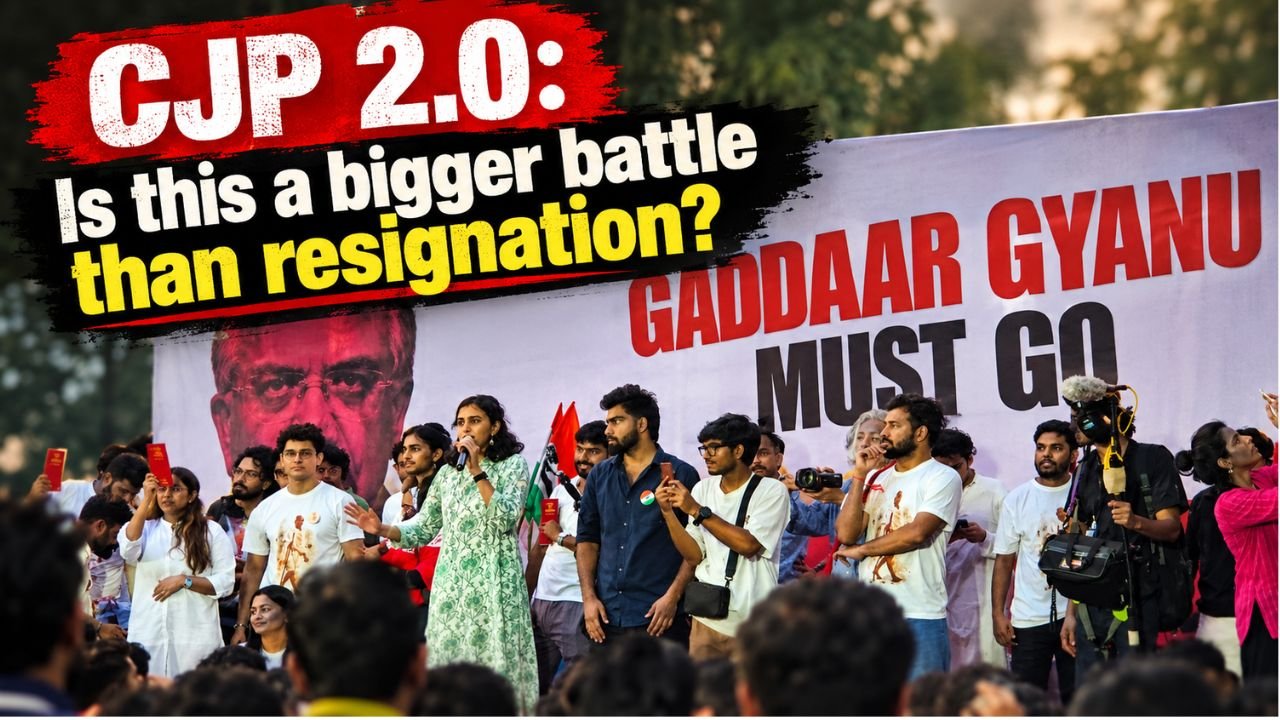
On October 12, opposition leaders, MPs, MLAs, student organisations and political workers came together in a massive march against Chief Election Commissioner Gyanesh Kumar, raising serious concerns over the Special Intensive Revision (SIR) of electoral rolls and the alleged mass deletion of voters’ names. The march brought together a broad coalition, including the INDIA bloc, AISA, SFI and other student unions, as part of a wider nationwide mobilisation against the SIR exercise and concerns surrounding electoral integrity.