
Why Have We Stopped Caring About Dowry Killings? A New Study Explains
From the Editor’s Desk
July 8, 2026

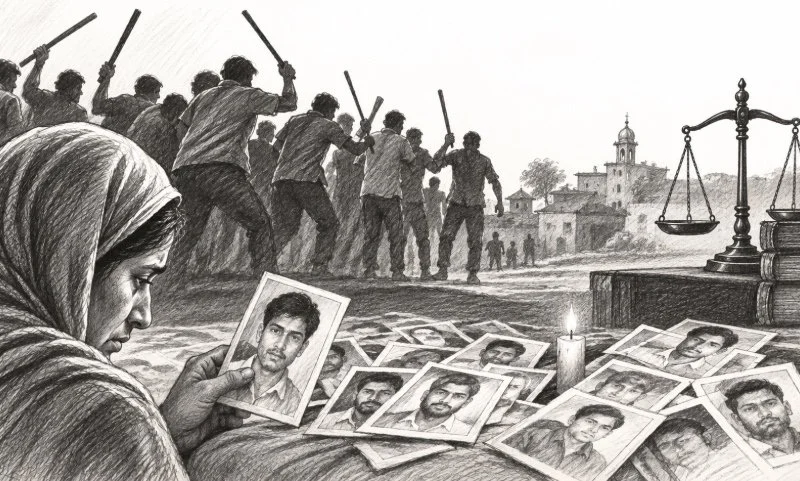
A new academic study argues that India has built an “infrastructure of inattention” around dowry killings, referring to legal and cultural processes that once made such deaths the focus of mass public protest but now allow such murders to pass with little public attention.
Dowry deaths surged in India during the 1970s and 1980s, a period marked by the state of Emergency imposed from 1975 to 1977, says the study, published in the academic journal Public Culture and written by King’s College London social anthropologist Kriti Kapila. Women were killed by husbands and in-laws over unmet dowry demands, mostly by burnings disguised as kitchen accidents involving kerosene and loose sari fabric.
Dowry is considered by many as “streedhan,” or women’s wealth, and refers to payments made by a bride’s family to the groom's family at marriage, the study says. In 2022, India recorded 6,516 reported dowry deaths, compared with 1,841 registered with the National Crime Records Bureau in 1988, and 60,577 related court cases remained pending, the study notes.
Kapila’s study traces why dowry survived and even worsened despite being outlawed under the Anti-Dowry Act of 1961, back to two other laws passed around the same period. Parliament passed the Hindu Marriage Act in 1955, introducing divorce into Hindu marriage for the first time, and the Hindu Succession Act in 1956, giving women inheritance and property rights, the study says.
According to the study, marriage between Hindu families traditionally carried a lasting imbalance. A family that had a daughter was treated as ritually tainted simply for having her, the study argues, and dowry was the price that family paid to the groom’s side to accept her and lift that stigma. The debt did not run both ways equally, according to the study. It was the bride’s family that owed, and the ritual logic behind it treated daughters as a burden from birth, as Kapila describes it.

The Hindu Marriage Act made divorce legal for the first time, the study says. That meant a marriage could now end within a person’s own lifetime, instead of carrying that ritual arrangement forward across generations. B.R. Ambedkar had hoped this kind of change would eventually help dismantle the caste system itself, since caste and marriage were so closely tied together. That did not happen, the study says. Marriage stayed governed by caste rules in practice, and the practice of dowry survived along with it, the study says, but it no longer meant what it once did. It stopped being payment for ritual stigma and started working like a price tag, one families could set on a groom and demand in cash, sometimes for years after his wedding.
The dowry protests of the 1970s and 1980s marked the first time women in India mobilised as women, without needing men to act on their behalf, according to the study. The study contrasts that history with female foeticide, a second and larger form of what Kapila calls structural femicide, achieved through prenatal sex-selection. Female foeticide has never produced mass protest or public mourning, despite killing more women than dowry deaths, according to the study.
India’s 1991 census first recorded an adverse sex ratio nationally. The 2001 census recorded 927 girls for every 1,000 boys in the 0-6 age group, down from 945 a decade earlier, and found that some northern states had as few as 884 females for every 1,000 men, the study notes. Parliament made female foeticide a punishable offense under the Prenatal Diagnostic Techniques Act of 1994, amended in 2004.
The study says dowry deaths themselves faded from public attention by the late 1990s, driven by two related changes. Suicide rates among young women in India rose through the 1990s, and many of those deaths, though not officially linked to dowry, had the effect of masking dowry-related killings. Brides who might once have been killed by their husbands’ families began instead to take their own lives, the study says, which made it harder to build a case against the relatives responsible for driving them to it.
At the same time, kerosene stoves, once common in Indian kitchens and often used to stage a dowry killing as an accident, became rarer in cities, making that particular cover story less believable. As killings increasingly took the form of suicide rather than murder, the public grief and anger that had once followed a bride’s death gave way to private shame, according to the study.
This is what the study calls an “infrastructure of inattention.” Once dowry deaths took the form of suicide rather than murder, protest became difficult in a specific way, according to the study, since it is hard to campaign against a death for which no living person can be clearly blamed.
Female feticide presents an even starker version of the same problem, the study argues. Sex-selective abortion is a decision made by a foetus’s own parents and grandparents, so there is no outside party left to hold accountable. The relatives who might otherwise grieve and protest are themselves part of the decision that ended the pregnancy.
Rather than simple neglect, the study describes this as a kind of enforced inattention, in which families become unable to acknowledge their own role in a killing, and that inability, multiplied across the country, is what has kept female foeticide from ever becoming a matter of mass protest, unlike the dowry deaths of the 1970s and 1980s.
The study also points to the mass protests that followed the 2013 “Nirbhaya” Delhi gang rape and murder as the last time women in India mobilised on this scale. But it argues that rape draws public anger for a different reason than dowry deaths or feticide. Rape is understood as a violation of someone’s personal freedom and consent.
You have just read a News Briefing, written by Newsreel Asia’s text editor, Vishal Arora, to cut through the noise and present a single story for the day that matters to you. We encourage you to read the News Briefing each day. Our objective is to help you become not just an informed citizen, but an engaged and responsible one.
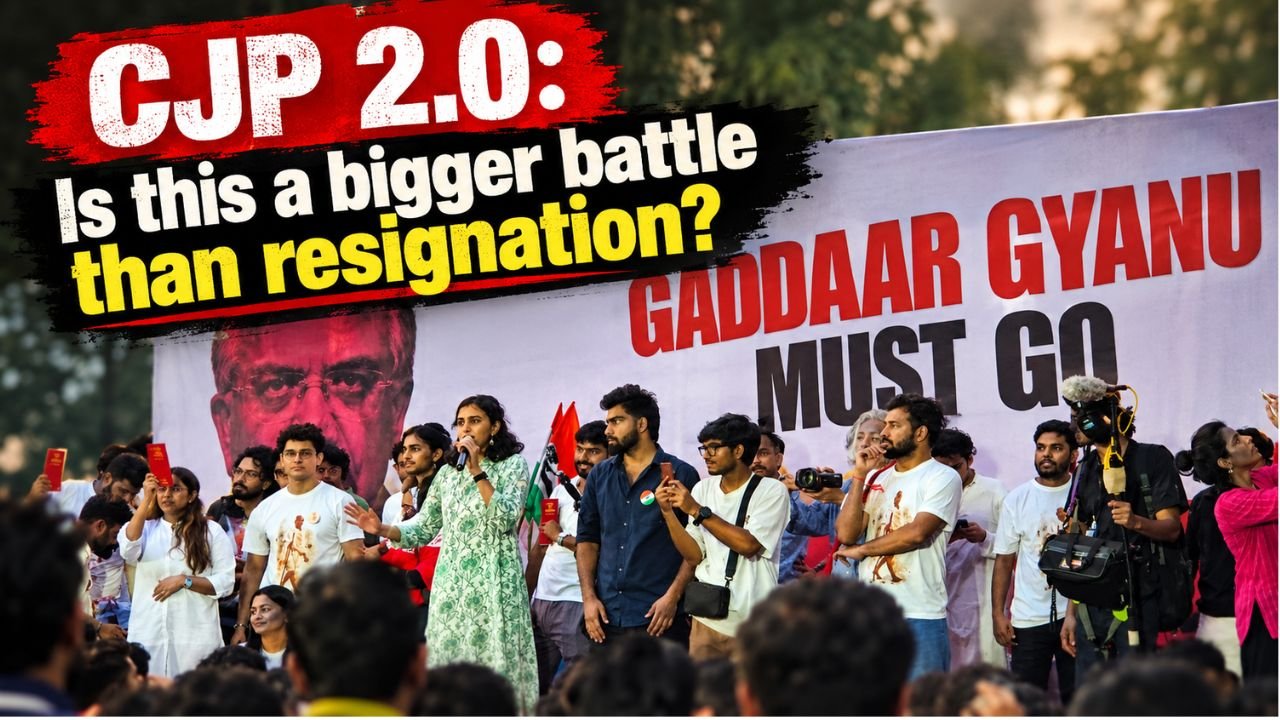
On October 12, opposition leaders, MPs, MLAs, student organisations and political workers came together in a massive march against Chief Election Commissioner Gyanesh Kumar, raising serious concerns over the Special Intensive Revision (SIR) of electoral rolls and the alleged mass deletion of voters’ names. The march brought together a broad coalition, including the INDIA bloc, AISA, SFI and other student unions, as part of a wider nationwide mobilisation against the SIR exercise and concerns surrounding electoral integrity.