
Historic Kerala Club Fights Eviction Notice For Its Delhi Premises
From the Editor’s Desk
July 13, 2026
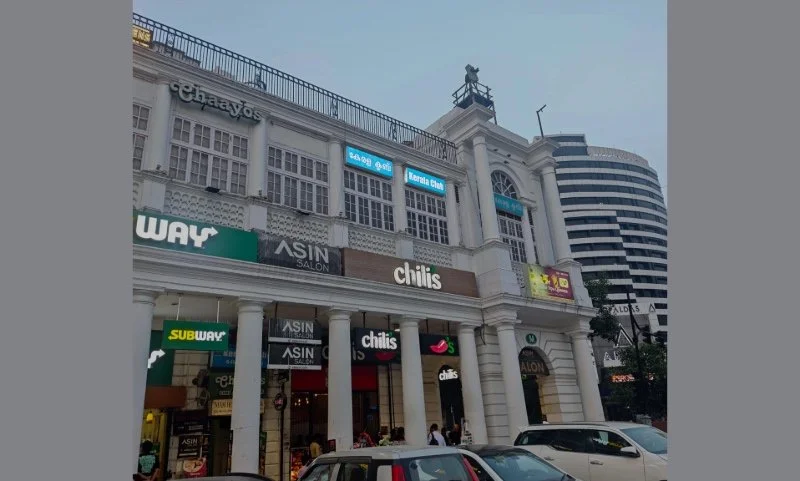
The Kerala Club, an 87-year-old socio-cultural institution founded by V.P. Menon, the civil servant who helped unite India’s princely states, is fighting eviction proceedings brought by its landlord in a dispute the club says rests on a false claim that it stopped paying rent.
The eviction case was initiated on an allegation that the club defaulted on its rent, according to a press note issued by the Kerala Club. The club also faces the assertion that the owners, a private limited real estate company, require the premises for their own use.
The club, a Malayali cultural body housed in the Outer Circle’s M Block at Connaught Place in Delhi, has been a lawful tenant of its current premises for decades and has kept up its payments, the note said. An earlier dispute over the tenancy ended in a court settlement that revised the rent.
When the landlord stopped taking payment, the club began remitting it by money order, the note said. When those orders came back undelivered, the sums were held in a dedicated account. After tracing the landlord’s current address, the club again remitted the rent by money order, and the landlord is now taking it. A cheque covering the whole of the accrued rent, plus interest, has also been sent, the note said.

The Kerala Club has appealed to writers, historians, cultural bodies, elected representatives and the wider public to help save it. The appeal was signed by veteran journalist and author A.J. Philip, the club’s president, and K. Madhavankutty, its secretary.
The body was established in 1939 by Menon, a senior civil servant of the late colonial and early independence period. Menon had advised three Viceroys on constitutional questions, Lord Mountbatten among them, and later ran the Ministry of States as its secretary, serving under Sardar Vallabhbhai Patel. Between them the two men brought upward of 500 princely realms into the new Indian Union.
Menon also had a hand in keeping the country from breaking apart, the note said. Under the first version of the Mountbatten Plan, princely states could accede to either India or Pakistan without regard to where they lay. Menon convinced Mountbatten to alter that proposal by adding a rule of territorial contiguity, under which a princely state could accede only to whichever dominion lay next to it.
At Menon’s birth centenary event held at the club, former Deputy Prime Minister L.K. Advani said the amended plan, reworked to include the contiguity principle Menon had pressed for, should be recalled as the Mountbatten-Menon Plan.
A separate account from The Patriot said Menon founded the club as its first president and had worked closely with Patel as his adviser.
Its past presidents and leaders include Thankam Shankar, the jurists V.R. Krishna Iyer and Subramaniam Poti, the playwright Omchery N.N. Pillai, and K.P.S. Menon, who became independent India’s first Foreign Secretary.
On the midnight of Independence, club members walked to Parliament House behind the renowned cartoonist Puthukkody Kottuthody Sankaran Kutty Nair, better known as Kutty, to hear Jawaharlal Nehru deliver his “Tryst with Destiny” address, the note said. They came back with the national flag and raised the Tricolour at the club.
The club’s weekly Malayalam literary circle, known as Sahitee Sakhyam, nurtured writing in the language for many years. O.V. Vijayan’s novel “Khasakkinte Itihasam,” later regarded as a landmark of modern Malayalam fiction, had its first reading and discussion there, and early work by the authors M. Mukundan, M.P. Narayana Pillai and Kakkanadan was read and critiqued at the gatherings. Members also built Kerala’s floats for the first Republic Day parades in New Delhi, and figures such as Nehru and the Communist leader E.M.S. Namboodiripad took part in club events.
The institution predates the state whose name it carries. Kerala came into being on Nov. 1, 1956, when Travancore-Cochin and Malabar were joined on the basis of language under the States Reorganisation Act, an early instance of India redrawing its map along linguistic lines. When the club was founded, the country remained under British rule and no state of Kerala existed.
You have just read a News Briefing, written by Newsreel Asia’s text editor, Vishal Arora, to cut through the noise and present a single story for the day that matters to you. We encourage you to read the News Briefing each day. Our objective is to help you become not just an informed citizen, but an engaged and responsible one.
On October 12, opposition leaders, MPs, MLAs, student organisations and political workers came together in a massive march against Chief Election Commissioner Gyanesh Kumar, raising serious concerns over the Special Intensive Revision (SIR) of electoral rolls and the alleged mass deletion of voters’ names. The march brought together a broad coalition, including the INDIA bloc, AISA, SFI and other student unions, as part of a wider nationwide mobilisation against the SIR exercise and concerns surrounding electoral integrity.