
India’s Growing Creator Economy Is Changing Society for Better and Worse
From the Editor’s Desk
July 3, 2026
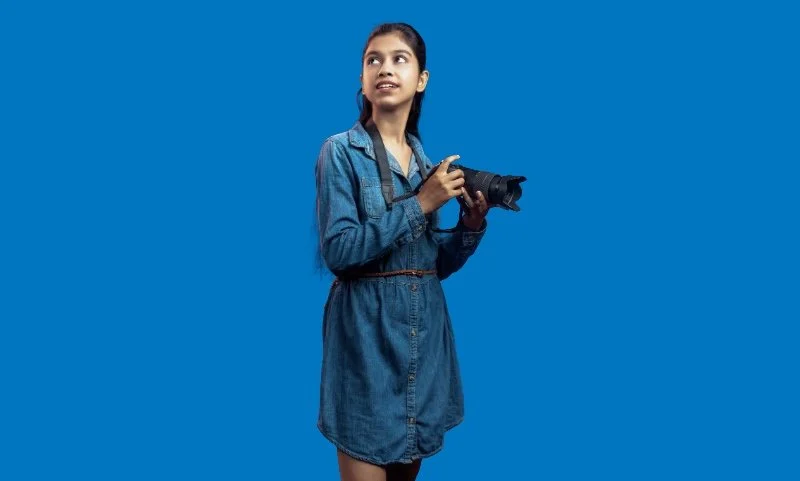
Millions of Indians now create videos, podcasts, photographs and social media content for online audiences. A new study suggests that content creation is spreading to smaller cities, growing more professional and occupying an increasingly important place in young people's lives. This growth brings significant social benefits. It could also bring problems of mental health, misinformation and a culture increasingly driven by the pursuit of attention.
The study, “The Content Rush: Inside India’s New Always-On Creator Economy,” was commissioned by SanDisk and conducted by CyberMedia Research (CMR). It looked at the habits, motivations and challenges of India’s rapidly growing community of digital content creators, surveying more than 6,000 creators aged 18 to 35 from 13 cities.
One of the most positive developments is the democratisation of public voice. For most of modern history, the ability to reach large audiences was concentrated in the hands of newspapers, television channels, publishers and film studios. Social media and digital platforms have changed that reality.
An Ikigai Law report estimated that India had more than 4 million active creators in 2025, while other industry estimates place the number substantially higher when smaller creators are included.
According to a 2025 report by the Boston Consulting Group (BCG), India has between 2 million and 2.5 million monetised content creators who collectively influence an estimated US$350 billion to US$400 billion in consumer spending. The report projects that creator-influenced consumption could exceed US$1 trillion by 2030.
The expansion has also strengthened representation. While India is extraordinarily diverse, traditional media has mostly reflected the concerns of the elite in a relatively small number of urban centres. A growing creator economy now allows more regional languages, local cultures and community experiences to find audiences.
The creator economy can also create a stronger sense of agency among individuals. The study found that more than 80% of creators reported greater confidence when their content resonated with audiences, while 81% said they found purpose in transforming everyday moments into stories. It suggest that for many people, content creation is a way of expressing identity, sharing experiences and developing skills. Creating content requires communication, storytelling, research, editing and technical competence, all of which creators seek to learn.
Another social benefit is the creation of new communities. People who share interests, experiences or challenges can connect across geographical boundaries. Someone interested in farming, disability rights, local history, mental health, religion, music or education can now find communities that would have been difficult to access in earlier decades.
However, the growth of the creator economy can also have harmful social consequences.
One concern is that social approval may increasingly become a measure of personal worth. The study found that many creators gain confidence when their content receives positive audience responses. There is nothing unusual about seeking encouragement from others. The difference today is that social media platforms measure approval continuously through likes, views, shares and follower counts. As a result, “success” has become visible and quantifiable, with many individuals beginning to evaluate themselves according to metrics generated by algorithms rather than by measures of real achievement, character or contribution.

Live Love Laugh Foundation notes that likes, comments and engagement can become a form of social currency, creating a tendency among some users to tie self-worth to audience approval.
The creator economy may also encourage a culture of constant performance. The study found that nearly three-quarters of creators publish content every week. In highly competitive digital environments, many creators are likely to feel pressure to remain visible in order to retain audiences and maintain relevance. Everyday experiences that were once simply lived and enjoyed are increasingly becoming material to be recorded, edited and shared. The boundary between private life and public performance is becoming less clear. Relationships, family life, celebrations and even personal difficulties are increasingly being viewed as content.
Studies and research have found associations between intensive social media use and higher rates of anxiety and depression among young people, although researchers continue to debate the extent to which social media causes these problems rather than simply reflecting them.
The growth may also impact information quality. Reuters Institute research, released in June 2026, found that around 58% of Indians use YouTube for news, while global research found that 46% of respondents obtain at least some news from creators or influencers. The research also found that audiences often regard creators as more relatable and easier to understand than traditional news organisations, even though they generally rate them as less trustworthy and less impartial.
Traditional journalism is far from perfect, but it usually operates with editors, fact-checkers, legal review and professional standards. Many creators work independently without these safeguards. As more people receive information from creators rather than from established news organisations, there is a greater risk that rumours, misinformation and emotionally charged claims will spread rapidly. That’s because platforms reward content that captures attention, and attention is not always aligned with accuracy.
Furthermore, although the study shows widespread participation, it tells us little about how many creators earn stable incomes. Many a times, visibility can create an illusion of opportunity. According to Kotak Asset Management, only about 8% to 10% of India’s creators successfully monetise their work, despite the sector’s growing influence over consumer spending.
You have just read a News Briefing, written by Newsreel Asia’s text editor, Vishal Arora, to cut through the noise and present a single story for the day that matters to you. We encourage you to read the News Briefing each day. Our objective is to help you become not just an informed citizen, but an engaged and responsible one.
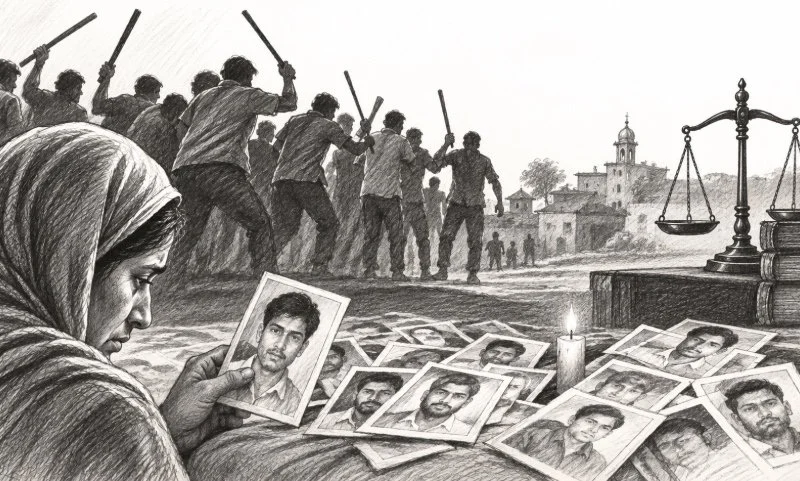
What happened in Mumbai on October 2 may have been only one day of protest, but the issues behind it are unlikely to disappear with the dispersal of the crowd. The protest was centred around concerns over the Election Commission, electoral rolls and the Special Intensive Revision (SIR) exercise, with protesters demanding accountability from Chief Election Commissioner Gyanesh Kumar. At the same time, similar mobilisation has been taking place across different parts of the country, with student groups, Opposition parties and civil society organisations raising concerns over the electoral process. Newsreel Asia spent the day at Mumbai Protest capturing the preparations, the police presence, conversations with protesters, the atmosphere on the streets and how the day unfolded. The speech of Cockroach Janta Party's leaders and sentiment of protestors seemed larger than the concerns regarding the electoral process. Will this lead to something bigger?