
Featured




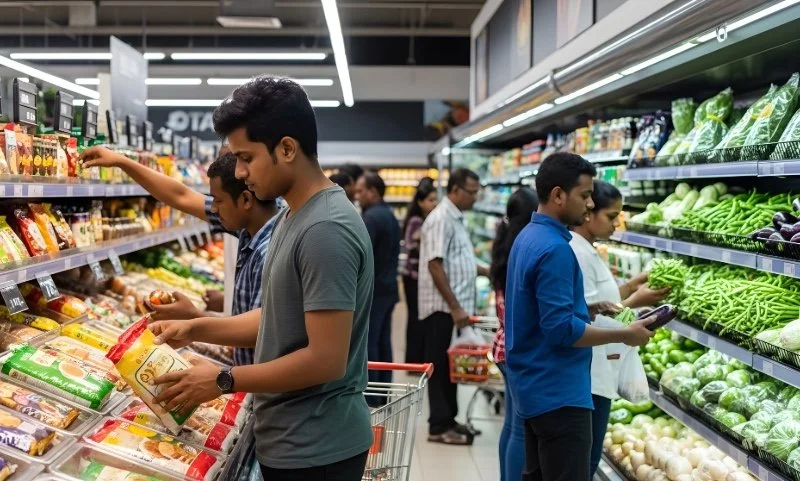
As the Strait of Hormuz remains shut for nearly two months due to the Israel-U.S.-Iran war, crude oil prices have climbed by over 80%. India’s four-year freeze on domestic fuel prices may no longer be sustainable, with the state-owned companies mandated to hold those prices down already recording losses at a scale that points to a deepening profitability crisis.
A study has found that India’s summer monsoon systematically produces the conditions for dangerous moist heatwaves, with humidity playing a larger role than temperature in pushing the body past its cooling limit and raising the risk of fatal heatstroke for a population already facing a worsening trend.
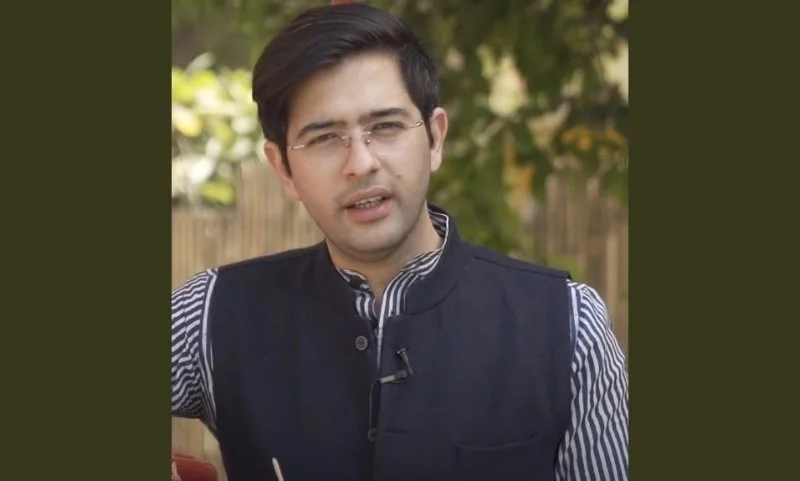
Raghav Chadha, a founding member of the Aam Aadmi Party (AAP) and one of its most prominent Rajya Sabha faces, has left the party along with six other MPs from the same party to join the governing Bharatiya Janata Party (BJP). The question his departure raises is not whether his stated grievances about AAP’s inner functioning were genuine, but whether those grievances, even taken at face value, explain why he chose to join the BJP.
India has agreed to import 2.5 million metric tons of urea at prices ranging from $935 to $959 per ton, nearly double the $508 to $512 per ton paid in its previous tender just two months ago. For ordinary Indians, a near-doubling of urea import prices will eventually translate into higher food costs.
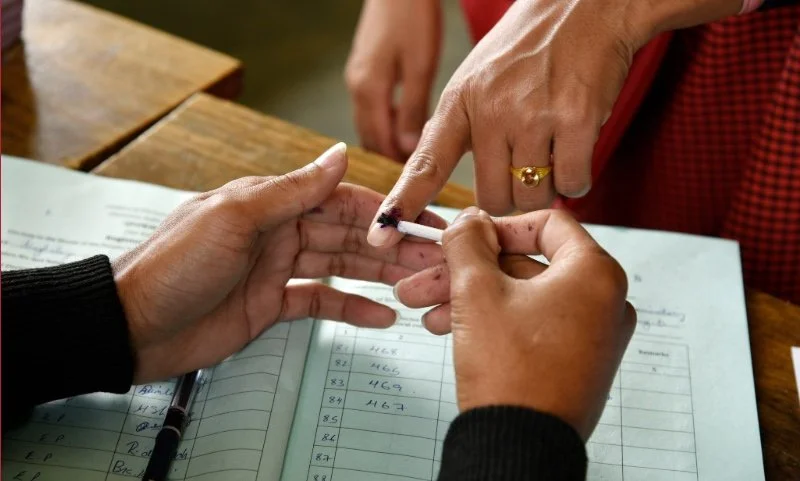
As West Bengal and Tamil Nadu prepare for polling, much of the public discussion has turned, as it routinely does in election seasons, to parties, candidates, alliances and campaign arithmetic. Allegations of cash for votes, political intimidation, partisan use of institutions, extraordinary security deployment, and the blurring of state power with party power appeared well before voting day. Isn’t it surprising that amid such blatant undermining of democracy, we, as citizens, continue participating in systems we know are compromised? In fact, sometimes we help reproduce the very practices we criticise.
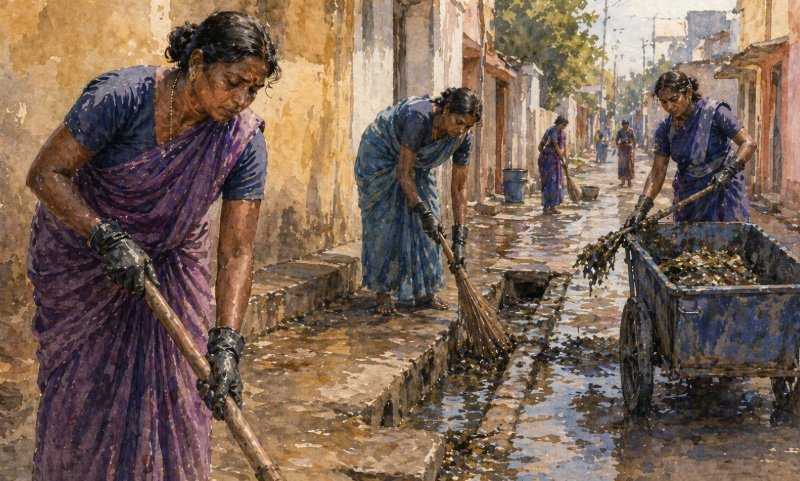
Dalit women working as manual scavengers or housemaids in Delhi face severe menstrual discrimination from their employers and within their own families, with some workers seeing their wages cut and others hiding their periods to avoid punishment at work, according to a report by the Kathmandu-based advocacy organisation Global South Coalition for Dignified Menstruation (GSCDM).
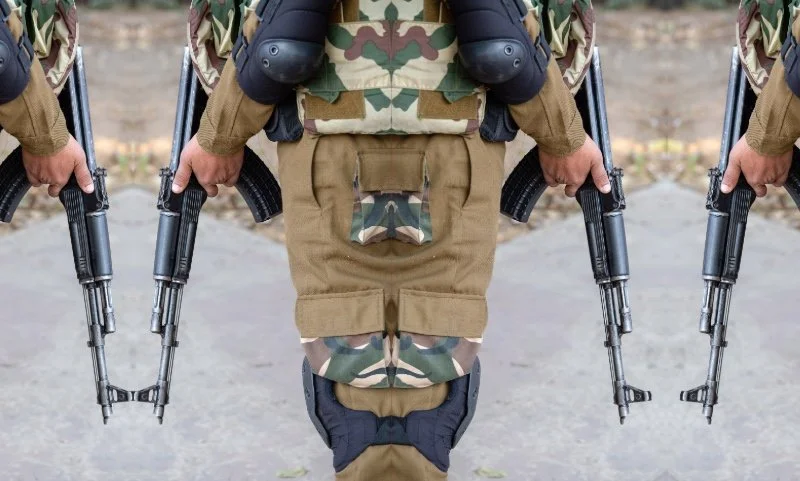
The Election Commission has deployed more than 240,000 Central Armed Police Forces personnel for Phase 1 of the 2026 West Bengal Assembly election, covering 152 of the state’s 294 constituencies, with a further 500 companies to remain after counting and 200 guarding voting machines and counting centres. The scale of this deployment, relative to what the state of security in West Bengal actually warrants, is a question worth putting to the Commission directly.
After the Lok Sabha rejected the Constitution (131st Amendment) Bill, 2026, which sought to activate the 33 percent reservation for women by raising the House’s strength to 850 seats, Prime Minister Narendra Modi issued an apology, placed responsibility on the opposition, and vowed to remove every obstacle to women’s reservation. However, the most consequential barrier arises from within his own party.
The Constitution (131st Amendment) Bill, 2026, proposes to raise the sanctioned strength of the Lok Sabha to 850 and also expand state legislatures to accommodate the 33 percent reservation of seats for women. The trouble with enlarging the House, rather than reallocating seats within it, is that existing arrangements of power would be left intact, which in turn would mean male-dominated networks carry on with only limited change.
A new study has found that smoking may increase the risk of dementia by triggering a chain of biological events that starts in the lungs and ends up damaging brain cells. The findings offer the clearest biological explanation to date for a link that population studies have observed for years without being able to fully explain.
A global study has found that work is now in a state of constant change due to rapid technological advances, with India feeling this more acutely, as roles, tools and expectations keep changing all at once. As workers are having to adjust, the pressure shows in how they feel, with 67 percent in India saying they are anxious about becoming obsolete.
A new study has found that India is undercounting stillbirths because a large share of pregnancy losses occur earlier than what official systems record. The research reached this conclusion by examining stillbirths at different stages of pregnancy, rather than counting only those that occur after a fixed point in pregnancy, pointing to a larger global issue in how stillbirths are counted.
Opposition parties have criticised Prime Minister Narendra Modi's letter to all political party leaders seeking their support to pass amendments during an extended sitting of Parliament, saying he framed the issue as a collective responsibility to mask what they call a political calculation.
The documents linked to Jeffrey Epstein, a U.S. financier who built a network of relationships with political leaders, business figures and public personalities, contain several references involving India, including instances of direct contact between Epstein and Indian political and business figures. Here is a clear account of what the Epstein files say about India and how to read those references.
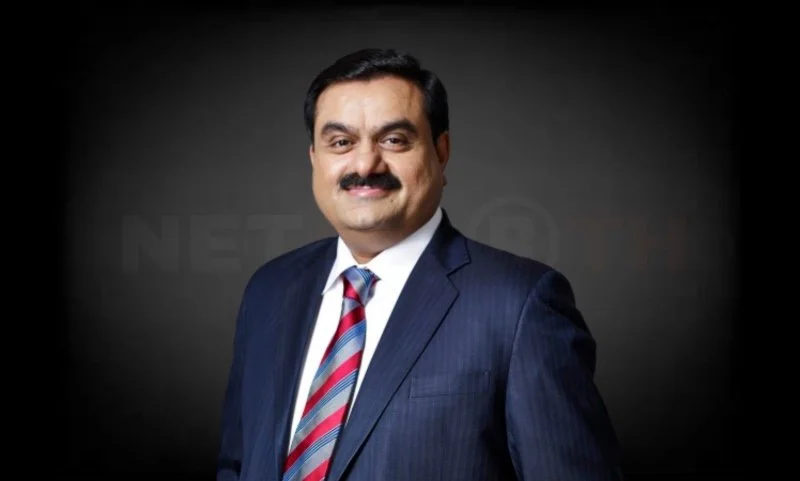
India’s bottom half owns just 6.4% of the country’s total wealth, while an extremely small group at the top holds wealth equal to nearly half of the country’s annual economic output, according to Wealth Tracker India 2026, released by the Centre for Financial Accountability and Tax The Top. The report also states that the wealth of Gautam Adani and his family rose by over 600% between 2019 and 2025. The comparison offers a sense of scale.
The Supreme Court expressed frustration on April 6 over repeated forensic delays in authenticating audio clips that allegedly implicate former Manipur Chief Minister N. Biren Singh in the state’s ethnic violence. Meanwhile, a bomb attack the following day in Manipur’s Bishnupur district killed two children and triggered fresh unrest.
The education ministry has reportedly written to all university vice-chancellors, forwarding a suggestion from Prime Minister Narendra Modi that journalism syllabuses be reviewed “to make them more effective.” The ministry offered no specification of what the review should contain or why the current syllabuses fall short. This vagueness, which appears to be deliberate, is concerning.
The Congress party has alleged that Assam Chief Minister Himanta Biswa Sarma’s wife, Riniki Bhuyan Sharma, holds multiple foreign passports and undisclosed overseas assets, triggering a political confrontation with the Bharatiya Janata Party (BJP), which has rejected the claims and announced legal action.
The Roblox gaming platform, widely used by children under 13 and estimated to have tens of millions of users in India, has come under increasing legal and regulatory scrutiny following documented cases in which its social features have been used by predators to groom children for sexual abuse. Children and parents in India, one of Roblox’s fastest growing markets, need to take note and act to protect themselves.
A draft amendment to the IT Rules would allow authorities to direct platforms to take down not only content from media organisations but also posts by individual users on social media. It would remove the distinction between a media organisation that publishes news as an institutional activity and an ordinary citizen who speaks, comments, jokes, shares, records, criticises or reports from a phone, by bringing such user generated content within a regulatory structure designed for digital media entities and publishers.
The Indian rupee is falling sharply and the Reserve Bank of India (RBI) is struggling to hold it steady even after taking strong steps. The weakening rupee, which is driven by high oil costs, may raise fuel and transport prices, increase prices of goods and services, and reduce business investment, hiring and household spending.
Bengaluru is no longer the Bengaluru many of us remember, or the one we still speak of with nostalgia. This was once the city people came to for its weather, its trees and lakes, and an easier pace of life. Today, summer feels harsher, water has become uncertain, and ordinary life has become more expensive and more exhausting.