
Falling Rupee May Raise Daily Costs and Hit Jobs and Investment in India
From the Editor’s Desk
April 1, 2026
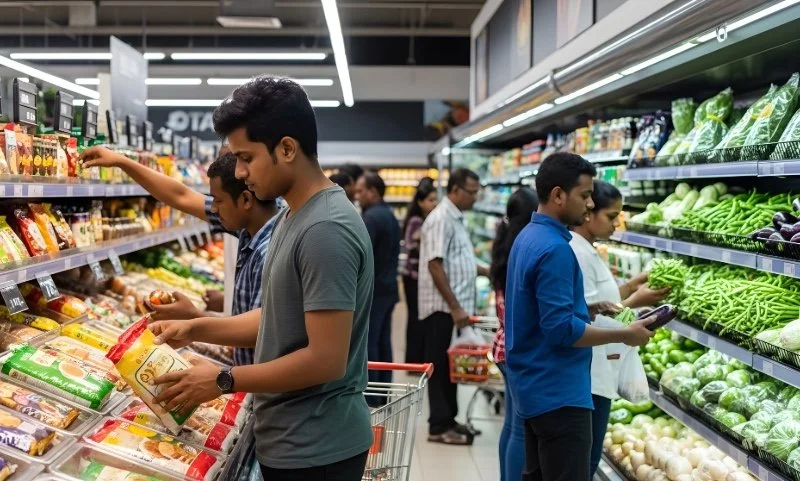
The Indian rupee is falling sharply and the Reserve Bank of India (RBI) is struggling to hold it steady even after taking strong steps. The weakening rupee, which is driven by high oil costs, may raise fuel and transport prices, increase prices of goods and services, and reduce business investment, hiring and household spending.
The central bank tried to calm the currency market by putting a limit on how much foreign currency banks can buy and keep or use for trading. The move briefly pushed the rupee up by about 1.4 percent when trading opened, but the effect lasted only a short time and the rupee fell again to a record low of around 94.83 against the dollar, according to a report by Bloomberg.
This suggests that the problem is not limited to market speculation. The main reason is oil, according to the report.
India is the third largest importer of crude oil in the world and buys most of its oil from abroad, in U.S. dollars. As global oil prices have risen, especially because of conflict between U.S.-Israel and Iran and risks to supply route at the Strait of Hormuz, India is now having to spend far more dollars to buy oil. This has an impact on India’s current account deficit, which is the gap that arises when a country spends more foreign currency on imports of goods and services than it earns from exports, remittances and income from abroad. Every 10 percent increase in oil prices increases India’s current account deficit by about 0.4 percent of its total economy, according to the report.


The current account deficit, which was expected to be about 1 percent of GDP, may now rise to around 2.5 percent. This means India will need much more foreign currency than it earns, further weakening the rupee and increasing reliance on foreign investment or reserves to cover the gap.
What compounds the problem is that India may receive fewer dollars from abroad. About 10 million Indians work in Gulf countries and regularly send money back home. These remittances are a major source of foreign currency for India. If Gulf economies slow because of war-related tensions that are pushing oil prices up, these workers may send less money. This means fewer dollars coming into India just as the need for dollars is rising.
Because of the rising oil import costs that has increased the demand for dollars and the possible fall in remittances, more dollars may leave India than entering it. Even before the current crisis, India already had a large trade deficit, meaning it was importing more goods than it exported, and this gap is expected to widen further.
The concern is the impact of these developments on the balance of “payments,” which includes the current account as well as the capital account.
The current account records income and spending linked to everyday economic activity, including trade in goods, services, remittances and income from abroad. It answers, is the country earning enough from what it produces and sells to the world. The capital account records money moving for investment and financing, including foreign investors buying shares, investing in businesses, lending money, or taking money out. It answers, is the country getting funds from outside to finance its needs.


In a worst case situation, where the conflict becomes more serious and the Strait of Hormuz is disrupted for a long time, oil prices could average about 125 dollars per barrel, compared to an average of 75 to 85 dollars per barrel, in the coming years, according to Bloomberg Economics’ Abhishek Gupta. In such a case, India could face a balance of payments deficit of more than 130 billion dollars, which would be extremely large.
Earlier, India was expected to have a small surplus in this overall balance. In fact, India had a surplus of about 63.7 billion dollars in one recent year and a small deficit of about 5 billion dollars in the next, notes the Bloomberg report. Now economists say India could face a deficit for a second year in a row, something that has not happened before, and there is a real risk of a third year of deficit.
Now, there is another layer to the problem. Foreign investors may pull their money out of countries like India during uncertain times and move it to safer places such as the United States. If that happens, India may also face a deficit in the capital account. A situation where both trade flows and investment flows are negative at the same time has not been seen since 1991, the year India faced a major financial crisis, warns the report.
The impact is already being felt in growth forecasts. Some economists have cut India’s expected economic growth to about 5.9 percent because higher oil prices increase costs in the overall economy.
The expected widening gap between dollar outflows and inflows has to be financed by the government.
The RBI can intervene by selling dollars from its reserves, tightening conditions in the currency market, or signalling through interest rates. These measures can reduce volatility and discourage short-term trading against the rupee. But their effect may remain limited because they cannot alter the underlying demand for imports or the structure of inflows.
A sustained weakening of the rupee may have larger economic effects. Imports may become more expensive in domestic currency terms, which will increase costs for fuel, transport and industries that rely on imported raw material. These higher costs may then pass through to consumer prices. Firms may delay investment or adjust hiring in response to rising costs and uncertainty.
You have just read a News Briefing, written by Newsreel Asia’s text editor, Vishal Arora, to cut through the noise and present a single story for the day that matters to you. We encourage you to read the News Briefing each day. Our objective is to help you become not just an informed citizen, but an engaged and responsible one.

What happened in Mumbai on October 2 may have been only one day of protest, but the issues behind it are unlikely to disappear with the dispersal of the crowd. The protest was centred around concerns over the Election Commission, electoral rolls and the Special Intensive Revision (SIR) exercise, with protesters demanding accountability from Chief Election Commissioner Gyanesh Kumar. At the same time, similar mobilisation has been taking place across different parts of the country, with student groups, Opposition parties and civil society organisations raising concerns over the electoral process. Newsreel Asia spent the day at Mumbai Protest capturing the preparations, the police presence, conversations with protesters, the atmosphere on the streets and how the day unfolded. The speech of Cockroach Janta Party's leaders and sentiment of protestors seemed larger than the concerns regarding the electoral process. Will this lead to something bigger?