
‘Apology’ Accepted for Not Implementing Women’s Reservation
By Vishal Arora
April 20, 2026
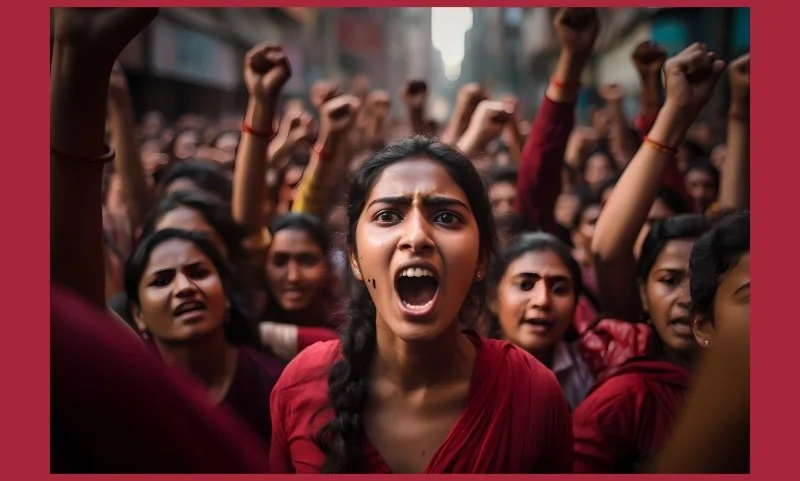
After the Lok Sabha rejected the Constitution (131st Amendment) Bill, 2026, which sought to activate the 33 percent reservation for women by raising the House’s strength to 850 seats, Prime Minister Narendra Modi issued an apology, placed responsibility on the opposition, and vowed to remove every obstacle to women’s reservation. However, the most consequential barrier arises from within his own party.
Only those caught in the complications introduced by the Bharatiya Janata Party (BJP) in implementing women’s reservation in national and state legislatures would believe that the ruling party truly wanted to, but was unable to give women the representation long due to them.
The Bill failed to pass, with only 278 of the 489 members present voting in favour, falling short of the two thirds majority required for a constitutional amendment. But why was another amendment needed when a law providing for women’s reservation already exists?
The Women’s Reservation Act passed in September 2023 but was written to take effect only after a fresh census and the delimitation of constituencies that would follow. That census, which the Union government alone can schedule, began five years late. The Bill that failed on April 17 sought to work around that bottleneck by allowing delimitation to proceed on 2011 Census data, without waiting for a post-2026 Census. And the women’s quota would kick in after the delimitation based on 2011 Census, in time for the 2029 general elections.

Had it passed, the Lok Sabha would have expanded from 543 to 850 seats, with 815 going to states and 35 to Union Territories, and roughly 273 constituencies would have been reserved for women.
As a previous News Briefing by Newsreel Asia pointed out, reservation within the existing 543 seats would have required parties to replace sitting male candidates in roughly a third of constituencies, directing campaign funds, workers and organisational resources toward women in seats men currently hold. The enlargement route would create 307 new seats and fill them with women, leaving every existing constituency and every existing incumbent untouched. No sitting male legislator would lose his seat. No man already in line for a ticket would lose his chance.
The proposed delimitation would have compounded this. Seat distribution in India has been frozen on 1971 Census figures to protect states that managed population growth well from losing representation. A 2021 Census based redraw would shift seats from states in the south and the northeast to states in the north, centre and east, including Uttar Pradesh and Bihar. Tamil Nadu Chief Minister M.K. Stalin said this would penalise states that met their demographic targets.
Packaging delimitation and the quota into a single Bill compressed a decade’s worth of political adaptation into one vote. It would have forced southern parties to absorb two disruptive changes at once. They would have faced the prospect of losing seats and restructuring candidate pipelines for women simultaneously. A Union government that controls the Census Commissioner, the Delimitation Commission and the parliamentary calendar could manage that uncertainty. A regional party with fixed networks in fixed constituencies could not. Their resistance was predictable.
Under the Bill’s design, the largest gains in women’s representation would have gone to states where women are least literate, least employed and least politically active. Numbers in the legislature and real political power would have moved in opposite directions.
Glossing over these issues, the Prime Minister’s apology used the language of moral emergency. He accused opposition parties of betrayal, conspiracy and “foeticide,” calling them “criminals of the Constitution” who hate women’s representation. The language may help mobilise some supporters, but it may also harden positions in Parliament. A constitutional amendment requires a two-thirds majority, which obviously means it requires opponents to be persuaded, and not antagonised. Public denunciation is a poor instrument of persuasion.
This government has passed difficult constitutional legislation before, including the Constitution (103rd Amendment) Act, 2019, introducing 10 percent reservation for economically weaker sections. However, for this latest Bill, the government brought it to the floor knowing it had 278 votes in a House where 327 were required. A gap of that scale indicates that the Bill was introduced without the numbers needed for passage. Newspapers had already reported the likely defeat of the Bill, citing concerns raised by the opposition. Why, then, did the outcome lead to an “apology,” particularly at a time when some states are preparing for elections?
However, the apology deserves acceptance. The 2023 women’s reservation law exists, the census remains under way, and the government has delayed both processes while retaining control over the timing of the next attempt.
You have just read a News Briefing, written by Newsreel Asia’s text editor, Vishal Arora, to cut through the noise and present a single story for the day that matters to you. We encourage you to read the News Briefing each day. Our objective is to help you become not just an informed citizen, but an engaged and responsible one.
On October 12, opposition leaders, MPs, MLAs, student organisations and political workers came together in a massive march against Chief Election Commissioner Gyanesh Kumar, raising serious concerns over the Special Intensive Revision (SIR) of electoral rolls and the alleged mass deletion of voters’ names. The march brought together a broad coalition, including the INDIA bloc, AISA, SFI and other student unions, as part of a wider nationwide mobilisation against the SIR exercise and concerns surrounding electoral integrity.