
Opposition Alleges Politics Behind Women’s Reservation Law
From the Editor’s Desk
April 13, 2026

Opposition parties have criticised Prime Minister Narendra Modi's letter to all political party leaders seeking their support to pass amendments during an extended sitting of Parliament, saying he framed the issue as a collective responsibility to mask what they call a political calculation.
The law provides 33 percent reservation for women in the Lok Sabha and state assemblies, to be implemented only after a Census and delimitation exercise. Opposition parties support the principle of increasing women’s representation and have raised no objection to reserving seats. Their argument is about the intent behind the sequencing.
The government’s stated position is that reserving seats before the delimitation exercise would lock the quota into constituency boundaries that no longer match current population realities. There is also a technical argument about how rotation would work. The law provides that reserved seats will rotate across constituencies, and the government says that rotation requires a new baseline, which only delimitation can establish. Without it, some constituencies could end up repeatedly reserved or excluded based on outdated boundaries.
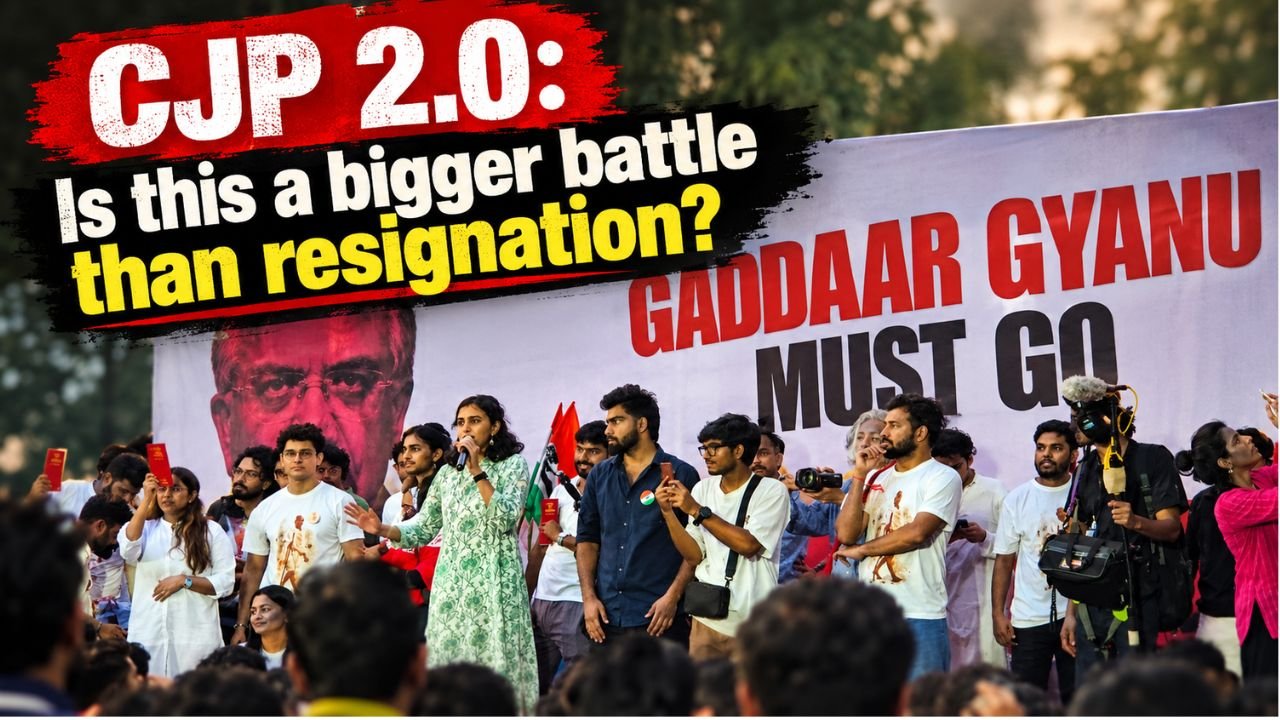

Congress has questioned the timing and process. The party has repeatedly said it objects to tying women’s representation to delimitation, and its leaders have argued that the government has provided no clear information on when delimitation will happen or how the law will be implemented. Congress president Mallikarjun Kharge has accused the government of using the law’s timing to influence elections and extract political benefit.
Leader of Opposition Rahul Gandhi has said he would have preferred immediate implementation. Congress has also argued that the government tends to push this issue at moments that coincide with major state elections, and that the pattern is not coincidental.
The sequencing creates a practical problem for the ruling Bharatiya Janata Party (BJP). If reservation were implemented immediately, the BJP would have to replace many sitting male candidates with women, which could generate resistance from its own established leaders. Postponing implementation until after delimitation spares the party that disruption for now, while still allowing it to claim credit for passing the law. That is the logic Congress says the government is following.
Further, a reform that signals support for women can influence voter sentiment, particularly among women voters. Introducing such a reform close to elections allows the ruling party to present itself as delivering change, and opposition parties argue the timing is driven by electoral calculation rather than policy urgency.

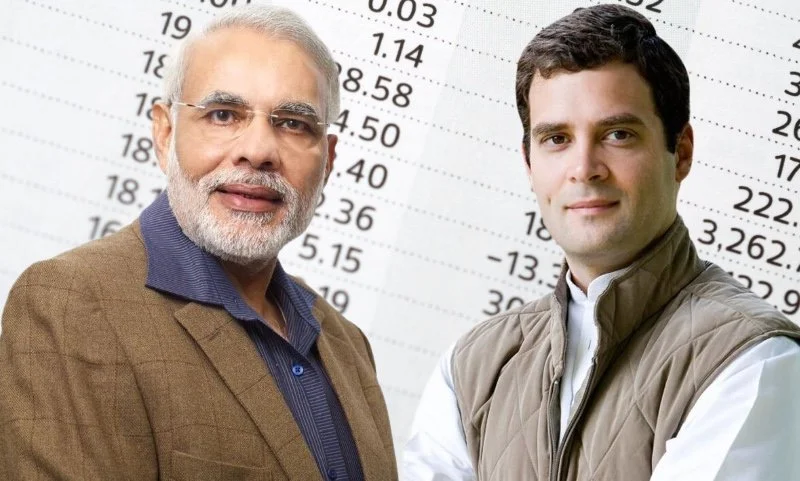
Congress has also raised a concern about federalism. One of its leaders, Shashi Tharoor, has warned that changes linked to delimitation risk weakening the balance between states. As delimitation redraws constituencies based on population, states with faster population growth stand to gain seats, while states with slower growth, including those in the south that successfully controlled population, may see their relative share in Parliament decline.
The DMK, led by Tamil Nadu Chief Minister M.K. Stalin, has called it a redistribution of political power between states rather than a measure for gender justice. Stalin has said the exercise is a reengineering of power, an assertion that the real stakes lie in which states gain and which lose political weight.
Delimitation can change how many seats each state holds in Parliament. If women’s reservation takes effect only after that exercise, the new constituency map and the reserved seats arrive together. States that gain seats through delimitation will also receive more reserved seats for women, compounding their presence in Parliament.
West Bengal Chief Minister Mamata Banerjee, of the Trinamool Congress, has said the critical issue is control over timing. The government decides when to conduct the Census and when to initiate delimitation, and those administrative decisions will determine when reservation actually comes into force. The party views the law as one link in a chain of decisions that will ultimately influence electoral outcomes.
The Samajwadi Party and the Rashtriya Janata Dal have focused on representation within the quota itself. Both parties have demanded a sub-quota for women from Other Backward Classes (OBCs), arguing that without one, women from socially dominant groups will capture most of the reserved seats.
On the ground, candidates who win party tickets tend to come from families or networks with financial resources and strong local influence, advantages that are unevenly distributed across caste groups. OBC communities make up a large share of the country’s population but remain underrepresented in legislatures, and these parties say the current law does nothing to change that.
You have just read a News Briefing, written by Newsreel Asia’s text editor, Vishal Arora, to cut through the noise and present a single story for the day that matters to you. We encourage you to read the News Briefing each day. Our objective is to help you become not just an informed citizen, but an engaged and responsible one.
On October 12, opposition leaders, MPs, MLAs, student organisations and political workers came together in a massive march against Chief Election Commissioner Gyanesh Kumar, raising serious concerns over the Special Intensive Revision (SIR) of electoral rolls and the alleged mass deletion of voters’ names. The march brought together a broad coalition, including the INDIA bloc, AISA, SFI and other student unions, as part of a wider nationwide mobilisation against the SIR exercise and concerns surrounding electoral integrity.