
India’s Monsoon Creates Fatal Mix of Heat and Humidity; How You and Government Can Stay Prepared
Form the Editor’s Desk
April 28, 2026
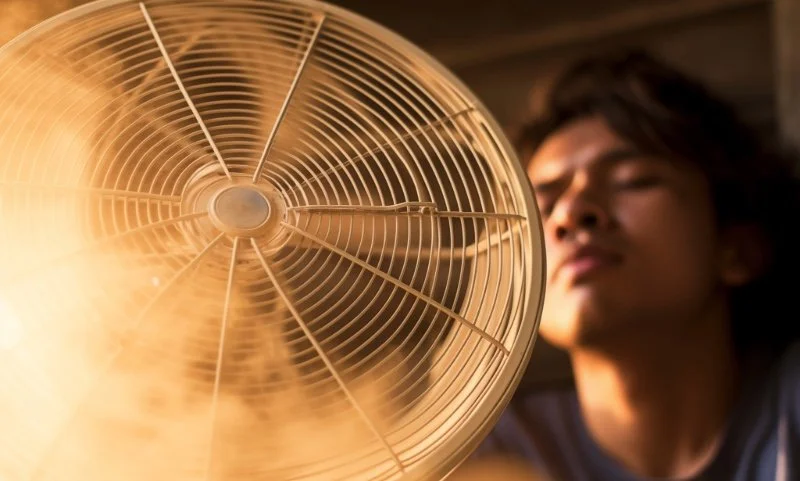
A study has found that India’s summer monsoon systematically produces the conditions for dangerous moist heatwaves, with humidity playing a larger role than temperature in pushing the body past its cooling limit and raising the risk of fatal heatstroke for a population already facing a worsening trend.
The peer-reviewed study, “Anatomy of Moist Heatwaves in India During the Summer Monsoon Season,” explains that the human body cools itself primarily through sweating, but as humidity rises, sweat evaporates less efficiently, and the body’s ability to shed heat diminishes. Physiological strain intensifies rapidly under those conditions, escalating risks of cardiovascular and respiratory illness. When the body can no longer regulate its own temperature, internal heat builds to levels that damage organs, and without intervention, the outcome can be fatal.
The study, which analysed weather data from 1940 to 2023 to map how, when and where extreme moist heat strikes during the June-to-September monsoon period, measured moist heat stress using a metric called wet-bulb temperature, which captures what happens when heat and humidity combine. Unlike a standard thermometer reading, it registers how much cooling the body can actually achieve through sweating in a given set of conditions. Scientists have long placed 35°C on that scale as the point beyond which the body cannot survive sustained exposure, and research has shown that six hours at that threshold can be enough to kill.
That 35°C figure, however, has been pushed downward by more recent biophysical research the study cites. Survivability thresholds now range from 25.8°C to 34.1°C for younger adults and from 21.9°C to 33.7°C for older adults. Among all groups, older women show the lowest tolerance, with thresholds in dry conditions estimated at up to 7°C to 13°C below the conventional benchmark.

In India, the monsoon delivers abundant moisture between June and September, and the study found that during July and August, wet-bulb temperatures in some parts of northern India and eastern Pakistan already reach levels that place the body under severe stress. That frequency and intensity of such days has been rising, a trend the researchers expect to continue as global temperatures climb. Agricultural workers, labourers, and the elderly are among those facing the greatest exposure.
The study’s most important finding is that moisture in the air is more dangerous than heat alone. A day that does not feel especially hot can still overwhelm the body’s ability to cool itself if the air carries enough humidity.
To understand what drives these episodes, the researchers ran a statistical analysis of 84 years of daily wet-bulb temperature readings across India and found two recurring patterns. The first determines how frequently dangerous moist heat episodes occur. In the worst-case configuration, heatwave conditions can prevail on nearly half the days of a monsoon season over central India. The second determines who gets hit. In one scenario, the danger spreads across the country at once. In another, it concentrates in northern India and adjoining parts of eastern Pakistan, where it can persist even as the rest of the country experiences relatively normal conditions.
When monsoon rainfall weakens during what meteorologists call break periods, moist heatwaves are more likely over southern and eastern India. When rainfall intensifies during active phases, the danger moves to northern and northwestern India. This is less obvious than it sounds, because active rainfall brings moisture into a region that is ordinarily dry, and it is that surge of humidity, arriving even without extreme temperatures, that drives the body toward its limit.
The monsoon does not deliver rainfall evenly across the season. It moves in pulses, driven by a large-scale atmospheric cycle that researchers track in eight distinct phases as it travels northward across South Asia over several weeks. The study found that moist heatwave risk over northern India peaks at one specific point in that cycle, coinciding with the period when rainfall over central India is at its heaviest. At that point, heatwave occurrence in northern India runs at more than twice the rate normally expected, precisely because the moisture driving that heavy rainfall is also what pushes the body past its cooling limit.
The researchers said these patterns are consistent enough to serve as the basis for early warning systems, giving government agencies and public health officials days or weeks of lead time before dangerous conditions arrive.



For individuals, the most effective protection against moist heat is staying out of it. During active monsoon phases in June through September, especially in northern and northwestern India, the combination of heat and humidity can be lethal even at temperatures that feel manageable. Staying indoors during midday and afternoon hours, when heat and humidity peak, is the most reliable way to reduce exposure.
For those who cannot avoid working outdoors, frequent rest in shaded or cooled spaces, steady hydration with water rather than caffeinated or alcoholic drinks, and light loose-fitting clothing all help slow the body’s heat accumulation. Cooling the skin with a wet cloth or a fan provides additional relief. Among all groups, older women face the lowest survivability thresholds and need priority access to shade and cooling.
Recognising the warning signs of heat illness can save a life. Heat exhaustion typically presents as heavy sweating, weakness, cold or pale skin, a fast and weak pulse, nausea, or fainting. Heatstroke is a medical emergency and presents as a body temperature above 40°C (104°F), hot and dry skin, a rapid and strong pulse, and possible loss of consciousness. A person showing signs of heatstroke needs emergency medical help immediately and should be moved to a cool environment and have cool water applied to their body without delay.
Because the atmospheric patterns that produce dangerous moist heat follow a predictable cycle, forecasters can see them coming days or weeks in advance. India’s meteorological agencies, working with the Ministry of Earth Sciences and institutions such as the Indian Institute of Tropical Meteorology in Pune, can use that knowledge to issue timely public health advisories. A warning issued early enough gives local administrations time to open cooling centres, move outdoor workers off job sites, and position medical teams where they are likely to be needed.
Several Indian states have heat action plans, but they have largely focused on the dry heat of the pre-monsoon months. The monsoon season, when humidity makes high temperatures far more dangerous, has received less attention. Extending those plans to cover moist heat risk during the monsoon months would address a gap this study makes clear. Mandatory rest periods and guaranteed water access for outdoor workers during high-risk periods would offer a direct layer of protection to the agricultural workers and labourers the study identifies as especially vulnerable.
You have just read a News Briefing, written by Newsreel Asia’s text editor, Vishal Arora, to cut through the noise and present a single story for the day that matters to you. We encourage you to read the News Briefing each day. Our objective is to help you become not just an informed citizen, but an engaged and responsible one.



On October 12, opposition leaders, MPs, MLAs, student organisations and political workers came together in a massive march against Chief Election Commissioner Gyanesh Kumar, raising serious concerns over the Special Intensive Revision (SIR) of electoral rolls and the alleged mass deletion of voters’ names. The march brought together a broad coalition, including the INDIA bloc, AISA, SFI and other student unions, as part of a wider nationwide mobilisation against the SIR exercise and concerns surrounding electoral integrity.