
Adani Family’s Wealth Grew Over 600% in 6 Years; Bottom Half’s Share Declined
From the Editor’s Desk
April 9, 2026
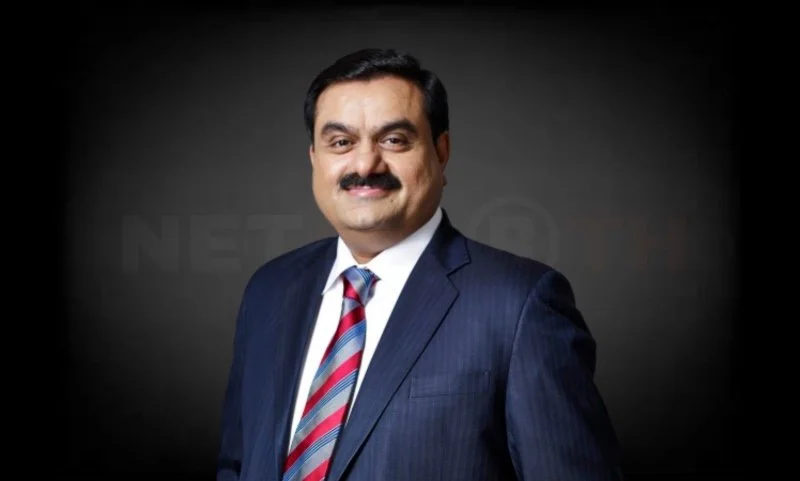
Gautam Adani. Photo by Chirag200201, licensed under Creative Commons
India’s bottom half owns just 6.4% of the country’s total wealth, while an extremely small group at the top holds wealth equal to nearly half of the country’s annual economic output, according to Wealth Tracker India 2026, released by the Centre for Financial Accountability and Tax The Top. The report also states that the wealth of Gautam Adani and his family rose by over 600% between 2019 and 2025. The comparison offers a sense of scale.
At the top, 1,688 individuals in India possess wealth equal to or exceeding 10 billion (1,000 crore) rupees each, with their combined wealth amounting to about 167 trillion (167 lakh crore) rupees, or about $2 trillion, based on data from the World Inequality Database and the Hurun Rich List, says the report.
The report, whose research was led by Jacob Joshy, a PhD candidate in economics at Jawaharlal Nehru University in New Delhi, states that the number of dollar billionaires in India rose from one in 1991 to more than 358 by 2025. It adds that, in terms of income (not wealth), the top 10% captures nearly 60% of national income, while the bottom 50% receives just 15%.
The top 1% held 40.1% of national wealth in 2022, up from 36.5% in 2019. Over the same period, the bottom 50%’s share declined from 6.8% to 6.4% and has remained at that level.

The number of Indians with personal wealth of over 10 billion (1,000 crore) rupees, grew 77% between 2019 and 2025, from 953 to 1,688. Their combined wealth grew by 227% over those six years, from roughly 50 trillion (50 lakh crore) rupees, to approximately 167 trillion (167 lakh crore) rupees.
The combined wealth of India’s 100 richest individuals stood at around 31 trillion (31 lakh crore) rupees in 2019. By 2024, it had climbed to 93 trillion (93 lakh crore) rupees, before settling at around 88 trillion (88 lakh crore) rupees in 2025, a gain of roughly 200% over six years.
Five of India’s wealthiest individuals saw their combined fortune rise by about 400% between 2019 and 2025. Mukesh Ambani, Gautam Adani and family, Savitri Jindal and family, Sunil Mittal and family, and Shiv Nadar together held about 6.6 trillion (6.68 lakh crore) rupees in 2019; by 2025, that figure had grown to around 26.6 trillion (26.55 lakh crore) rupees.
The gains were steepest for Adani, whose family’s wealth grew from 1.11 trillion (1.11 lakh crore) rupees to 8.02 trillion (8.02 lakh crore) rupees over the period, a rise of about 625%, according to Hurun Rich List. Ambani’s wealth grew from 3.62 trillion (3.62 lakh crore) rupees to 9.15 trillion (9.15 lakh crore) rupees, a gain of about 153%. Savitri Jindal and family’s wealth rose 8.6 times and Sunil Mittal and family’s wealth rose 5.6 times over the same period.
The report’s analysis of caste found that nearly 90% of all billionaire wealth in India in 2022-23 was held by members of upper castes, based on Forbes billionaire rankings coded by caste surname and analysed by the World Inequality Lab. Scheduled Tribes had zero representation. Other Backward Classes held just under 10%, and Scheduled Castes held 2.6%.


From 2014 to 2022, the OBC share of billionaire wealth fell from 20% to below 10%, while the upper caste share climbed from 80% to 90%. Upper castes accounted for just over a quarter of India’s population and owned nearly 55% of the country’s total wealth, according to the All-India Debt and Investment Survey for 2018-19.
Another significant finding from the study is that household debt in India nearly doubled in five years. It rose from about 69.9 trillion (69.9 lakh crore) rupees in 2019–20 to 136.6 trillion (136.6 lakh crore) rupees, based on data from India’s National Statistical Office and the Reserve Bank of India, says the report. Household debt stood at 42.1% of annual disposable income, up from 34.2%.
Further, Indian banks wrote off 19.66 trillion (19.6 lakh crore) rupees in loans over the last 11 years, as reported to the Lok Sabha, the report notes, claiming that the write-offs largely benefited the wealthiest borrowers.
The report questions why India abolished its wealth tax in 2016, proposing a progressive wealth tax of 2% to 6% on individuals with assets of 10 billion (1,000 crore) rupees or more, along with an inheritance tax of one-third on inherited wealth. Together, the two measures could generate about 10.63 trillion (10.63 lakh crore) rupees each year, according to the report.
The report challenges a set of arguments against taxing the rich, including that it weakens the incentive to invest and build businesses. It argues that public spending, financed through taxation, places income in the hands of a larger section of the population, and that spending increases consumption, which in turn gives businesses a reason to expand production. It also argues that when governments tax part of the profits and channel the revenue into infrastructure, welfare or public services, they expand the market for goods and services.
It concludes, “In the end, the question is not whether we can tax the rich—it is whether we choose to build an economy that works for everyone.”
You have just read a News Briefing, written by Newsreel Asia’s text editor, Vishal Arora, to cut through the noise and present a single story for the day that matters to you. We encourage you to read the News Briefing each day. Our objective is to help you become not just an informed citizen, but an engaged and responsible one.


On October 12, opposition leaders, MPs, MLAs, student organisations and political workers came together in a massive march against Chief Election Commissioner Gyanesh Kumar, raising serious concerns over the Special Intensive Revision (SIR) of electoral rolls and the alleged mass deletion of voters’ names. The march brought together a broad coalition, including the INDIA bloc, AISA, SFI and other student unions, as part of a wider nationwide mobilisation against the SIR exercise and concerns surrounding electoral integrity.