
Is Heavy Central Forces Deployment in West Bengal Election Justified?
From the Editor’s Desk
April 21, 2026
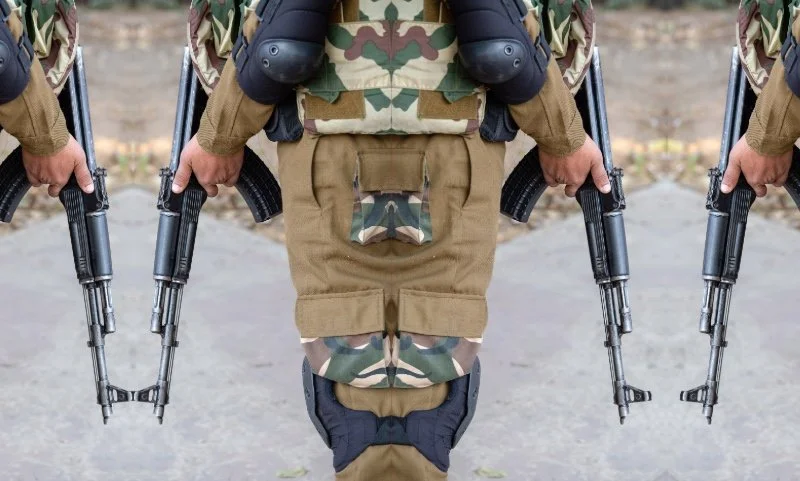
The Election Commission has deployed more than 240,000 Central Armed Police Forces personnel for Phase 1 of the 2026 West Bengal Assembly election, covering 152 of the state’s 294 constituencies, with a further 500 companies to remain after counting and 200 guarding voting machines and counting centres. The scale of this deployment, relative to what the state of security in West Bengal actually warrants, is a question worth putting to the Commission directly.
The first phase alone involves 2,407 CAPF companies. The deployment began in early March, well before polling, with forces conducting area domination exercises through districts in the weeks that followed. The Commission has classified a large number of polling booths as sensitive or super-sensitive, citing factors such as voter-list deletions and prior incidents, with Murshidabad receiving one of the highest concentrations. Senior central force officials held a joint coordination meeting in Kolkata, followed by integration with state police and election authorities to establish a unified security arrangement.
The Commission has defended the concentration of forces partly by citing the decision to conduct polling in two phases rather than several rounds, which it argues requires more personnel at any given time. It has also pointed to post-poll violence following the 2021 election as justification for the scale of the current operation.
The 2021 comparison, however, does not hold up well when placed against more demanding precedents. During the peak of ethnic violence in Manipur in 2024, roughly 288 CAPF companies were deployed under conditions of prolonged armed unrest, with the Armed Forces Special Powers Act (AFSPA) in force in parts of the state, a law that grants the military sweeping powers in areas designated as disturbed, as noted by The Telegraph.

By contrast, West Bengal is conducting a routine state election. The gap between 288 companies in Manipur and 2,407 companies in West Bengal is too wide to be explained by the compressed polling schedule alone.
In the institutional context, CAPF units operate under the Union government, and the 2026 state election is a direct contest between the Union’s ruling party and the Trinamool Congress (TMC), which governs the state. The use of centrally controlled forces at this density, in a state where the political rivalry with Delhi is openly adversarial, puts the appearance of neutrality under considerable strain.
The Commission would need to demonstrate not only that it directed these forces impartially, but that it did so in a way that could also be “seen” as impartial by those most likely to doubt it. That is a high threshold, and the manner in which the Special Intensive Revision (SIR) process has been conducted, alongside other procedural complaints, raises questions about whether the Commission meets that threshold in public perception.
Further, India’s constitutional design assigns primary responsibility for law and order to states. A deployment of this magnitude does not reinforce state police capacity so much as displace it with Union-controlled personnel. The question of legality is secondary here. The Commission has the authority to requisition central forces. But the more consequential issue is whether the equilibrium between levels of government is being maintained, or whether the logic of electoral security is being used to extend the Union’s operational presence in a state that appears to be largely at peace.

There is also the matter of what a deployment of this density does to the experience of voting. A ratio of central personnel to voters that produces visible security installations in polling booths, on roads and in neighbourhoods sends a signal to voters, though not the same signal to all voters. In areas with a history of intimidation, visibility can function as reassurance. In areas where the dominant local grievance is against the Union government, the same visibility can function as pressure. The Commission’s argument that security enables a free vote depends on the assumption that voters read the forces as neutral. The credibility of that reading depends on the credibility of the Commission itself, and that credibility is in dispute.
The cumulative weight of these measures raises a question the Commission has not publicly answered. What threshold of violence or instability would it have required to not deploy at this scale? Without a clear answer, the deployment can be read as disproportionate to the stated security needs and open to the interpretation that it serves political objectives while being framed in procedural terms.
You have just read a News Briefing, written by Newsreel Asia’s text editor, Vishal Arora, to cut through the noise and present a single story for the day that matters to you. We encourage you to read the News Briefing each day. Our objective is to help you become not just an informed citizen, but an engaged and responsible one.
On October 12, opposition leaders, MPs, MLAs, student organisations and political workers came together in a massive march against Chief Election Commissioner Gyanesh Kumar, raising serious concerns over the Special Intensive Revision (SIR) of electoral rolls and the alleged mass deletion of voters’ names. The march brought together a broad coalition, including the INDIA bloc, AISA, SFI and other student unions, as part of a wider nationwide mobilisation against the SIR exercise and concerns surrounding electoral integrity.