
From the Editor’s Desk
April 23, 2026
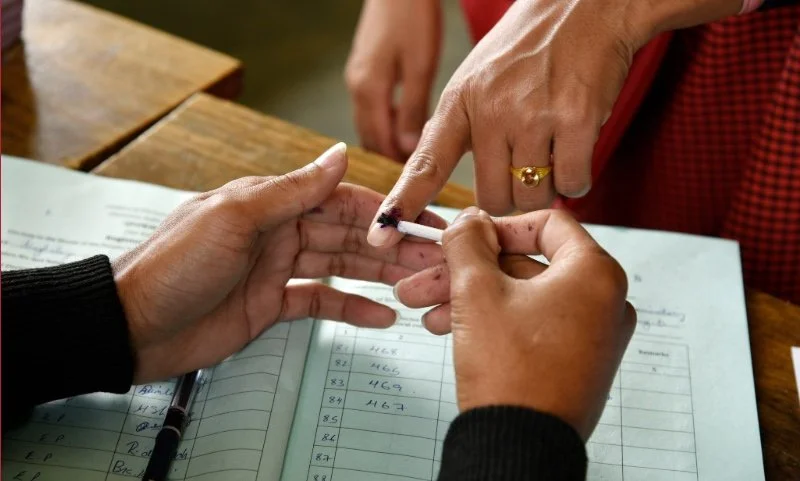
As West Bengal and Tamil Nadu prepare for polling, much of the public discussion has turned, as it routinely does in election seasons, to parties, candidates, alliances and campaign arithmetic. Allegations of cash for votes, political intimidation, partisan use of institutions, extraordinary security deployment, and the blurring of state power with party power appeared well before voting day. Isn’t it surprising that amid such blatant undermining of democracy, we, as citizens, continue participating in systems we know are compromised? In fact, sometimes we help reproduce the very practices we criticise.
The question is unsettling because democratic thought usually separates citizens from democratic erosion. Governments abuse power, parties manipulate institutions and citizens are imagined as victims or resisters. It sounds good to us, but political science gives a more difficult picture. Ordinary people like us allow and sustain democratic weakening when we adapt to it, rationalise it, or participate in it for reasons that feel practical, moral or necessary.
The money in these elections was staggering. Between February 26 and April 22, 2026, enforcement authorities seized cash, drugs, liquor, gold and other items worth over billions in the two states.
Public attitudes toward the practice of cash distribution have long been morally complicated. Many voters condemn the practice, but reporting by The News Minute in the Kongu belt ahead of the 2026 polls found cash-for-votes acknowledged by workers from both the AIADMK and the DMK, with voters often demanding money in exchange for support. A survey by the National Election Watch and the Association for Democratic Reforms found that most respondents said they were against taking money for their vote in principle, but that politicians threatened them with consequences if they refused. The reasoning on the ground is often that taking money is merely recovering a fragment of what power has already taken away.

The logic reveals something political scientists have long observed. Citizens do not always engage elections through the moral vocabulary institutions assume. The British social historian E.P. Thompson used the term “moral economy” for popular notions of fairness that diverge from formal legal rules, notions that carry their own internal legitimacy and deserve to be taken seriously on their own terms. But the same willingness to set aside rules seen as unjust can, in a different context, make it easier to set aside rules that are genuinely protective. That is how citizens may come to see an act that undermines electoral equality as defensible, and at times even principled.
West Bengal offered its own evidence, rooted in a pattern that had been building across successive elections. Political analyst Biswanath Chakraborty told The Wire in June 2024 that electoral violence in West Bengal was “not a spontaneous outburst but a calculated preparation for future elections,” and that the ruling party had historically used state machinery, including the police, to ensure there were no legal repercussions for political violence.
Citizens living inside such settings may condemn coercion in principle, but often excuse it when their own side does it. If the other camp would do the same, why hold back? Political scientists call this partisan asymmetry in moral judgement, meaning people apply one standard to their own side and another to their opponents, which suggests they have already been drawn into the power-hungry agendas of political parties, often without realising it.
No party and no state had a monopoly on this asymmetry. In West Bengal, Chief Minister Mamata Banerjee accused the BJP of using the Election Commission’s Special Intensive Revision (SIR) of electoral rolls to systematically delete legitimate voters, particularly minorities and migrants. In Tamil Nadu, Chief Minister M.K. Stalin made the same accusation against the BJP-AIADMK alliance, alleging it was targeting working-class voters, Scheduled Castes, minorities and women. These are, no doubt, serious concerns, but each side insisted that only the other side manipulated institutions.
The Italian theorist Antonio Gramsci had a useful idea here, which he called hegemony. Gramsci argued that a ruling group stays in power not just through force but by getting ordinary citizens to internalise its values and view of the world as simple common sense. Politicians and parties deliberately create conditions of dependence and inequality that make the existing order appear natural and inevitable to those living under it.
In an electoral context, this helps explain why a villager who depends on a party network for welfare may resent political domination and yet accommodate it, or why a local trader backs a dominant party not out of loyalty but calculation. People are left with no practical alternative but to go along. And it is through exactly this kind of manufactured consent that existing political orders sustain themselves.
Further, according to the Association for Democratic Reforms, 404 of the 722 candidates from major parties contesting the Tamil Nadu election had serious criminal cases pending against them. A voter dissatisfied with governance could have reasonably considered this fact decisive. Many may not, because the election is experienced primarily through questions of language, regional autonomy and cultural dignity. While these are real and significant issues, they are only part of what a state government is responsible for, and a small part at that.
Citizens voting through strong identity commitments may not weigh allegations of electoral misconduct equally across party lines. Identity loyalty, hardened to that degree, can end up shielding the very conduct democratic institutions exist to prevent.
The German-American political philosopher Hannah Arendt observed that grave political wrongs persist through ordinary habits of accommodation by people who see themselves as simply managing life. Something similar appears to be at work in democratic decline. A voter who shrugs that all parties distribute money may believe this is realism, and a party worker who treats intimidation as unfortunate but necessary may think he is simply defending political order.
A citizen who dismisses electoral violence as how politics has always functioned may be expressing resignation rather than endorsement. But each such accommodation reduces the moral shock of practices that weaken democratic life. What appears exceptional today can become routine tomorrow, and routine is often where institutional decay settles deepest.
This argument can sound severe because it assigns citizens a share of responsibility. Stopping there, however, would distort reality. People often continue participating in flawed elections for another reason. Based on their experience, they believe that elections, however damaged, still contain the possibility of correcting power. For example, West Bengal saw the Left Front’s 34-year dominance overturned through the ballot in 2011. Tamil Nadu has repeatedly shown voters punishing incumbents seen as overreaching. Indian elections have repeatedly produced outcomes that confounded political elites who thought the result was already decided.
Political scientists sometimes call this democratic resilience. Participating under such conditions may mean compromising with a damaged order, but it may also mean refusing to abandon the only peaceful instrument available to change it.
Democracy does not erode only from the top. Rulers who seize too much power are part of the story, but so are ordinary people who look away from small violations, excuse abuses committed by their own side, accept coercion as tradition, or treat cash for votes as practical common sense. The same people, however, can also choose to stop looking away, and that is often what keeps democracy alive.
You have just read a News Briefing, written by Newsreel Asia’s text editor, Vishal Arora, to cut through the noise and present a single story for the day that matters to you. We encourage you to read the News Briefing each day. Our objective is to help you become not just an informed citizen, but an engaged and responsible one.
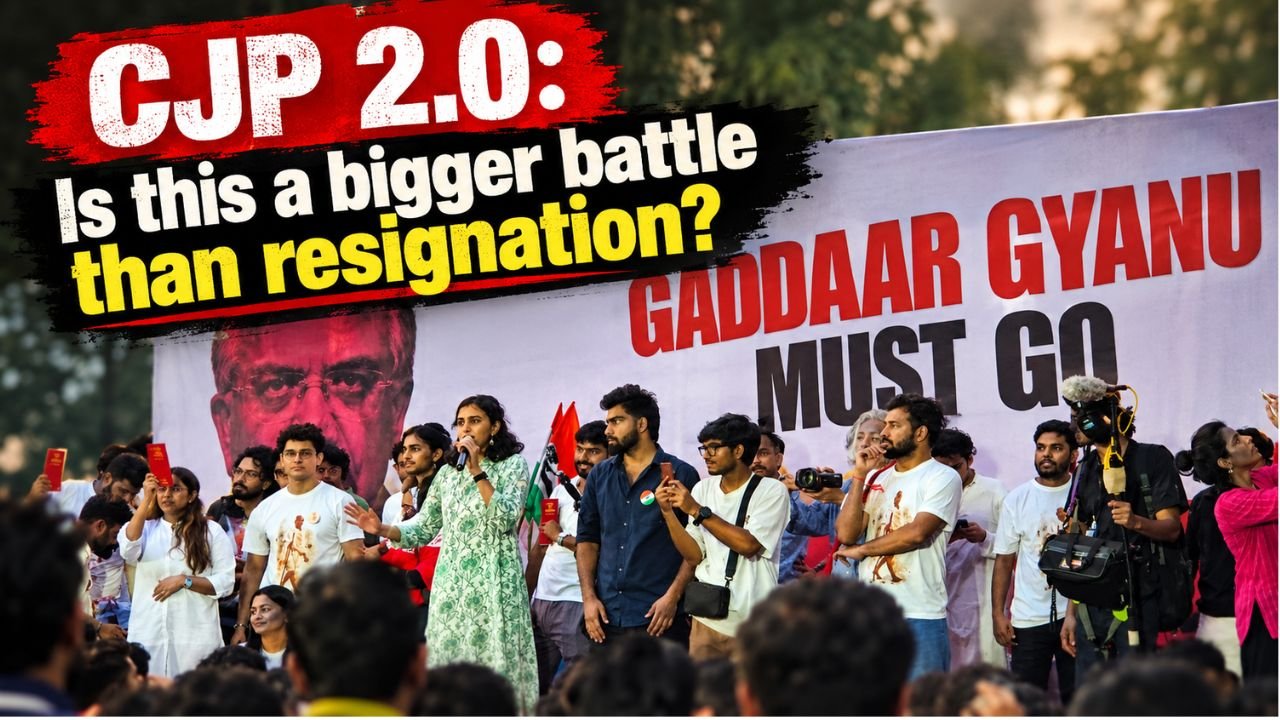
On October 12, opposition leaders, MPs, MLAs, student organisations and political workers came together in a massive march against Chief Election Commissioner Gyanesh Kumar, raising serious concerns over the Special Intensive Revision (SIR) of electoral rolls and the alleged mass deletion of voters’ names. The march brought together a broad coalition, including the INDIA bloc, AISA, SFI and other student unions, as part of a wider nationwide mobilisation against the SIR exercise and concerns surrounding electoral integrity.