
In this episode of WEE The People, we examine the history and importance of protests—from one of the earliest recorded workers’ strikes in ancient Egypt to the French Revolution, the labour movement, the struggle for universal voting rights and India’s freedom movement. We also explain how protests create change. By bringing people together, they make ignored problems visible, attract public attention, demonstrate collective strength and give people without money or institutional influence the power to negotiate with those in authority.
Why do we go to the police instead of taking revenge ourselves? Why does the court decide disputes instead of families settling them through force? The answer lies in the political science concept of “monopoly over legitimate violence.”
Do governments really need to limit our freedom to keep us safe? In this episode, we break down the concept of security politics and how states define threats, justify extraordinary measures, and expand their powers in the name of protection.
Why do we all want better public services—clean air, safer roads, good schools, and accountable governance—yet fail to act together to achieve them?
What is a Constitution, and why must every citizen understand it? In this episode of We the People by Newsreel Asia, we explain the meaning of a Constitution, how constitutionalism evolved from ancient law codes to modern democracy, and why the Indian Constitution remains central to protecting our rights, liberty and equality.
In a democracy, power is meant to belong to citizens. Elected leaders and public officials hold authority only as a trust — to serve the public and remain accountable to it. But over time, that relationship can begin to feel reversed. In this episode of “We the People,” Surabhi Singh examines how a system built on representation can gradually start to feel like control.
If hard work alone could end poverty, the poorest people in the world would be the richest. Yet millions remain trapped in poverty for generations. Why? In this episode of Newsreel Asia’s explainer series “We the People,” Harshita Rathore examines why poverty cannot be reduced to individual effort or personal choices.
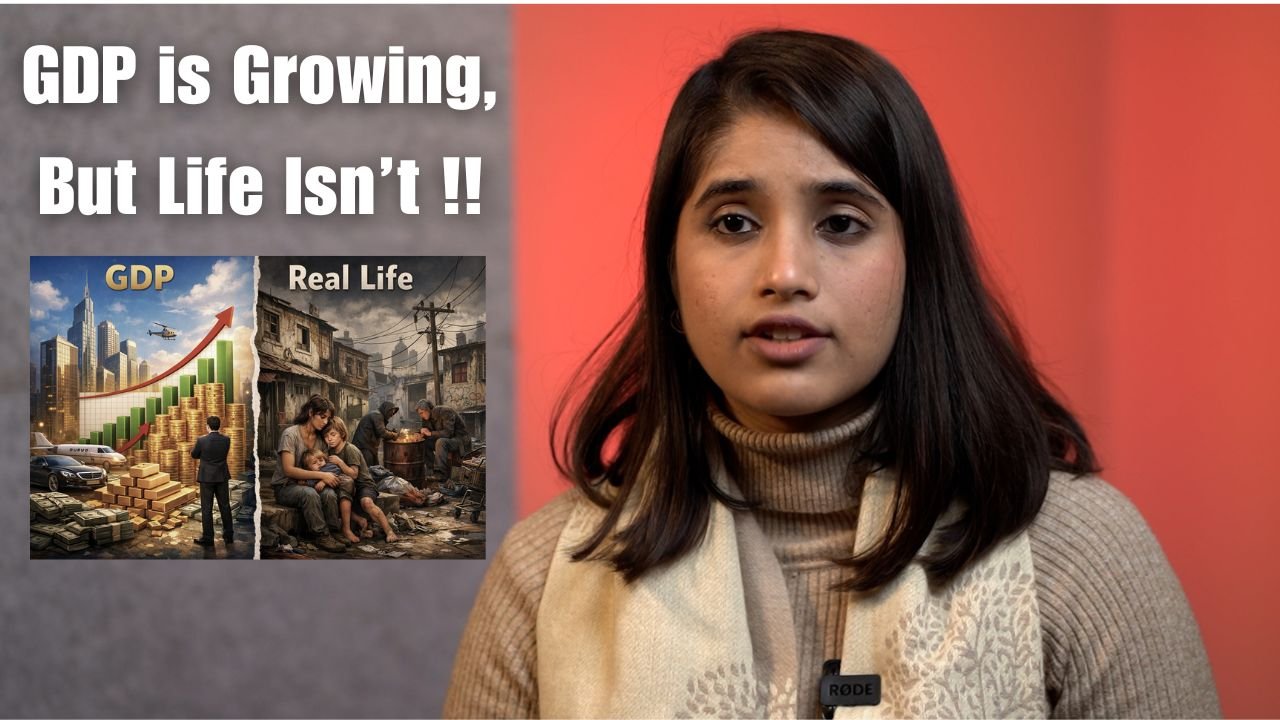
Governments often point to rising GDP, higher per capita income, and global rankings to claim that the economy is doing well. But do these numbers actually reflect how ordinary people live? If GDP grows by five percent, does life really improve by five percent for everyone? In this episode of We the People, we look beyond headline statistics to understand what economic “growth” truly means for people on the ground. Using simple examples—from wages and employment to gig work, nutrition, and cost of living—this video explains why commonly used economic yardsticks can be misleading.
In this episode of We the People, Surabhi Singh breaks down a powerful but often misunderstood idea: rights are recognised, not granted. Using everyday examples and insights from political philosophy and constitutional law, this video explains why freedoms like speech, conscience, equality, and dignity don’t come from the state — they belong to us simply because we are human.
Surabhi Singh explains why the dignity of labour is not just a moral idea, but an economic necessity. From caste and class hierarchies in India to global examples like Germany’s vocational education system, this video explores how respect, fair wages, and legal protection shape productivity, skill-building, and economic growth. Drawing on ideas from thinkers like Émile Durkheim, George Akerlof, Gary Becker, and Dr B. R. Ambedkar, this explainer shows how undervaluing manual and skilled labour weakens economies.
In democracies, we expect rights to disappear loudly — through bans, crackdowns, or open repression. But in reality, freedom is often taken away quietly, through laws, procedures, and paperwork.
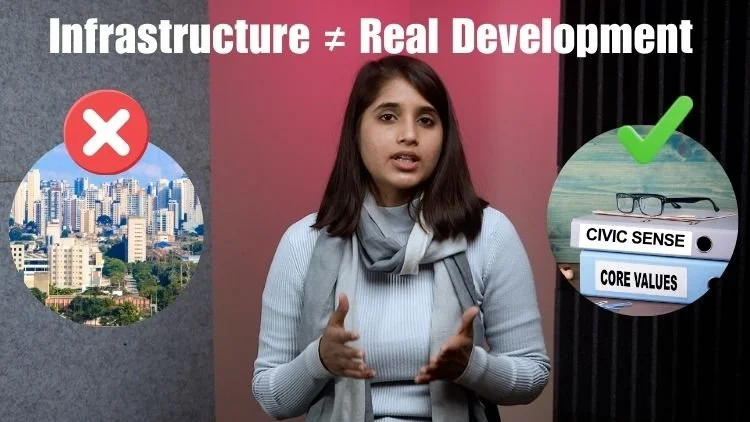
When we think of development or vikas, we often picture highways, airports, metros, and tall buildings. But do these visible symbols really tell us how well a country is doing? In this explainer, Newsreel Asia looks beyond concrete and steel to ask a deeper question: does development only mean infrastructure, or does it also mean freedom, trust, and dignity? Drawing on ideas from thinkers like Amartya Sen, Robert Putnam, and Douglass North, this video explores why real progress is about expanding people’s choices and improving the quality of public life.
Political engagement is not the same as political loyalty. Yet in today’s hyper-polarised world, many of us confuse supporting democracy with supporting a political party. In this episode of Newsreel Asia’s Explainer Series, Harshita Rathore breaks down what political engagement really means—and why being politically aware does not require blind loyalty to any party or ideology.
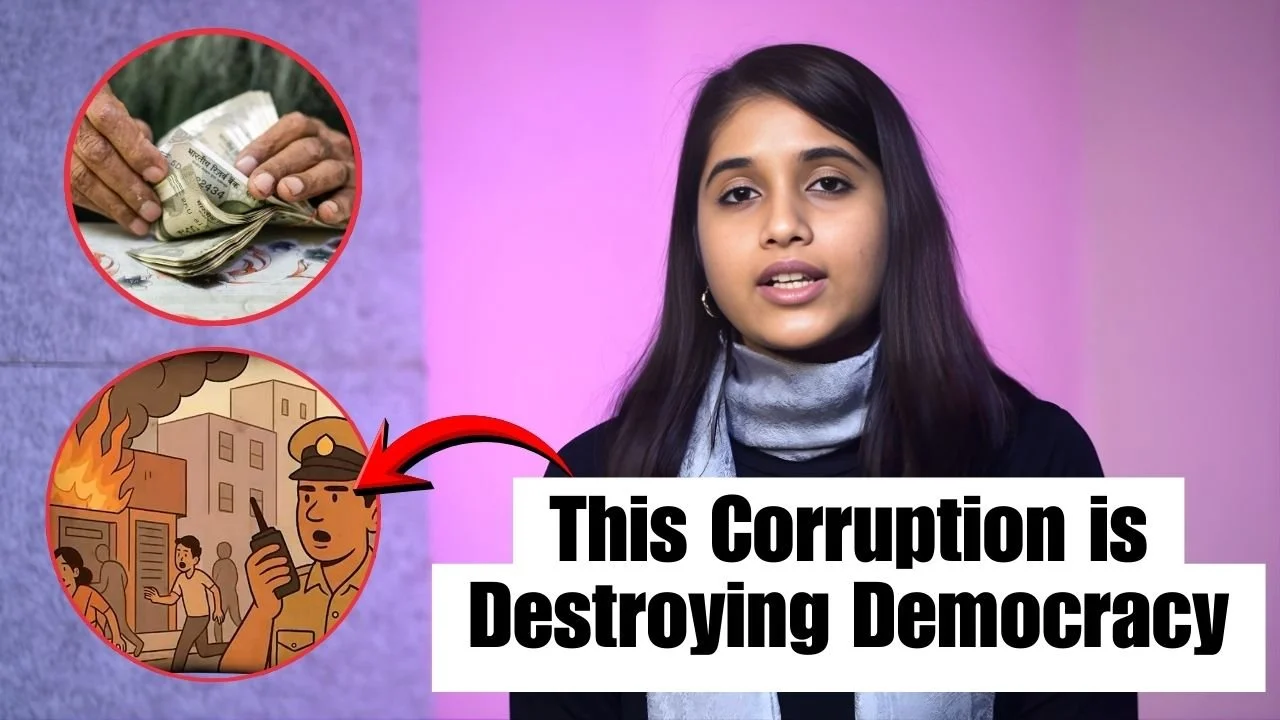
Corruption is often imagined as bribes, cash-filled envelopes, or stolen public funds. But today, scholars, legal experts, and real-world events are forcing us to rethink this definition. Corruption is no longer just about money — it also includes deliberate inaction, selective enforcement, and the betrayal of public duty. In this explainer, we unpack how a new idea has quietly entered the meaning of corruption and why it matters for every citizen.
This video looks at the role social media played in the rise of the Cockroach Janata Party and the wider Cockroach Movement in India. From Instagram and short-form videos to memes, satire and real-time responses, CJP and independent creators were able to build a political narrative around education, employment, accountability and governance, while pushing back against attempts to define the movement through communal or anti-national frames.