
India Pays Double for Fertiliser Imports as Middle East War Disrupts Supply
From the Editor’s Desk
April 24, 2026
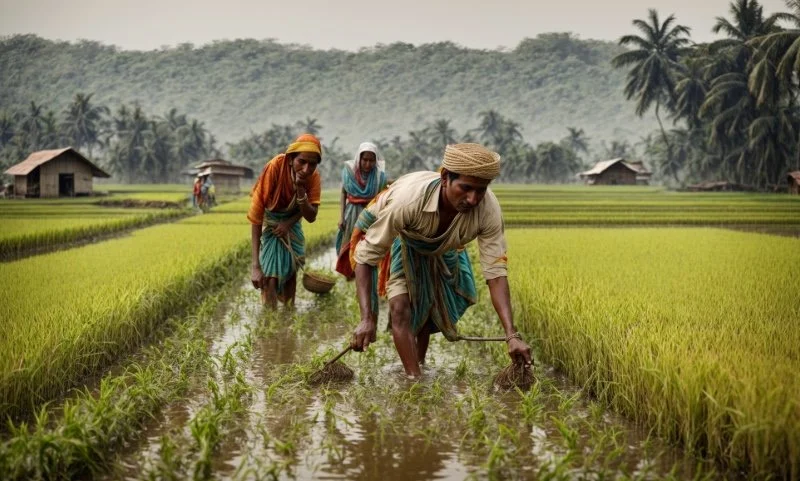
India has agreed to import 2.5 million metric tons of urea at prices ranging from $935 to $959 per ton, nearly double the $508 to $512 per ton paid in its previous tender just two months ago. For ordinary Indians, a near-doubling of urea import prices will eventually translate into higher food costs.
The purchase was made through Indian Potash Ltd, which issued a tender earlier this month seeking 2.5 million tons of urea, equal to roughly a quarter of India’s annual imports of about 10 million tons, , according to Reuters.
Suppliers offered to provide 5.6 million tons in total, with most bids clustering around $1,000 per ton and some reaching as high as $1,136, reported the newswire. IPL secured the full 2.5 million tons after competing suppliers agreed to match the lowest available price of $935 per ton for west coast delivery and $959 per ton for the east coast. The previous tender, issued by Rashtriya Chemicals and Fertilizers, had drawn bids of $508 and $512 per ton respectively. Shipments must depart by June 14.


The price surge is rooted in the disruption of global urea supply by the war involving the US, Israel, and Iran. India’s decision to absorb 2.5 million tons in a single tender has further tightened an already strained global market, and remaining buyers will now scramble to secure supplies at whatever prices producers can command, according to a Mumbai-based industry official quoted by Reuters.
Urea is a nitrogen fertiliser and the most widely used crop nutrient in Indian agriculture. Farmers buy it at a government-fixed subsidised price, so the doubling of import costs does not appear on a farmer’s bill immediately. The government compensates fertiliser companies for the gap between the market price and the subsidised rate, which means the extra cost is absorbed by the state rather than charged directly to the farmer.
That absorption, however, is not free. The government will have to find additional money to maintain the subsidy at the same level, and that money comes from the same pool of public funds that pays for rural roads, schools, hospitals, and welfare programmes. An ordinary citizen who never buys urea directly will still feel the consequence if spending in those areas is trimmed to cover a higher fertiliser subsidy bill.
The farmer’s exposure is more direct, though it too operates with a delay. If the government finds the subsidy bill difficult to sustain at the new import price, it may respond by gradually raising the subsidised rate at which farmers buy urea, capping the quantity available per farmer, or reducing the speed at which it reimburses fertiliser companies. Any of these responses raises the cost of growing food, and that cost moves into food prices that urban and rural consumers pay alike.


The structural problem this episode exposes is that India imports roughly 10 million tons of urea a year, making it the world’s largest urea importer. That level of dependence on external supply means any serious disruption anywhere in the production or shipping chain lands directly on Indian agriculture and, through it, on Indian food prices.
The global market will feel this too. India’s single purchase of 2.5 million tons has committed a large share of available export supply, leaving other importing countries with less to buy at higher prices. In lower-income countries in Asia and Africa that are already under food stress, a tighter urea market will push up the cost of growing staple crops and add pressure to food prices that are already stretched. For an Indian consumer, this matters because India’s own food import bill and inflation are linked to the same global commodity pressures that are now tightening around fertiliser.
The subsidy will most likely hold through this season. The government has both the fiscal capacity and the political incentive to keep urea affordable for farmers. The concern is not this planting season but the one after, and the budget negotiation that will happen in between, where a higher subsidy cost will compete quietly with every other public need, and ordinary citizens will have no way of knowing which line item lost.
You have just read a News Briefing, written by Newsreel Asia’s text editor, Vishal Arora, to cut through the noise and present a single story for the day that matters to you. We encourage you to read the News Briefing each day. Our objective is to help you become not just an informed citizen, but an engaged and responsible one.



What happened in Mumbai on October 2 may have been only one day of protest, but the issues behind it are unlikely to disappear with the dispersal of the crowd. The protest was centred around concerns over the Election Commission, electoral rolls and the Special Intensive Revision (SIR) exercise, with protesters demanding accountability from Chief Election Commissioner Gyanesh Kumar. At the same time, similar mobilisation has been taking place across different parts of the country, with student groups, Opposition parties and civil society organisations raising concerns over the electoral process. Newsreel Asia spent the day at Mumbai Protest capturing the preparations, the police presence, conversations with protesters, the atmosphere on the streets and how the day unfolded. The speech of Cockroach Janta Party's leaders and sentiment of protestors seemed larger than the concerns regarding the electoral process. Will this lead to something bigger?