
The Question Is Not Why Raghav Chadha Left AAP, But Where He Went
By Vishal Arora
April 27, 2026
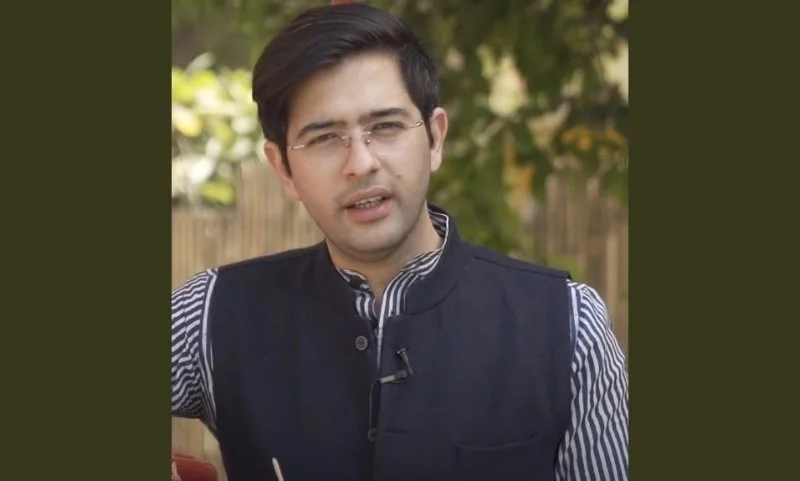
Raghav Chadha, a founding member of the Aam Aadmi Party (AAP) and one of its most prominent Rajya Sabha faces, has left the party along with six other MPs from the same party to join the governing Bharatiya Janata Party (BJP). The question his departure raises is not whether his stated grievances about AAP’s inner functioning were genuine, but whether those grievances, even taken at face value, explain why he chose to join the BJP.
Chadha’s stated reason for leaving AAP is a “toxic work environment,” according to The Times of India. He was quoted as saying that he was sidelined within the party, and that before his exit, AAP had removed him as its deputy leader in the Rajya Sabha and reportedly asked that he not be allocated speaking time from its quota.
He denied rumours that the prospect of Enforcement Directorate (ED) or Central Bureau of Investigation (CBI) scrutiny pushed him out of AAP, stating that disappointment, disenchantment and disgust drove the decision.
Seven of AAP’s 10 Rajya Sabha MPs left together, which is precisely the two-thirds threshold required under the Tenth Schedule of the Constitution, the anti-defection law. That law disqualifies legislators who voluntarily give up party membership, but it exempts a merger where at least two-thirds of a legislative party joins another party as a group. By reaching that number, Chadha and his colleagues retained their parliamentary seats.

AAP has characterised the move as part of “Operation Lotus,” referring to alleged BJP efforts to attract rival legislators through inducement or political pressure. AAP spokesperson Anurag Dhanda and senior leader Sanjay Singh have made that claim.
AAP supporters have also recirculated a press conference from October 2023 in which Chadha himself alleged that opposition leaders facing ED and CBI cases could obtain relief by switching to the BJP. The ED had raided Delhi Jal Board offices in early 2024 in connection with a contract investigation. Chadha was not named as an accused. However, some AAP supporters linked that context to speculation about pressure, a suggestion Chadha has explicitly denied.
The internal functioning argument deserves to be taken seriously on its own terms, because if true, it would be a serious indictment of a party that built its identity on internal democracy and clean politics. But the argument appears difficult to reconcile with the destination he chose.
The BJP offers little obvious evidence of resolving the grievance Chadha described, especially regarding dissent within parliamentary politics or autonomy for independent voices. Chadha cited silencing as his grievance, and he has moved to a party where leaders such as Shivraj Singh Chouhan and Vasundhara Raje, both former chief ministers with decades of organisational work behind them, were passed over without explanation when their states returned BJP governments in 2023. If the grievance was about freedom to speak and work, the move leaves questions unresolved.
The two-thirds arithmetic is where the case for ideological choice weakens further.

The Tenth Schedule was designed to prevent defections motivated by personal or political gain and to hold elected representatives accountable to the mandate under which they were elected. The merger exemption was intended for genuine political realignments, and critics may question whether a split calibrated precisely to meet the threshold sits comfortably with that constitutional purpose. That Chadha’s group reached exactly two-thirds invites questions about whether the split was carefully structured to fit the merger exception and preserve parliamentary seats.
The MLAs who elected AAP’s Rajya Sabha members did so on a party mandate largely positioned against the BJP, and those MLAs themselves derived authority from voters who supported that platform.
Chadha spent years publicly alleging that the BJP used central investigative agencies to pressure and attract opposition politicians. He built a public identity in opposition to political practices he had publicly associated with the BJP. His supporters were backing what he said he stood for. That democratic relationship is hard to reconcile with a move into the party he had spent years warning against, explained primarily through dissatisfaction within his previous party.
Electoral mandates derive legitimacy from the assumption that the person seeking office will broadly remain within the political commitment they represented at the time of seeking it. A departure from that commitment can leave voters without an effective mechanism to revisit that choice.
Chadha may be correct that AAP’s internal environment became genuinely hostile. That is a verifiable claim, given the documented removal from his deputy leadership position and the restrictions on his speaking time, though the reasons for those decisions remain unclear. The difficulty is that he has used an apparently real grievance to justify a conclusion the grievance alone does not fully explain.
A toxic workplace may be a reason to leave a party, but it does not by itself explain joining the ideological formation he spent 15 years opposing.
You have just read a News Briefing, written by Newsreel Asia’s text editor, Vishal Arora, to cut through the noise and present a single story for the day that matters to you. We encourage you to read the News Briefing each day. Our objective is to help you become not just an informed citizen, but an engaged and responsible one.


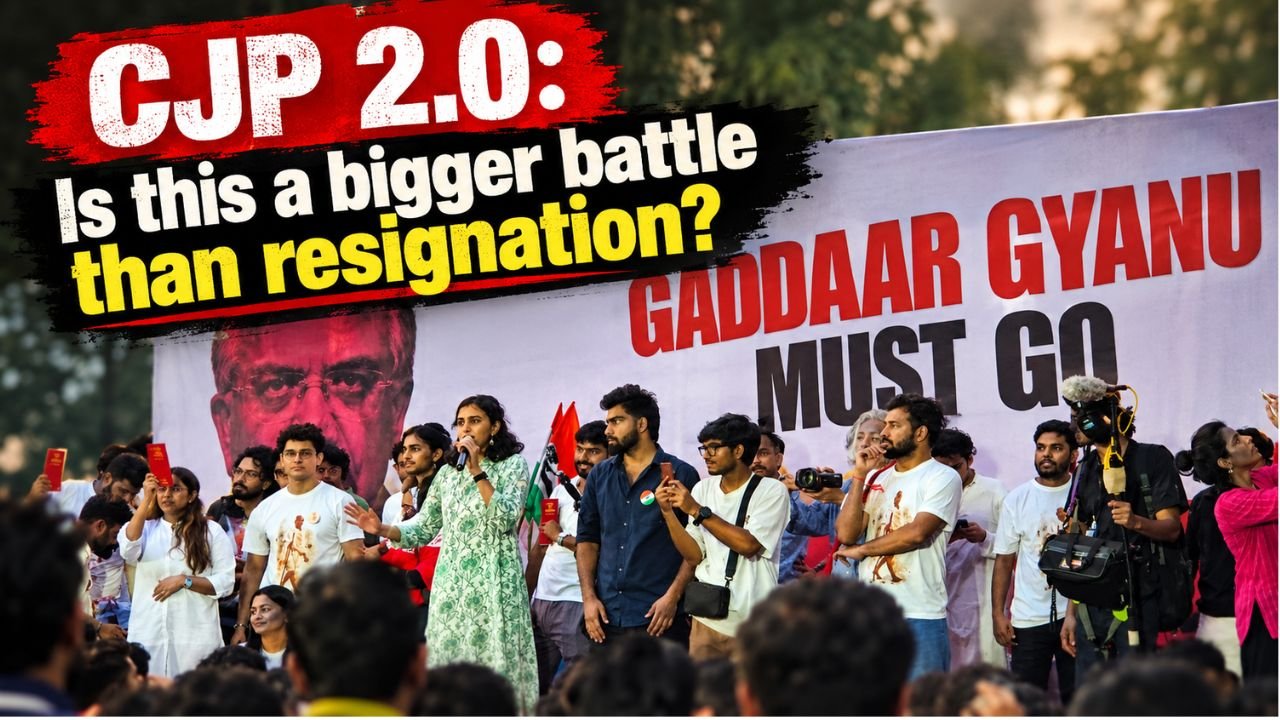
On October 12, opposition leaders, MPs, MLAs, student organisations and political workers came together in a massive march against Chief Election Commissioner Gyanesh Kumar, raising serious concerns over the Special Intensive Revision (SIR) of electoral rolls and the alleged mass deletion of voters’ names. The march brought together a broad coalition, including the INDIA bloc, AISA, SFI and other student unions, as part of a wider nationwide mobilisation against the SIR exercise and concerns surrounding electoral integrity.