
Lok Sabha Expansion Will Weaken Effect of Women’s Reservation
From the Editor’s Desk
April 17, 2026
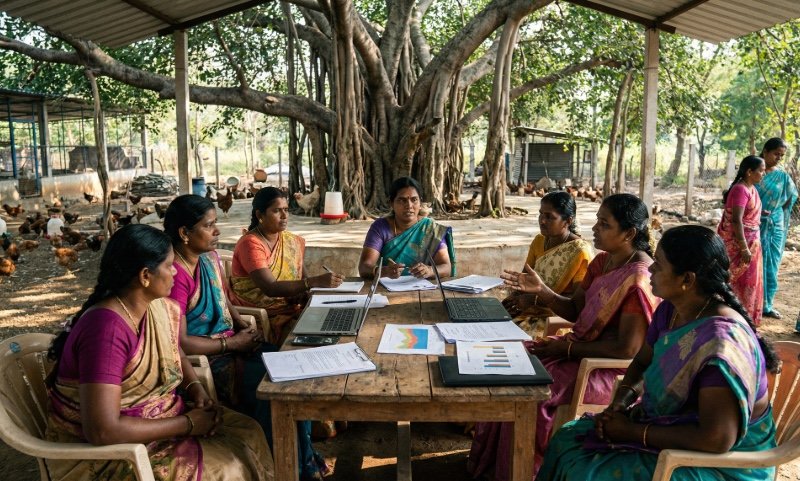
The Constitution (131st Amendment) Bill, 2026, proposes to raise the sanctioned strength of the Lok Sabha to 850 and also expand state legislatures to accommodate the 33 percent reservation of seats for women. The trouble with enlarging the House, rather than reallocating seats within it, is that existing arrangements of power would be left intact, which in turn would mean male-dominated networks carry on with only limited change. The proposal appears to serve political convenience at the cost of democratic fairness.
Let’s consider first what the government has actually put on the table.
The women’s reservation law sets aside 33 percent of seats in Parliament and state assemblies for women, and to ease implementation, the government wants to enlarge the Lok Sabha from 543 to 850 seats so that existing constituencies remain untouched. Of these, 815 seats would go to states and 35 to Union Territories. Alongside this enlargement, the Bill proposes a fresh delimitation based on the 2021 Census, even as a new census exercise is still under way.
The current distribution of seats are based on 1971 Census figures, an arrangement originally designed to ensure that states which had slowed their population growth would not be penalised with reduced representation. The proposed changes are meant to take effect from the 2029 general elections.
Now, let’s trace the consequences of stitching gender representation and territorial representation into a single reform.

If reservation is applied within the existing 543 seats, parties would have to nominate women in many constituencies where men currently contest and win. This means established male candidates would be replaced in a significant number of seats. As a result, parties would have to direct campaign funds, deploy workers and organise publicity around women candidates in these constituencies, giving them the same electoral backing that earlier went to male candidates.
In parliamentary systems, control over candidate selection is a key source of power. Women who enter through this route win elections in their own right, build ties with voters and develop independent political standing within their parties. This strengthens their ability to influence internal decisions. Gradually, this affects who gets promoted within the party, who is chosen for ministerial roles and which issues receive sustained political attention.
Enlarging the chamber to avoid displacing sitting male legislators dilutes the redistributive force of the reform. Quota systems in some other countries, including Rwanda and France, have generally worked because they reallocate existing political space. Such reallocation created friction within parties, and that friction was itself part of the reform because it forced political organisations to rework candidate selection, internal hierarchies and campaign priorities. Removing that pressure makes the law easier to pass and weaker in its long term effect on party structures.
American political theorist Hanna Pitkin wrote about “descriptive representation,” which is the mere presence of a group in a legislature. She separated it from actual influence over decisions and outcomes. She argued that mere entry into institutions does not automatically translate into power. Despite visible numbers, she explained, a group may remain limited in its ability to influence policy, debate and priorities.
American political scientist Paul Pierson’s work has shown that policies and institutions “lock in” over time because those who benefit from them have both the interest and the ability to defend them. It suggests that once institutions settle into a pattern, they tend to keep moving along that same track.
The existing system in India has long been dominated by male candidates who control party networks, funding channels and local political bases. A reservation applied within the current 543 seats would disrupt that pattern by forcing parties to replace many of those candidates. That kind of disruption acts as the “pressure” needed to push the system onto a new path.
If we look at delimitation separately, it involves two ideas of fairness. One gives priority to equal weight for each vote, which supports updating seats based on population. The other gives weight to balance between states and to policy outcomes such as population control, which supports keeping seat shares stable across regions. However, electoral equality is the core rule in a representative system, because legislatures are meant to reflect the distribution of people. If populations change, representation is expected to change with them so that each vote carries similar weight.
Further, had delimitation come first, parties would have adapted to new constituencies before adjusting to gender quotas. Had quotas come first, parties would have restructured candidate selection within the existing map. Doing both at once would compress the time available for adaptation and heighten uncertainty.
The work of Dutch political scientist Arend Lijphart on power sharing argues that in societies marked by deep divisions, political stability improves when different groups, whether defined by region, language or identity, have a real share in decision-making. If one group dominates because of numerical strength, others can feel excluded, which can weaken trust in the system.
You have just read a News Briefing, written by Newsreel Asia’s text editor, Vishal Arora, to cut through the noise and present a single story for the day that matters to you. We encourage you to read the News Briefing each day. Our objective is to help you become not just an informed citizen, but an engaged and responsible one.

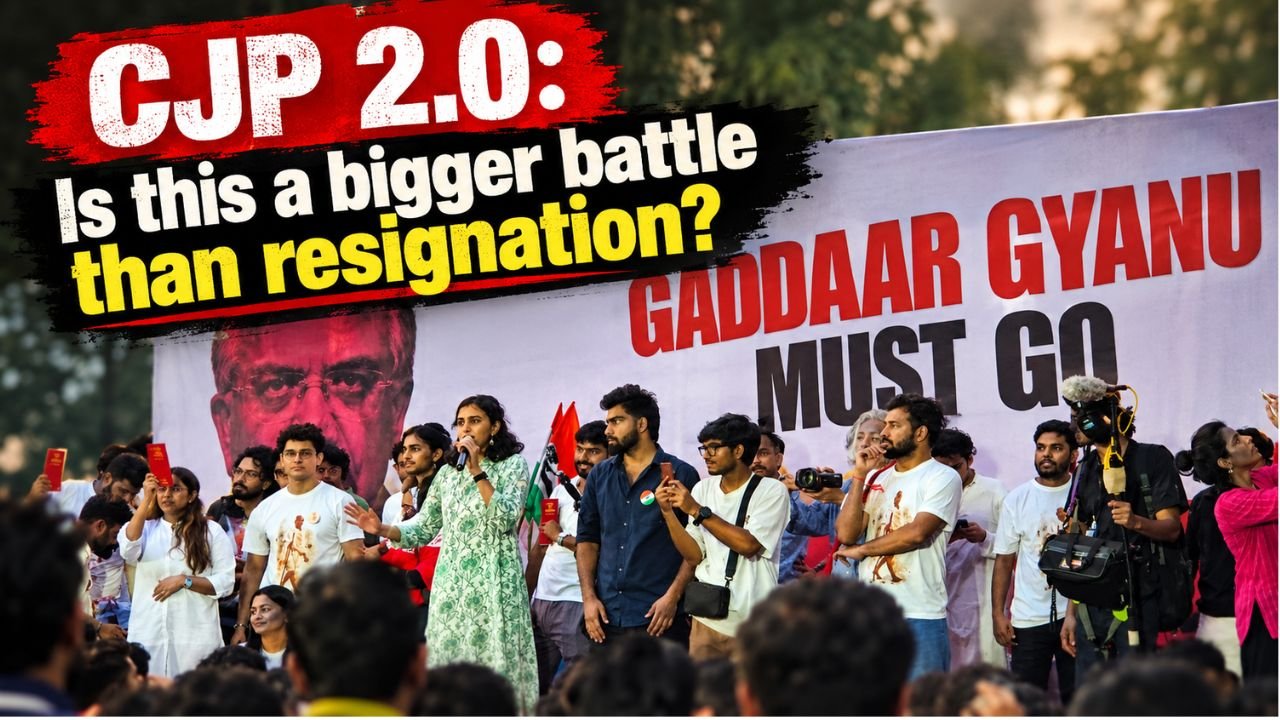
On October 12, opposition leaders, MPs, MLAs, student organisations and political workers came together in a massive march against Chief Election Commissioner Gyanesh Kumar, raising serious concerns over the Special Intensive Revision (SIR) of electoral rolls and the alleged mass deletion of voters’ names. The march brought together a broad coalition, including the INDIA bloc, AISA, SFI and other student unions, as part of a wider nationwide mobilisation against the SIR exercise and concerns surrounding electoral integrity.