
Government Wants to Regulate Citizen Speech Like ‘Published’ News
From the Editor’s Desk
April 2, 2026
A draft amendment to the IT Rules would allow authorities to direct platforms to take down not only content from media organisations but also posts by individual users on social media. It would remove the distinction between a media organisation that publishes news as an institutional activity and an ordinary citizen who speaks, comments, jokes, shares, records, criticises or reports from a phone, by bringing such user generated content within a regulatory structure designed for digital media entities and publishers.
Under the draft, the Ministry of Information and Broadcasting would extend its oversight from recognised digital news publishers to “news and current affairs content” posted by ordinary users, categorised as “non-publisher users,” allowing it to flag such posts for action, as reported by Hindustan Times. The Ministry of Electronics and Information Technology (MeitY) would ensure that platforms treat these directions as part of their legal due diligence under Section 79 of the IT Act, with the risk of losing safe harbour if they fail to comply.
The draft also expands the role of an inter-departmental committee, a government body set up under the Rules to review complaints and decisions, which would now be able to take up a wider range of matters referred by ministries, placing user posts within a layered system of executive oversight that was originally designed for publishers.
The use of the phrase “non-publisher users” in the Rules is interesting. It appears to preserve the distinction while actually destroying it. It’s like naming citizens as non-publishers, and then subjecting their public affairs speech to the very machinery associated with publisher oversight.

Citizens and publishers must be treated differently under the law.
A publisher is a legally identifiable institutional actor, which has an editorial chain, designated responsibility, structured output, financial organisation, repeat publication, and in many cases legal and professional processes that the state can point to when it wants to regulate or prosecute. A citizen occupies a different place in a democracy. A citizen speaks as part of public life itself. A citizen may post a fact, a view, satire, criticism, a question, a livestream, a meme, or a local eyewitness account.
Therefore, treating citizen as a publisher for enforcement purposes amounts to turning everyday political participation into a regulated activity. Treating the citizen as an object of media governance is a major shift in the relationship between state and society.
Further, regulation covering individuals whose posts contain “news and current affairs” content is too broad and may include politics, elections, protest, religion, corruption, satire about public officials, commentary on violence, local administration, economic distress, parliamentary speech, public policy, civic complaints, communal incidents. This may result in the state acquiring a route to treat large numbers of politically active citizens as quasi-publishers.
Democracies have a layered public sphere. Professional journalism is one layer. Citizen speech is another. The two interact, but they remain distinct. In political science and democratic theory, ordinary public discussion is seen as part of self-government. Citizens do not need a newsroom structure in order to criticise a minister, share a video of police action, or circulate a political interpretation. The proposal therefore widens state power over public discourse at the level where democratic life is most active, among citizens using social media to speak on public affairs.

In media law, legal responsibility for published content rests with the publisher, which bears the risk of penalties or prosecution for what it puts into the public domain. In this case, the state places that kind of legal risk on platforms through liability rules, so that user posts become potential sources of legal exposure for the platform. As a result, platforms would act quickly to remove or restrict such content, producing an outcome where user speech is controlled in a way that resembles how publisher content is regulated.
In February 2026, the government reduced the removal timeline for flagged content to three hours from 36 hours. That means the citizen’s rights will be filtered through a private company’s fear of legal exposure. In effect, the proposal creates a climate where millions of citizens can be governed as potential publishers, while the actual discipline is outsourced to firms that have every incentive to act first and debate later.
The real issue appears to be that social media has reduced the control that institutional publishers once held over what becomes visible in public debate. Citizens can now set agendas, circulate counter narratives, organise ridicule, document abuse and reach large audiences without going through editorial gatekeeping. Governments across the world view this shift with concern because it limits their ability to manage the flow of information. Expanding executive power, increasing pressure on platforms, broadening the scope of regulated speech and enlarging oversight mechanisms lacks clear justification in that context.
You have just read a News Briefing, written by Newsreel Asia’s text editor, Vishal Arora, to cut through the noise and present a single story for the day that matters to you. We encourage you to read the News Briefing each day. Our objective is to help you become not just an informed citizen, but an engaged and responsible one.
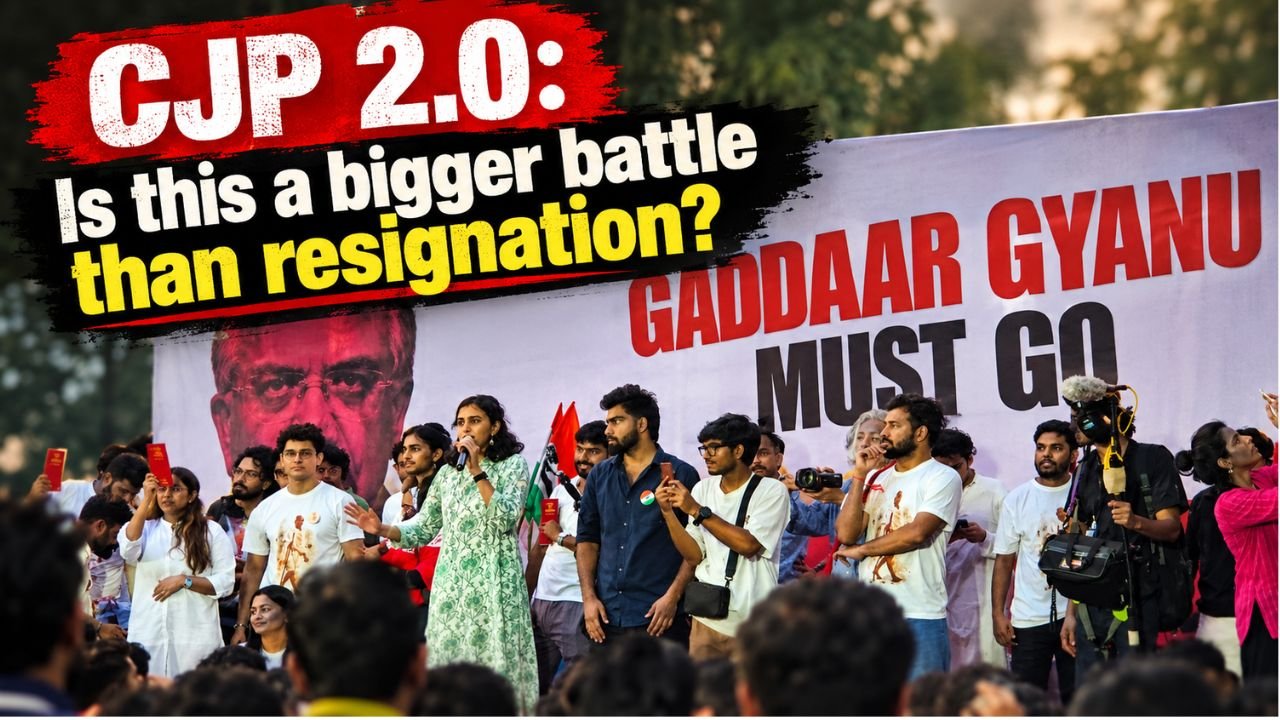
On October 12, opposition leaders, MPs, MLAs, student organisations and political workers came together in a massive march against Chief Election Commissioner Gyanesh Kumar, raising serious concerns over the Special Intensive Revision (SIR) of electoral rolls and the alleged mass deletion of voters’ names. The march brought together a broad coalition, including the INDIA bloc, AISA, SFI and other student unions, as part of a wider nationwide mobilisation against the SIR exercise and concerns surrounding electoral integrity.