
The State Has No Right to Regulate Sexual Conduct of Adult Women
Leader of Opposition Rahul Gandhi has written to Maharashtra Chief Minister Devendra Fadnavis, demanding an end to the reported practice of requiring female Adivasi students returning after an absence to undergo pregnancy tests before being readmitted to government hostels. No student should have to prove that she is not pregnant or has not had sex to retain her accommodation and continue her education.
Niti Aayog Finds 87 Million Young Indians Not Studying, Working or Training
More than 87 million (8.7 crore) Indians age 15 to 29 are not studying, working or getting any training, according to report by NITI Aayog, the Indian government’s policy think tank.
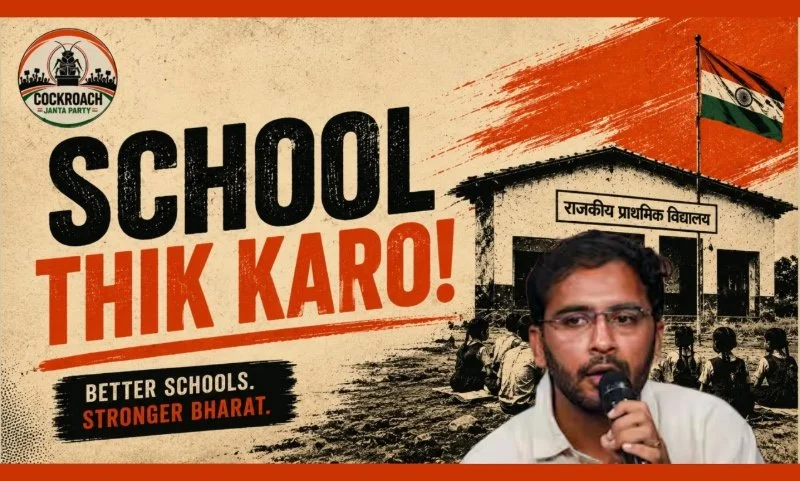
Why the Reported Attack on CJP’s Ashutosh Ranka During a Rajasthan School Visit Is a Serious Incident
Cockroach Janta Party (CJP) co-convener Ashutosh Ranka and his team travelled to Rampura-Kanwarpura village in Jaipur district on August 21 to investigate a government primary school reportedly operating from a cattle enclosure because its building was unsafe. According to reports, members of the delegation, including a woman, were chased, beaten and pelted with stones, while their vehicles and phones were damaged. Ranka said his clothes were torn and that one volunteer suffered a fractured hand. The incident is serious for at least five reasons.
Storm Could Be Brewing for Officials Across India as CJP Turns Focus to Govt Schools
The Cockroach Janta Party (CJP) has called on citizens, parents and village leaders nationwide to inspect government schools, film video evidence of missing facilities and submit the findings to the group, an nationwide initiative to begin on India’s Independence Day on August 15. This exercise could put every part of the school system on the spot, from the village panchayat to the education ministry.
Government’s Disconnect With Gen Z Is Visible in Its Three Miscalculations
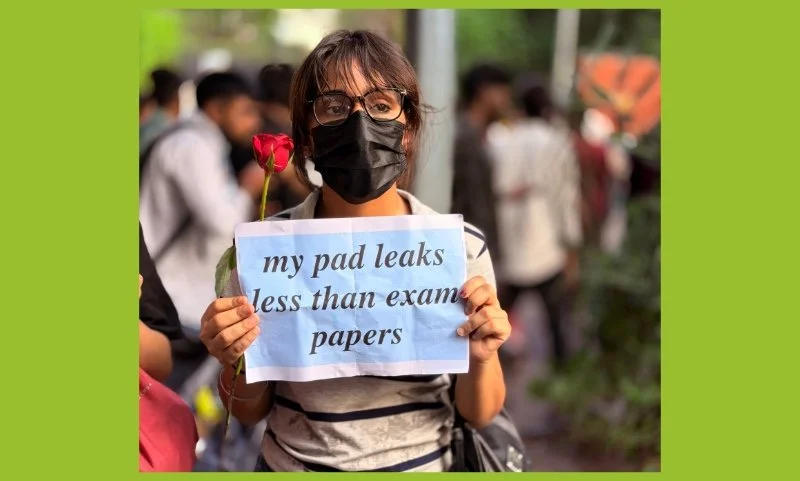
A protest movement built and led by India’s youngest citizens forced Education Minister Dharmendra Pradhan to resign, following weeks of hunger strikes and mass demonstrations. The government’s police crackdown subsequently backfired. Relying on its past successes in curbing protests and dissent, the administration led by officials decades older than the protesters tried to use silence and force during those weeks. However, the government and its advisors failed to realise that this time they were dealing with a generation they had no experience managing.
How Political Ego Made the CJP Protests a Crisis for the Government
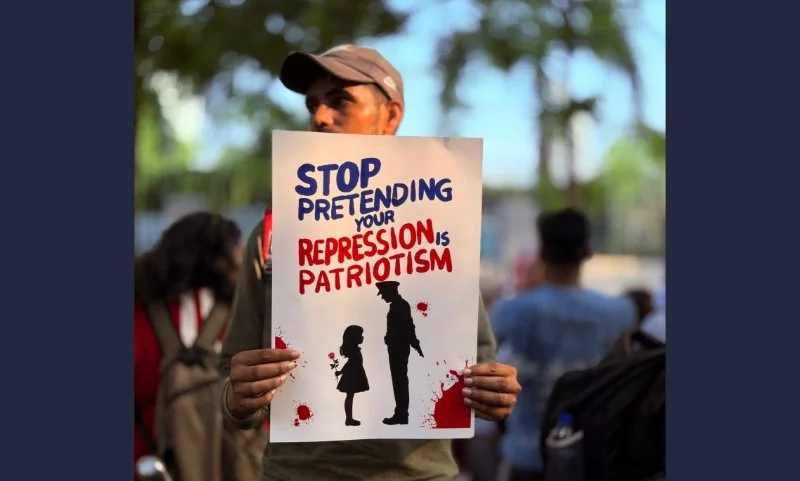
The government could have prevented the Cockroach Janta Party (CJP) protests from becoming a national political crisis for itself. It had several opportunities to do so but missed each one, apparently because key decision-makers treated compromise as weakness and dissent as a challenge to their authority. Political ego ended up putting at risk not only the government’s standing, but also public confidence in institutions acting on its behalf.
Sri Lankan Youth, Groups Rally in Solidarity with India’s Student Protesters
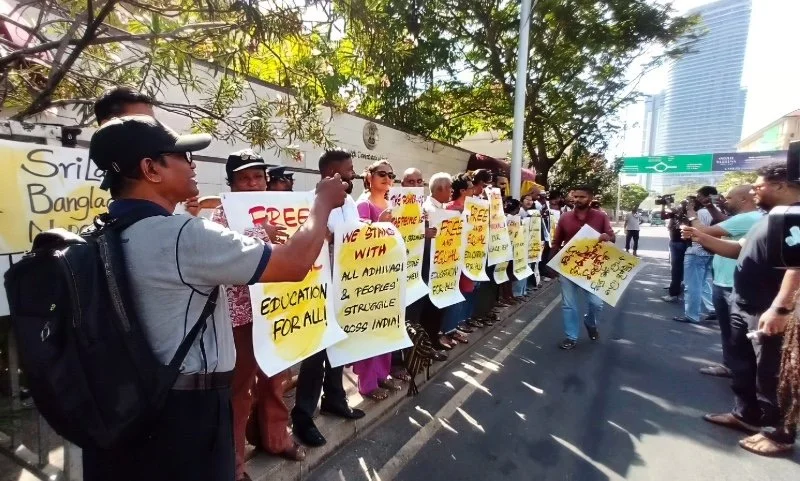
Youth activists, organisations and trade unions in Sri Lanka expressed solidarity with student protesters in India by holding a peaceful demonstration outside the Indian High Commission in Colombo in support of weeks-long protests against exam-paper leaks and alleged police violence.
CJP Protests: Key Developments After Dharmendra Pradhan’s Resignation
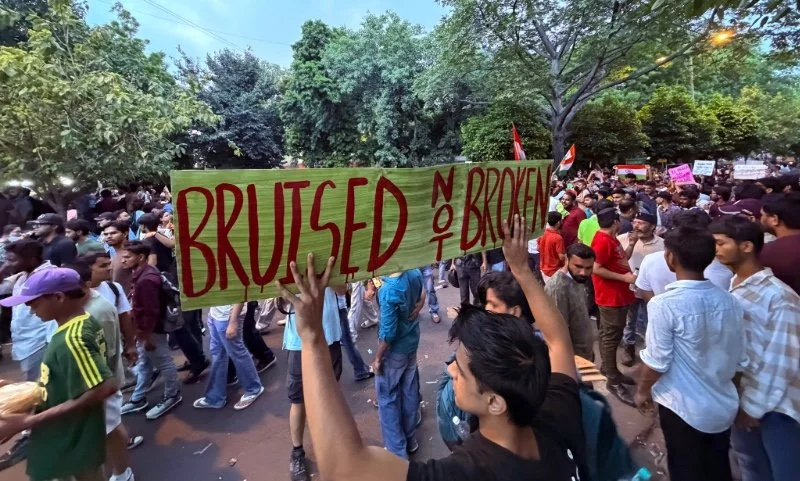
Dharmendra Pradhan stepped down as Union education minister on July 25, bringing to an end 36 days of protests initiated by the Cockroach Janta Party (CJP). Two days later, as of noon on July 27, key developments included a police investigation into the firing of pellet guns at protesters, Supreme Court petitions alleging police excesses against students, violent unrest in Bihar, an angry response from Central University of Kerala students to social media posts praising Pradhan, and activist Sonam Wangchuk’s planned visit to Rajghat in Delhi.
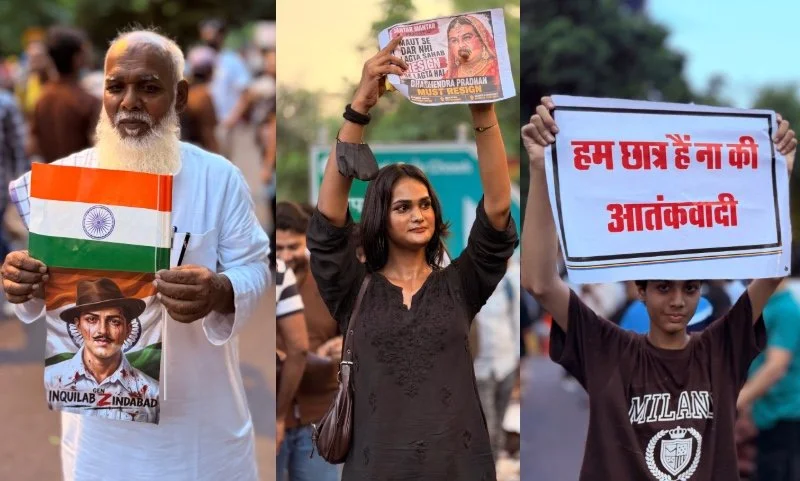
Delhi’s ‘Jantar Mantar Republic:’ the India Its Youngsters Want, and Are Building
A huge, leaderless crowd of protesters has been gathering at Connaught Place in Delhi alongside the organised Cockroach Janta Party (CJP) protest at a designated site at Jantar Mantar. By July 23, it looked at least four times the size of the CJP protest. Even without any leadership, except a few self-appointed volunteers doing crowd management, they seem to be living out the India they want, one they seem to be building themselves, an India where your identity and agency are never questioned but accepted with mutual trust and protection for one another.
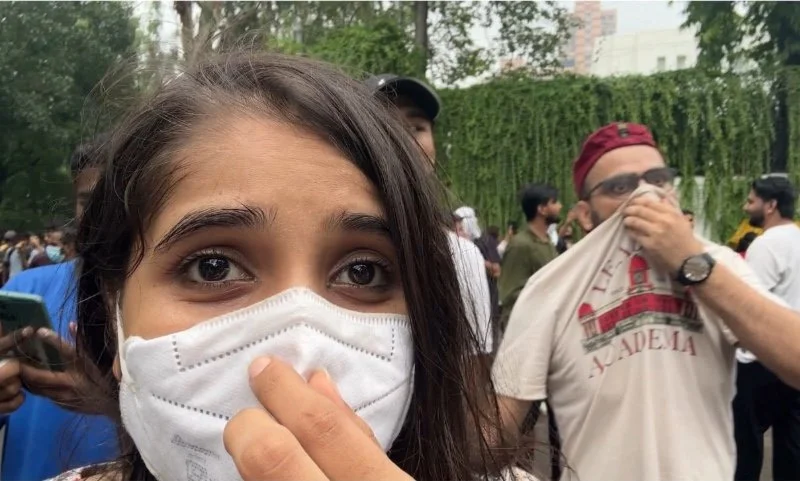
As a Woman Journalist, I Felt Safe Amid Thousands of Stranger Men at CJP Protest
Thousands of men have been filling the Cockroach Janta Party (CJP) protest ground at Jantar Mantar in Delhi for nearly a month. In the initial days, each time I walked into that crowd I expected to feel unsafe, as I always have as a woman in this city. What I soon found instead, as I covered the ongoing youth movement, is a kind of safety I had almost stopped believing was possible in a public space in the capital city, despite the area being dense with strangers.
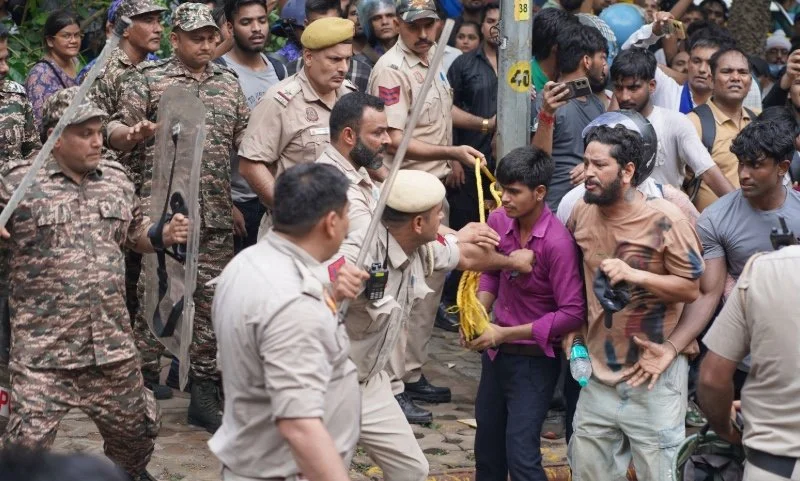
5 Forms of Unlawful, Punitive Force Delhi Police May Have Used Against CJP Protesters
Delhi Police and Rapid Action Force (RAF) personnel used batons and tear gas against thousands of protesters during the Cockroach Janta Party’s (CJP) “Chalo Sansad” march on July 20, leaving scores injured and dozens detained. Eyewitness accounts from journalists covering the protest, including those from Newsreel Asia, and videos circulating on social media point to at least five serious forms of possibly unlawful and punitive force.
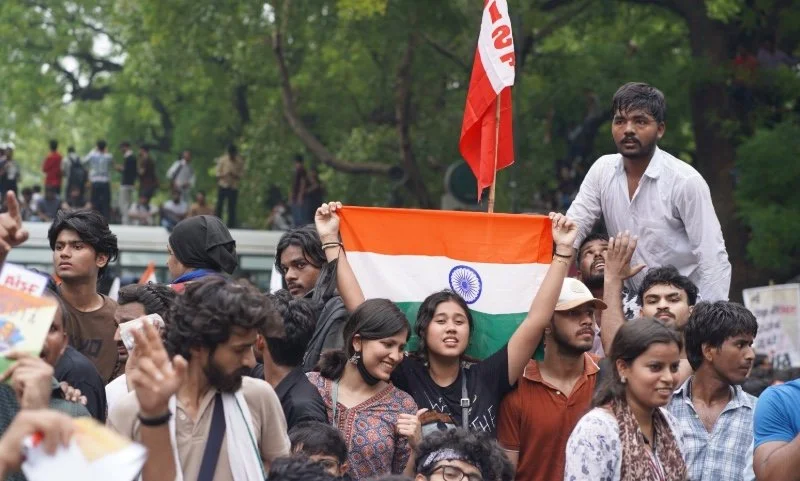
July 20 CJP Protest Defies Government Narrative of Who Dissenters Are
Tens of thousands of young people converged around Delhi’s Connaught Place area on July 20, responding to a call by the Cockroach Janta Party (CJP) for its “Chalo Sansad” march towards Parliament. Most of them belonged to no party, community or movement the government could name, and their active participation appeared to shatter its claim that dissent or grievances in India are confined to a few groups that can be conveniently bracketed into Muslims, Christians, communists, left-leaning civil society, farmers and independent journalists.
CJP’s Ideological Emptiness Is Its Most Effective (and Riskiest) Asset
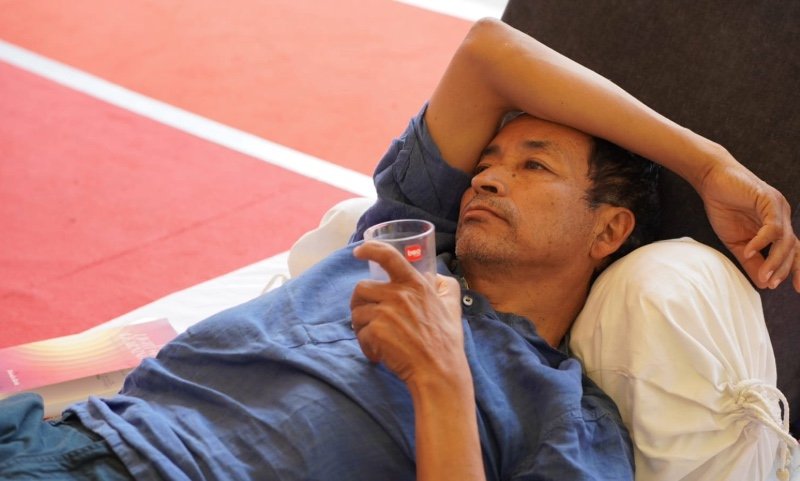
The Cockroach Janata Party’s protest at Jantar Mantar in Delhi has held together for 19 days because “cockroach” means something different to everyone under the tarpaulins, I found when I visited the site on July 16. My biggest concern now is that what could end this diverse coalition is the deteriorating condition of the fasting man on the mattress on the stage. Let me explain how.
Cockroach Janta Party’s Protest Calls for Crowd Management, Not a Law and Order Confrontation
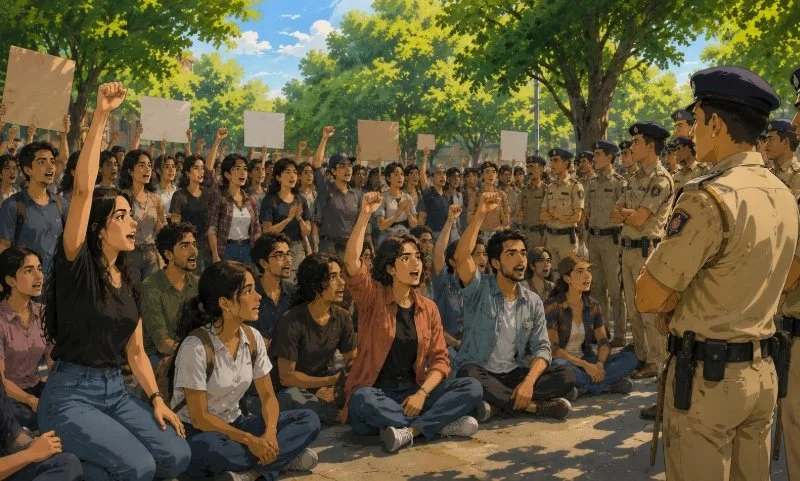
The Cockroach Janta Party (CJP), a youth-driven satirical movement that emerged online last month, is set to hold its first on-ground protest at New Delhi’s Jantar Mantar on June 6, demanding the resignation of Education Minister Dharmendra Pradhan over examination failures that the group says affected more than 10 million (one crore) students. It’s difficult to predict how the government will respond. However, treating the protest as primarily a law and order issue rather than a crowd management exercise could carry significant political and administrative costs.
Study Finds 40% of Graduates Seeking Work Are Unemployed
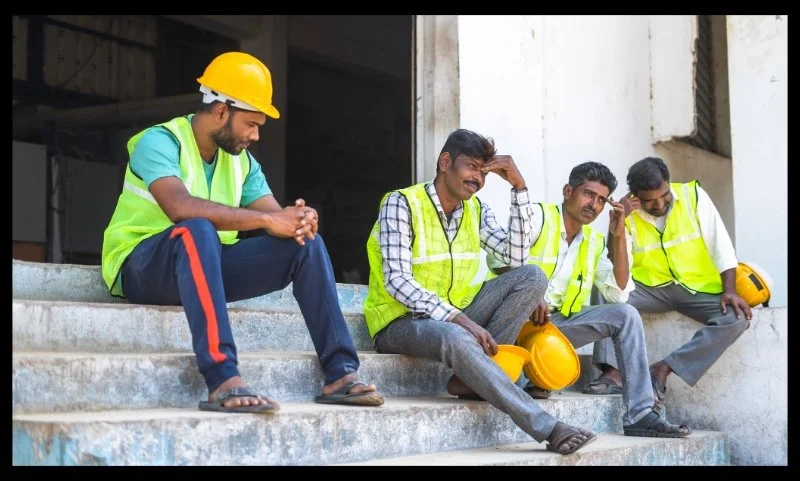
A major labour study from Azim Premji University reports that about 40 percent of graduates in India’s labour force are unemployed, a level that has remained largely unchanged for four decades. The finding shows that economic growth has failed to create enough skilled jobs for the number of graduates the country now produces.
Supreme Court Affirms Menstrual Health as Part of Right to Life
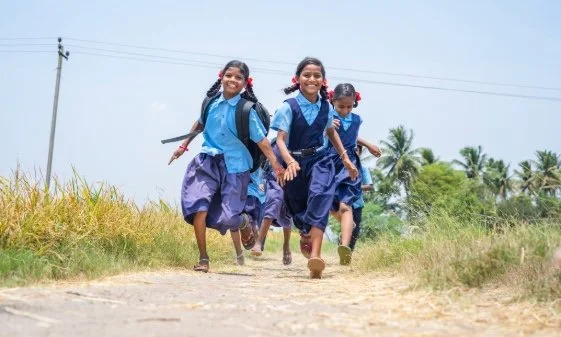
Adolescent girls in many parts of India miss several days of school each month during their periods due to lack of sanitary products, inadequate toilets and fear of public embarrassment. In response to this widespread exclusion, the Supreme Court of India has ruled that access to menstrual health is part of the fundamental right to life under Article 21 of the Constitution. The ruling affirms that denying girls the means to manage their periods in school violates their right to live with dignity, safety and equal opportunity.

What Actually Works in Today’s Job Market? A Guide for Young Professionals
A software engineer, Marmik Patel, applied to hundreds of jobs without success before changing his approach. By building products and networking in person, he eventually drew interest from over 80 recruiters, he shared on X. Does this suggest that traditional methods like mass online applications are no longer effective in competitive markets where access to opportunity is unevenly distributed?
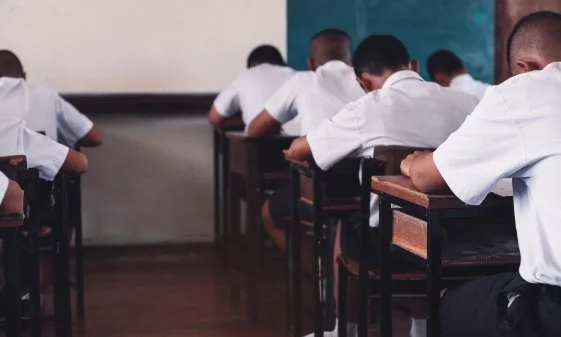
Do Teachers and Parents Really Understand What Students Go Through in School?
A new survey has revealed a consistent gap between what students across high fee private schools experience and what teachers and parents believe is happening inside classrooms and beyond. This suggests that decisions about teaching, discipline, technology use and wellbeing are being influenced by adult assumptions rather than student reality, which risks deepening stress, weakening trust and leaving schools poorly prepared for the social and technological world students already inhabit.
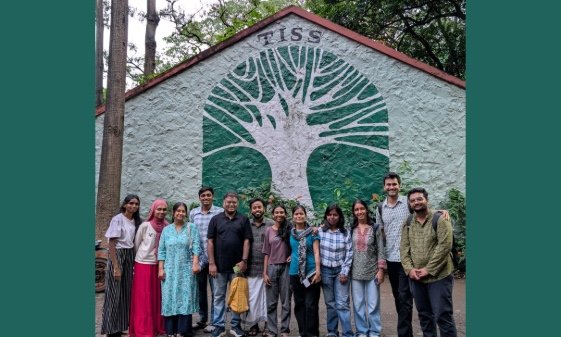
Oxford Graduate Works for Marginalised Students’ Access to Higher Education in India
India’s higher education sector has expanded steadily over the years, yet the benefits of this growth remain concentrated among those with social and economic privilege. For students from marginalised communities, entry into universities continues to be blocked by barriers that rarely make it into policy debates. In this interview, Manzer, a scholar working to bridge gaps in access, explains what keeps these students out of higher education, based on what he has observed while working closely with marginalised communities.
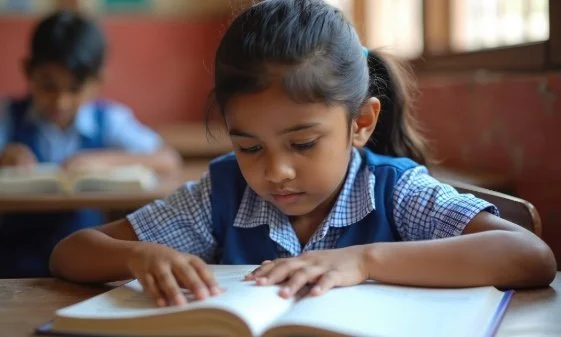
6.5 Million Children Dropped Out of School in 5 Years
Over the last five years, more than 6.5 million (65 lakh) children in India have dropped out of school, Minister of State for Women and Child Development Savitri Thakur revealed in Parliament. Among them, nearly 3 million (30 lakh) are adolescent girls. The numbers point to a large-scale rupture in India’s promise of universal education, and also to structural gaps in the way schooling is planned, supported and delivered, especially for children from marginalised families.