
Questions Over India Today Poll Presenting Modi as Still Popular After Youth Protests
By Vishal Arora
August 28, 2026
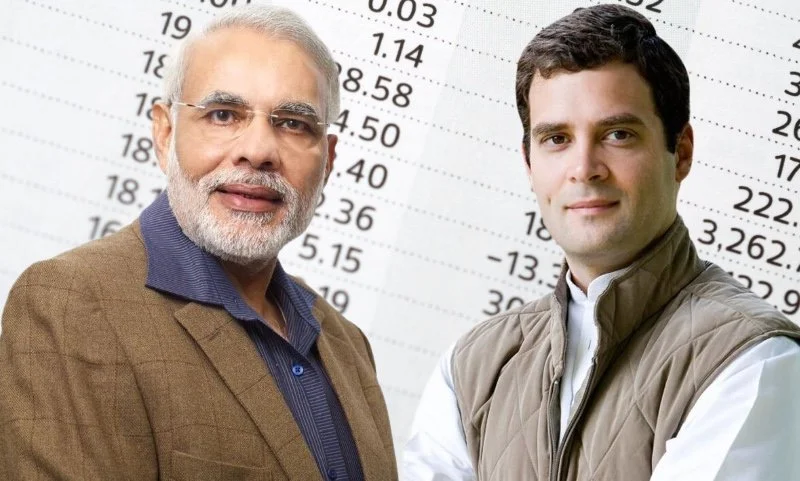
Photo by Animluvhoney and FlickreviewR, used under a Creative Commons licence
The latest India Today-CVoter Mood of the Nation (MOTN) poll records a considerable fall in support for Prime Minister Narendra Modi and the Bharatiya Janata Party, despite relying largely on interviews conducted before the Cockroach Janta Party (CJP)-initiated protests at Delhi’s Jantar Mantar grew into a nationwide movement demanding accountability. However, India Today and sister organisation Aaj Tak presented it mainly as evidence that Modi remains popular and the NDA would retain power.
“PM still going strong, NDA likely to win 326 seats if polls held today: India Today-CVoter MOTN,” reads the headline on India Today’s website. The subheading of Aaj Tak’s report reads, “In the India Today-CVoter MOTN survey, if Lok Sabha elections are held today, the NDA is projected to secure a majority once again. In terms of vote share, the NDA could receive 45%, the INDIA bloc 39%, and others 16%.”
The findings were published on August 27, weeks after the youth-led protests at Delhi’s Jantar Mantar presented the Modi government with one of its most serious public challenges in recent years, and less than 10 days before the second round of the CJP protests is scheduled to begin in Delhi on September 5.
The demonstrations, initially driven by anger over the NEET-UG paper leak and examination irregularities, grew into a wider movement concerned with unemployment, education and government accountability. But a comparison with the previous Mood of the Nation poll, conducted in January, presents a less reassuring picture for the BJP than the principal headlines suggest.
If the latest survey is to be believed at its face value, the BJP’s projected tally has fallen from 287 to 261 seats, leaving it below the Lok Sabha majority mark of 272. The NDA’s projected tally has declined from 352 to 326 seats. The Congress has gained 26 projected seats, rising from 80 to 106, while support for Modi as the preferred prime minister has fallen from 55 to 49 percent. Satisfaction with the NDA government has also declined, and the opposition INDIA alliance is projected to win more seats than the NDA in Uttar Pradesh.
The results therefore indicate that Modi remains the country’s leading political figure, but that he and the BJP have suffered a measurable loss of support during a period of intense youth mobilisation. This is despite the survey’s explicit disclosure that its findings also incorporated 91,795 interviews conducted as part of CVoter’s regular tracking during the previous six months, meaning most of them were conducted before the Jantar Mantar protests began. These interviews constituted nearly 80 percent of the reported sample of 116,644 respondents.

India Today and Aaj Tak nevertheless placed greater emphasis on the projected NDA victory and Modi’s continuing lead over his political opponents. The decision by two platforms belonging to the same media group to foreground the NDA’s projected majority, rather than the BJP’s loss of its own majority, raises questions about how the findings were presented.
India Today says 25,184 adults were surveyed between July 1 and August 25. Aaj Tak adds that the analysis also included responses collected from 91,795 people through CVoter’s regular tracking during the previous 24 weeks. It reports a total sample of 116,644, although the two disclosed components add up to 116,979. The publications do not explain how the two sets of responses were combined, which findings used the combined sample or why the totals differ.
This part of the fieldwork substantially overlaps with the Jantar Mantar protests. It includes interviews conducted during activist Sonam Wangchuk’s hunger strike, before and after the alleged Delhi Police crackdown on protesters on July 20, and around the resignation of Education Minister Dharmendra Pradhan on July 25. India Today has not published a date-wise breakdown that would allow readers to determine whether public opinion changed during the eight-week fieldwork period.
India Today has not clearly disclosed whether the headline projections of 326 seats for the NDA and 261 for the BJP were calculated from the complete rolling sample, the 25,184 recent interviews or a weighted combination of the two. Although 25,184 is a substantial sample for measuring national opinion, it averages only about 46 respondents for each of the 543 Lok Sabha constituencies. A credible seat projection would therefore require a statistical model or additional constituency-level data, neither of which is adequately explained in the published methodology.

A fuller assessment would require India Today and CVoter to release more information about the survey. They should explain how much statistical weight was given to the older responses and publish separate results for the recent and older interviews. They should also disclose whether every respondent was asked the same questions, provide the dates and sample sizes for each finding, publish the demographic and geographical weighting used, and explain the discrepancy of 335 respondents in the reported total. Until they provide these details, the available information does not justify presenting the poll simply as evidence of Modi’s continuing popularity.
You have just read a News Briefing, written by Newsreel Asia’s text editor, Vishal Arora, to cut through the noise and present a single story for the day that matters to you. We encourage you to read the News Briefing each day. Our objective is to help you become not just an informed citizen, but an engaged and responsible one.
What happened in Mumbai on October 2 may have been only one day of protest, but the issues behind it are unlikely to disappear with the dispersal of the crowd. The protest was centred around concerns over the Election Commission, electoral rolls and the Special Intensive Revision (SIR) exercise, with protesters demanding accountability from Chief Election Commissioner Gyanesh Kumar. At the same time, similar mobilisation has been taking place across different parts of the country, with student groups, Opposition parties and civil society organisations raising concerns over the electoral process. Newsreel Asia spent the day at Mumbai Protest capturing the preparations, the police presence, conversations with protesters, the atmosphere on the streets and how the day unfolded. The speech of Cockroach Janta Party's leaders and sentiment of protestors seemed larger than the concerns regarding the electoral process. Will this lead to something bigger?