
Anti-Conversion Laws Are a Question of Citizens’ Rights and Freedoms
By Adv. Robin Christopher
August 29, 2026

Maharashtra becoming the 13th state to enact an anti-conversion law once again raises a legal question that goes further than the protection of Christian and Muslim minorities, as the issue is often portrayed. Laws regulating conversion from one religion to another should be assessed by how they affect every citizen’s freedom of conscience and religious expression, rather than by which religious community they appear to protect or threaten.
An anti-conversion law makes conversion through force, fraud or certain forms of inducement a criminal offence. Such laws are officially called freedom of religion laws. While they do not formally prohibit voluntary conversion, their broad definitions, reporting requirements and enforcement can restrict the freedom to choose, practise and share one’s faith.
Vague Terms
Look past the details of each state’s anti-conversion law, and nearly all of them have the same fundamental problem of definition. Terms such as “allurement,” “inducement” and “undue influence” are defined so broadly that they can criminalise almost any act of persuasion, charity or association between people of different faiths, and are enforced selectively against whichever community the state has chosen to target at a particular time.
A law based on consistent principles would define “coercion” and “force” as actual physical compulsion or the threat of it, rather than mere persistence. It would define “fraud” as intentional and knowing deception, rather than a promise that was not fulfilled or a claim made in sincere error. It would also state expressly that the lawful expression, propagation, teaching or discussion of religious beliefs cannot by itself constitute an offence. The same protection would apply to prayer in congregations or homes, the distribution of religious literature and voluntary persuasion, however earnest or repeated.
Such a law would place the burden of proving coercion or fraud on the prosecution, as ordinary criminal law does, instead of requiring accused people to prove their innocence.
None of this is difficult to put into legal language. However, states have simply chosen not to draft their laws this way. That choice appears to be driven much more by politics than by any difficulty in drafting the law.
The adoption of such a law by any legislature will depend far less on the quality of its drafting than on the political terms in which the issue is presented. On this front, opposition parties have a long history of losing before the argument has even begun.
A telling example is Karnataka. The state Law Commission began considering an anti-conversion law under a Bharatiya Janata Party (BJP) government and submitted a report and model law in September 2013, shortly after the Congress government led by Siddaramaiah took office. The proposal was subsequently processed within the Congress administration but was not placed before or approved by its Cabinet. The BJP government later cited that report while introducing its 2021 law, although its legislation contained several additional and more stringent provisions.
The report did not ask a more fundamental question, “Can we pass a law that protects legitimate expressions of faith across the spectrum?”
How the Debate Becomes a Contest Between Communities
The trap is familiar. A ruling party presents an anti-conversion law as necessary to protect the majority religion from a decline in its population and from what it calls “predatory” missionary activity. The opposition responds, often sincerely, by defending the minority community most directly threatened by the law, usually Christians or Muslims. In doing so, both sides end up treating the issue as a conflict between religious communities, with the majority on one side, a minority on the other and the state acting as referee. Once the opposition accepts this framing, it has already lost the more important argument. It has conceded that the question is which community deserves protection, rather than what the state should be entitled to criminalise in the first place.
The problem with these definitions points to a better argument, if anyone chooses to make it. A law that uses vague ideas such as “inducement” or “undue influence” to protect the majority faith from conversion can just as easily be used to criminalise a revivalist campaign within that faith as a campaign outside it.
The Same Law Can Be Used Against Any Faith
Consider a godman whose “blessings” come with a suggested donation; an ISKCON volunteer distributing religious literature on a railway platform and inviting a stranger to a Sunday feast; a satsang that quietly discourages its younger members from marrying outside the faith; or an ashram that offers free accommodation and food to new residents. Under a broadly worded provision against “allurement” or “undue influence”, each could be as vulnerable to prosecution as the door-to-door missionary whom the law was actually intended to stop. A law drafted this loosely is not a shield protecting one faith from another. It is a loaded instrument that the state or an individual police officer can point in whichever direction they choose.
Another imbalance deserves attention because it shows how a concern with protecting particular communities is built into laws that appear neutral. Several of these laws do not treat a person’s reconversion to their “original” religion as an offence, but treat their first conversion away from it as inherently suspicious. Whatever the administrative reason for this exemption, the law is concerned less with whether the person chose freely and more with the direction in which their religious belief is moving. It therefore favours conversion in one direction over conversion in the other.
A law that instead asked the citizen’s question, whether this person’s choice is free regardless of the direction in which her belief is moving, would have no need for a reconversion exemption. A genuine choice made without coercion would be equally lawful in either direction.


Religious Freedom Must Be Defended for Everyone
This is the argument India’s opposition parties should be making, but mostly are not. Their argument should not simply be that such a law protects the majority at everyone else’s expense. It should be that a law intended to police religious expression through persuasion, testimony, charity, prayer and literature endangers the free exercise of every faith it touches. That includes the community that currently imagines itself to be safely on the state’s side of the line. This argument does not require anyone to defend Islam or Christianity in particular. It requires the defence of expression itself, a cause that every faith community has reason to support.
It is not enough to make this argument defensively every time a new anti-conversion bill appears. Opposition parties must take the initiative before the next law is drafted. They should campaign for a minimum constitutional protection that applies equally to all religious expression. It should protect a godman’s right to gather followers and seek donations as readily as a pastor’s right to preach “salvation.” It should protect an ISKCON volunteer distributing pamphlets on a railway platform as readily as a door-to-door evangelist.
Taking this position also requires a willingness to be unpopular. Defending a Christian evangelist’s right to knock on a stranger’s door may cost an opposition party votes in constituencies where such visits are genuinely resented. In the same way, defending a godman’s right to seek followers and donations may cost it votes among people inclined to see only exploitation in such appeals. A coalition that protects only the speech it privately approves of is not defending expression. It is playing its own, smaller version of the same majoritarian game.
Most anti-conversion laws fail to draw a clear and principled line between fraud and legitimate religious persuasion. Courts must therefore be willing to draw that line themselves. They should presume that religious expression is protected and impose criminal liability only in narrowly defined cases supported by convincing evidence, rather than presume that such expression is potentially criminal.
The willingness of courts to draw that line honestly depends on something less obvious than legal doctrine. It depends on how the question before the court is framed in the first place. This deserves to be taken seriously in its own right, rather than treated merely as a technical detail of law.
What the National Anthem Case Tells Us
In August 1986, the Supreme Court decided Bijoe Emmanuel v State of Kerala, which is still regarded as one of its finest judgments on religious freedom. Three siblings, Bijoe, Binu Mol and Bindu Emmanuel, were practising Jehovah’s Witnesses, a Christian denomination known for strictly following its own interpretation of the Bible. They stood respectfully during the daily singing of the national anthem at their school but did not sing it. Their faith prohibited them from participating in what they regarded as an act of worship directed towards anything other than God.
The school expelled them.
The Kerala High Court upheld the expulsion, reasoning in part that Jehovah’s Witnesses were not a “recognised” religious sect and therefore could not claim the protection of Articles 25 and 26 of the Constitution. The Supreme Court overturned that decision. It held that no law required anyone to sing the anthem, that standing respectfully was sufficient and that the children could not be compelled to violate a sincerely held belief of conscience.
The result was correct. But consider how the question was framed, both by the courts that heard the case and by nearly everyone who has written about it since. Did Jehovah’s Witnesses have a religious objection that was sufficiently sincere and firmly established to deserve an exemption? Much of the Supreme Court’s own reasoning was devoted to establishing precisely that. It documented the sect’s beliefs, their consistency across decades and countries, and their similarity to beliefs recognised in earlier judgments elsewhere.
This approach turns the case into a question about accommodating a minority. It asks the state to certify the sincerity of a particular community before its members can be left alone.
That is different from asking whether every citizen has an unconditional right not to be forced to show reverence they do not feel, whether their reasons are religious, political or personal. The Court referred to this wider principle, which applies equally to all citizens, by citing the freedom not to speak under Article 19(1)(a). But the case has since been remembered, taught and applied mainly as a question of which religious group qualifies for an exemption. This difference has practical consequences.

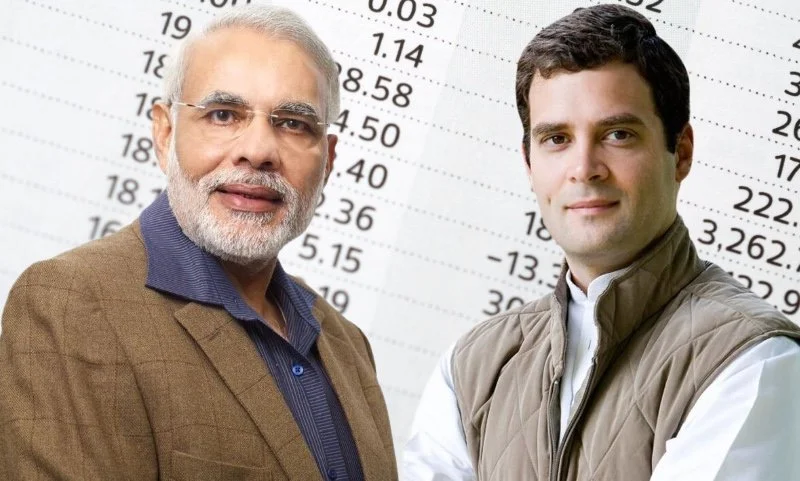
A Right for Every Citizen, Not an Exception for One Sect
If the right exists because Jehovah’s Witnesses proved that their doctrine was genuine, the same right must be proved again for every other group. It must be established sect by sect and through one hearing about sincerity after another, each time someone’s conscience objects to a different compulsory ritual. A right based on the principle that no citizen may be forced into an act of reverence against her will requires no such proof from anyone.
The first approach creates a narrow and contestable exception that must be litigated repeatedly. A hostile state or a differently constituted bench can gradually weaken it, one case at a time. The second establishes a minimum protection available to everyone, regardless of their faith or absence of faith.
The same choice lies at the centre of the current dispute over anti-conversion laws, whether or not anyone acknowledges it. Courts and legislatures may frame the question as: “Does this particular vulnerable community need protection from the missionary zeal of that particular faith?” Any law produced by that approach will remain a special exception for a minority. It will be contested, defined through communal identity and remain secure only for as long as the political coalition in power is willing to protect it.
The question could instead be: “Does every citizen have an unconditional right to speak about, share and live according to her faith without first convincing the state that her motives and sincerity are acceptable?” Protection based on that principle would apply equally to everyone and would be harder to dismantle. It would protect the evangelist, the godman, the ISKCON volunteer and the person quietly changing her mind about what she believes.
A law based on this second, citizen-neutral principle would not be difficult to draft. The difficult task, which the country’s opposition parties and eventually its judges still have to learn, is to ask the citizen’s question rather than the community’s question before the next bill arrives, not after it.
You have just read a News Briefing, written to cut through the noise and present a single story for the day that matters to you. We encourage you to read the News Briefing each day. Our objective is to help you become not just an informed citizen, but an engaged and responsible one.

What happened in Mumbai on October 2 may have been only one day of protest, but the issues behind it are unlikely to disappear with the dispersal of the crowd. The protest was centred around concerns over the Election Commission, electoral rolls and the Special Intensive Revision (SIR) exercise, with protesters demanding accountability from Chief Election Commissioner Gyanesh Kumar. At the same time, similar mobilisation has been taking place across different parts of the country, with student groups, Opposition parties and civil society organisations raising concerns over the electoral process. Newsreel Asia spent the day at Mumbai Protest capturing the preparations, the police presence, conversations with protesters, the atmosphere on the streets and how the day unfolded. The speech of Cockroach Janta Party's leaders and sentiment of protestors seemed larger than the concerns regarding the electoral process. Will this lead to something bigger?