
Why Journalist Ravi Nair’s Imprisonment in Defamation Case Is Concerning
From the Editor’s Desk
September 24, 2026
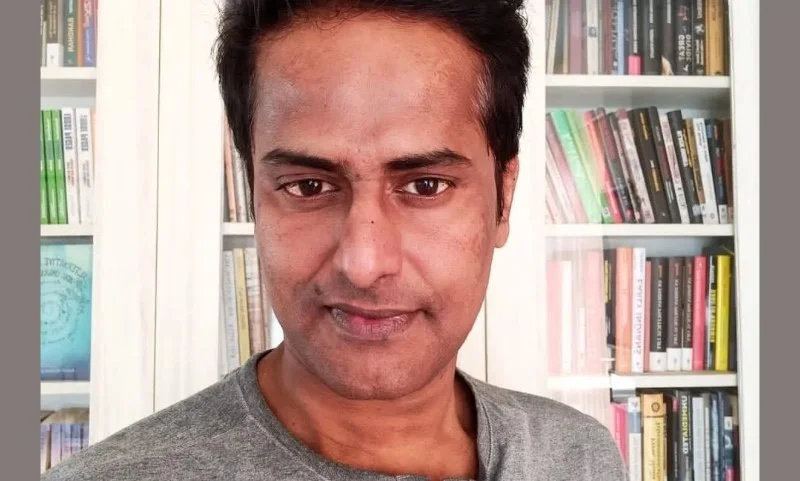
Ravi Nair’s photo has been taken from Committee to Protect Journalists.
Independent investigative journalist Ravi Nair has been in jail since September 17 over a criminal defamation case brought by Adani Enterprises. A court had found him guilty but he had appealed that decision and was allowed to remain free while the appeal was heard. After he missed a hearing, the court issued a warrant for his arrest. Nair went to court to ask for the warrant to be cancelled and was sent to jail instead. The concern is that a single missed hearing has cost him his freedom before the court has decided his appeal.
The case arose from posts Nair published about the Adani Group between 2020 and 2021. In February 2026, a magistrate found him guilty of criminal defamation and sentenced him to one year in prison. Nair appealed to a sessions court, which granted him bail on the condition that he attend hearings. He was absent on September 3. His lawyer asked the court to excuse his absence, but the court refused and issued a non-bailable warrant. Nair appeared in person before the court on September 17 and asked for the warrant to be cancelled. The court refused and sent him to judicial custody.
On September 23, the Gujarat High Court declined to release Nair while it considers his challenge to the warrant. His lawyers argue that he had attended other hearings, had previously been excused from attending one, and should not have been treated as someone evading the court. They say the sessions court should have considered less severe ways to secure his attendance.
Imprisonment takes away a person’s freedom. If a missed hearing leads to jail when that is not necessary, the person may suffer much of the effect of a prison sentence before the appeal is decided. The Supreme Court has recognised that non-bailable warrants interfere with personal liberty and must be used with care. Nair’s appearance before the sessions court on September 17 makes the question more pressing, that when he was there in person, was it necessary to keep him in jail while his appeal continued?

DIGIPUB, an association of independent digital news publishers, warns that Nair’s detention could discourage journalists from investigating powerful companies. Its statement also points out that the Adani Group owns NDTV. The group acquired a controlling stake in NDTV in 2022. A company that owns a major news outlet is also pursuing a criminal defamation case against a journalist who investigated it. Other reporters may hesitate to investigate the company if they fear facing a similar case.
“The same corporate entity pursuing criminal defamation proceedings against a journalist also ultimately controls a major news organisation whose journalists operate in the same profession and ecosystem,” reads the DIGIPUB statement. “If this becomes the new normal, Ravi Nair will not be the last journalist to face it. Today it is one journalist; tomorrow, any journalist who investigates the powerful could find themselves in the same position.”
It concludes, “Press freedom cannot survive if the cost of holding powerful institutions to account is imprisonment.”
Readers, too, have a stake in this. Few people can investigate a large company’s dealings for themselves. They depend on journalists to ask difficult questions and check the answers carefully.
You have just read a News Briefing, written by Newsreel Asia’s text editor, Vishal Arora, to cut through the noise and present a single story for the day that matters to you. We encourage you to read the News Briefing each day. Our objective is to help you become not just an informed citizen, but an engaged and responsible one.
What happened in Mumbai on October 2 may have been only one day of protest, but the issues behind it are unlikely to disappear with the dispersal of the crowd. The protest was centred around concerns over the Election Commission, electoral rolls and the Special Intensive Revision (SIR) exercise, with protesters demanding accountability from Chief Election Commissioner Gyanesh Kumar. At the same time, similar mobilisation has been taking place across different parts of the country, with student groups, Opposition parties and civil society organisations raising concerns over the electoral process. Newsreel Asia spent the day at Mumbai Protest capturing the preparations, the police presence, conversations with protesters, the atmosphere on the streets and how the day unfolded. The speech of Cockroach Janta Party's leaders and sentiment of protestors seemed larger than the concerns regarding the electoral process. Will this lead to something bigger?