
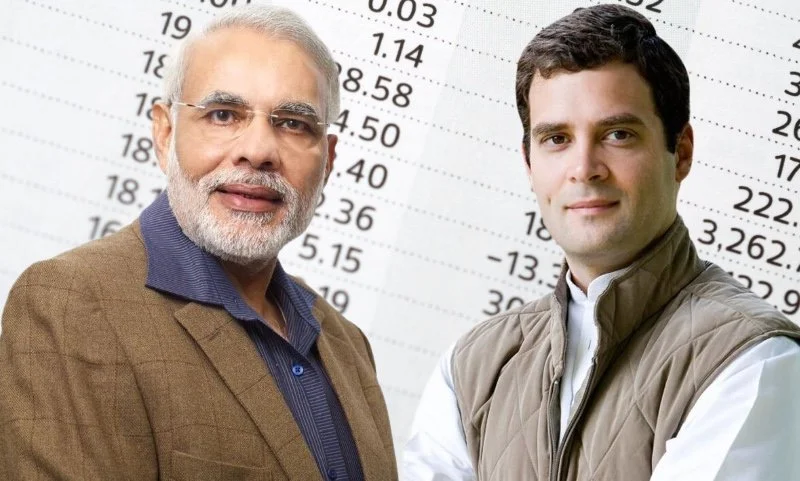
Questions Over India Today Poll Presenting Modi as Still Popular After Youth Protests
The latest India Today-CVoter Mood of the Nation (MOTN) poll records a considerable fall in support for Prime Minister Narendra Modi and the Bharatiya Janata Party, despite relying largely on interviews conducted before the Cockroach Janta Party (CJP)-initiated protests at Delhi’s Jantar Mantar grew into a nationwide movement demanding accountability. However, India Today and sister organisation Aaj Tak presented it mainly as evidence that Modi remains popular and the NDA would retain power.
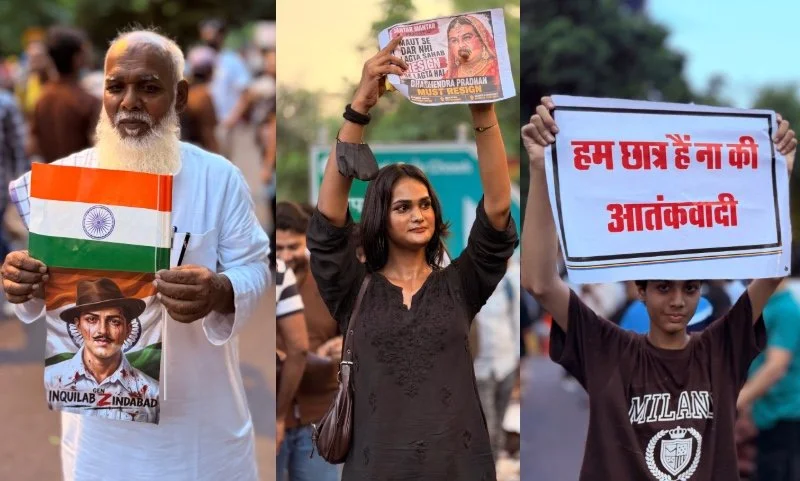
Delhi’s ‘Jantar Mantar Republic:’ the India Its Youngsters Want, and Are Building
A huge, leaderless crowd of protesters has been gathering at Connaught Place in Delhi alongside the organised Cockroach Janta Party (CJP) protest at a designated site at Jantar Mantar. By July 23, it looked at least four times the size of the CJP protest. Even without any leadership, except a few self-appointed volunteers doing crowd management, they seem to be living out the India they want, one they seem to be building themselves, an India where your identity and agency are never questioned but accepted with mutual trust and protection for one another.
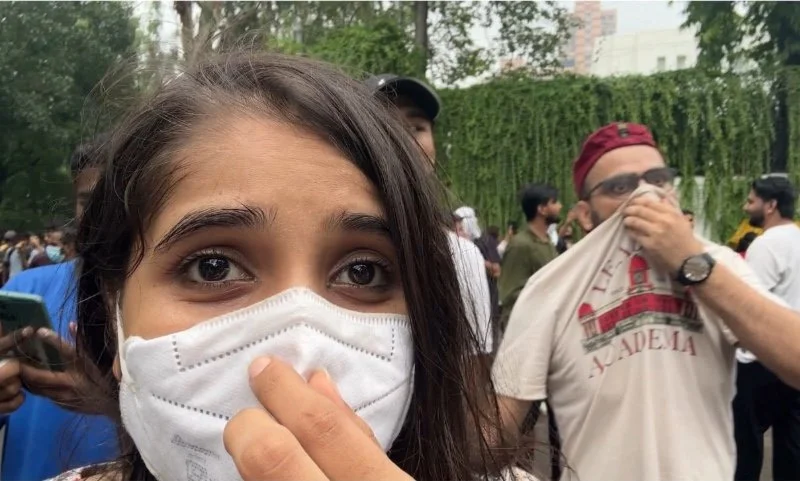
As a Woman Journalist, I Felt Safe Amid Thousands of Stranger Men at CJP Protest
Thousands of men have been filling the Cockroach Janta Party (CJP) protest ground at Jantar Mantar in Delhi for nearly a month. In the initial days, each time I walked into that crowd I expected to feel unsafe, as I always have as a woman in this city. What I soon found instead, as I covered the ongoing youth movement, is a kind of safety I had almost stopped believing was possible in a public space in the capital city, despite the area being dense with strangers.
AI is Changing How Indian Newsrooms Reach Audiences
Artificial intelligence is changing how Indian newsrooms reach their audiences, and the way outlets handle that change will affect what news people see, how well they can trust it and whether independent journalism can survive on platforms it no longer controls. This came out at a panel discussion at the India launch of the Digital News Report 2026, an annual study of global news consumption by the Reuters Institute for the Study of Journalism at the University of Oxford.
Government Wants to Regulate Citizen Speech Like ‘Published’ News
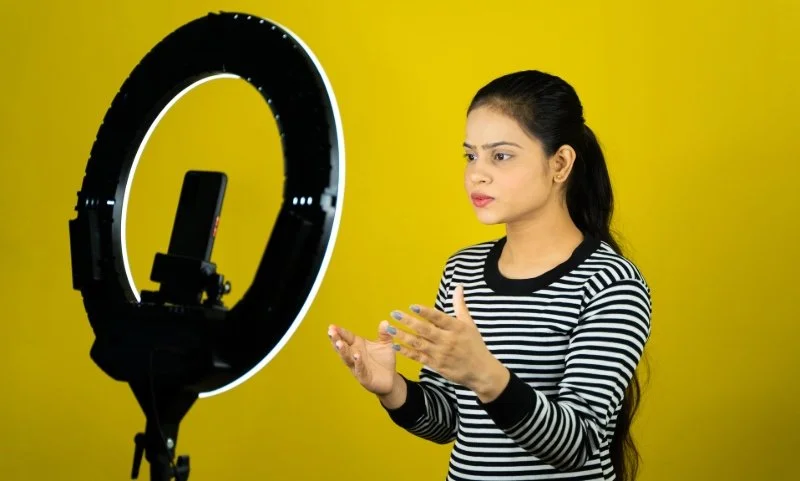
A draft amendment to the IT Rules would allow authorities to direct platforms to take down not only content from media organisations but also posts by individual users on social media. It would remove the distinction between a media organisation that publishes news as an institutional activity and an ordinary citizen who speaks, comments, jokes, shares, records, criticises or reports from a phone, by bringing such user generated content within a regulatory structure designed for digital media entities and publishers.

India’s New Labour Codes Have Dismantled Legal Protections for Journalists
The central government has brought into force the Occupational Safety, Health and Working Conditions Code, 2020, repealing the two special laws that had governed the service conditions and wages of working journalists since 1955. The change marks a retreat from the idea that journalism requires tailored labour protection and replaces it with a generic framework that weakens the professional security of the press.
India’s Move Toward ‘Data Nationalism’ and Post-Truth Governance
Across three major areas involving climate risk, press freedom and economic reporting, the government is steadily moving away from global benchmarks. It is discarding international assessments and building its own homegrown versions instead. These are managed or overseen by government bodies, which gives it more control over both the data and the story the data tells. The result is a system that does not just measure progress. It also quietly rewrites what progress is supposed to mean.
Why Delhi’s Deadly Air Suits Big Business
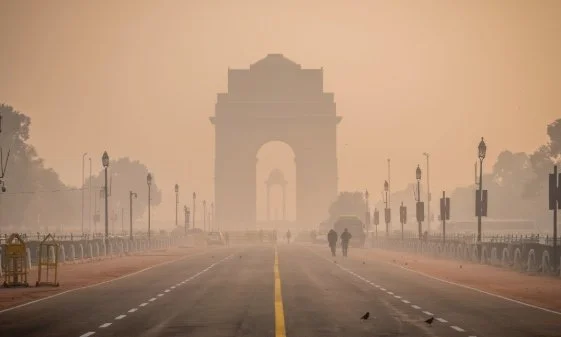
As pollution levels in Delhi trigger emergency measures once again this December, the public is told the usual causes: crop burning, vehicle emissions and weather. But a far more persistent source of pollution continues throughout the year, worsens the crisis each winter, and is enabled by government policy. It comes from coal power plants operating within 300 kilometres of the city.
Two Indian Entities Among RSF’s Press Freedom Predators’ List
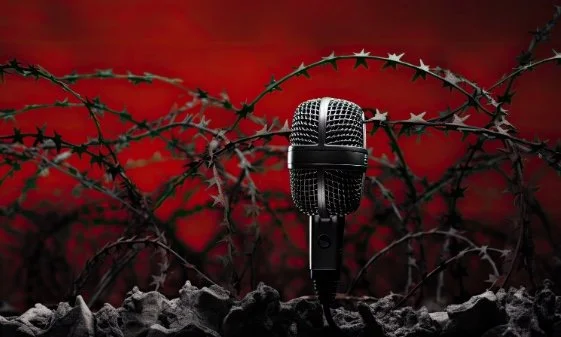
Two Indian entities have been named in Reporters Without Borders’ 2025 “Press Freedom Predators” list, a roster of 34 governments, officials and organisations accused of systematically attacking journalists and the right to independent information.
Uttarakhand Journalist Dies After Reported Threats, Probe Underway
The body of a journalist, Rajeev Pratap, was found in a river in northern India days after he went missing, prompting calls from his family and press freedom groups for a formal investigation. Police initially said the death appeared to be the result of a car accident, but authorities have since formed a special team to examine the case further.

Journalist Shot Days After Reporting on Assam’s Eviction Drive
A journalist from Nagaland in Northeast India was shot twice during a reporting trip in the neighbouring state of Manipur. The attack came days after a senior political leader in Nagaland publicly rebuked him for airing critical views on the Assam government’s eviction drive.

7 Psychological Tactics Politicians Use to Distract Us From Their Failures, Part 2
Political messaging affects what people believe, how they act and what they expect from their leaders. Some of the most common tactics used by politicians are meant to make people give up on asking questions, stop demanding better and accept poor performance without protest. In the first part of this series, we looked at four of the seven psychological tactics politicians use to shift public focus away from governance failures. This piece explains the remaining three.

7 Psychological Tactics Politicians Use to Distract Us From Their Failures, Part 1
Politicians rarely admit failure. They redirect attention, reduce criticism and protect their image instead. The methods they use draw on psychology, exploiting universal and predictable patterns in human thinking.

How Politicians Pull Four Mental Levers to Avoid Our Scrutiny
Politicians in India, as in many other countries, often rely on universal psychological tactics to divert public attention from their failures in governance, or from issues that could damage them politically or reduce their popularity. These tactics draw their strength from four mental levers deeply rooted in how the human mind responds to fear, identity, repetition and emotion.

Supreme Court Shields The Wire, Addresses Legal Threat to Free Press
The Supreme Court has ordered that the Foundation for Independent Journalism, which owns The Wire, and its founding editor Siddharth Varadarajan must be protected from any police action that could involve arrest, detention, or other measures intended to compel compliance in connection with an FIR filed by the Assam Police. The order puts the law’s constitutional validity before the court and concerns press freedom and the state’s power to act against journalists.
Woman Journalist Beaten on Camera, Power Appears to Shield the Accused
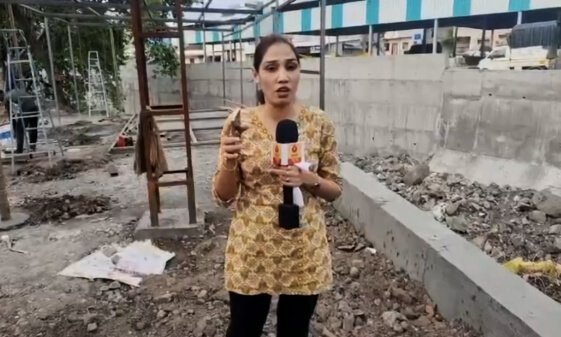
A journalist, Sneha Barve, was violently assaulted while reporting on suspected illegal construction along a riverbed in Pune district. The main accused, local businessman, struck her repeatedly with a wooden rod while she was filming a video report. That such an act was carried out in broad daylight, against a woman journalist, while the camera was rolling, shows how deeply the culture of impunity has taken root among individuals who operate close to political power.

Vivek Singh: His Passing, and His People-Centric Journalism
Vivek Singh, a fearless and thoughtful photojournalist whose camera often stood witness in places the rest of the country ignored, passed away on June 28 after a period of illness. The funeral is scheduled to take place on July 6.

How Wars Use Simplified Narratives to Justify Violence
In international conflicts, we often treat entire countries as if they share a single belief or intention. It makes it seem like all of America and Israel want to bomb Iran and Palestine, or that every Iranian threatens Israel and the U.S. This “monolith” thinking distorts our responses and fuels misdirected anger. It divides ordinary people as observers and lets those in power claim to speak for entire nations, even when many disagree within their borders.

The News Media Has Forgotten What Elections Are For
On June 19, voters in five Assembly constituencies across Gujarat, Kerala, Punjab and West Bengal are casting their ballots to choose new representatives for seats that have fallen vacant. But reading the newspapers, that purpose is barely visible. As usual, most headlines have reduced the exercise to a contest between two alliances – the Bharatiya Janata Party (BJP)-led NDA and the Congress party-led INDIA bloc.

Why Do So Many Indians Fall for Fake News?
A global study has tried to answer this question by looking closely at how people across four countries—India, France, the U.K. and the U.S.—react to news, especially in the age of social media, looking at people’s emotional reactions, thinking patterns and how their background affects the way they process information. What the study found about India is worrying—but it’s reassuring that it also points to clear solutions.