

What Polygamy Feels Like to a Daughter in Arunachal Pradesh
Growing up in a polygynous household taught me how a man’s decision to take another wife can alter the lives of the women and children who are given no say in it. It divided my father’s time, money and presence between two families, leaving my mother and her daughters to live with the consequences, though I do not hold him alone responsible for what followed.
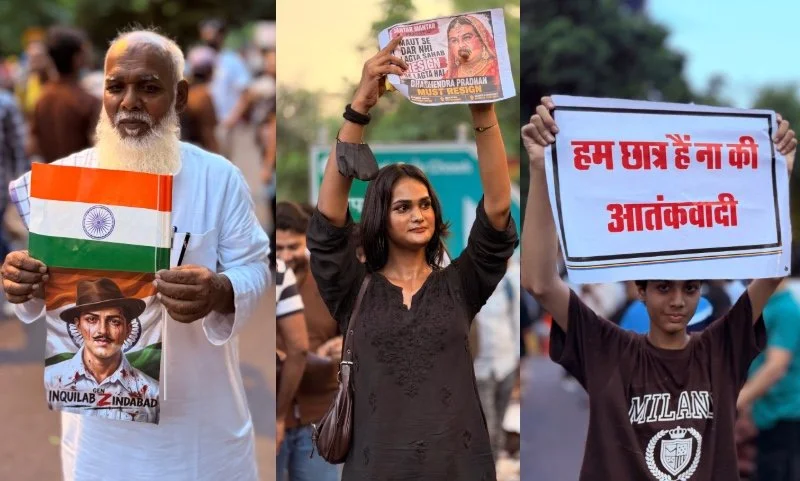
Delhi’s ‘Jantar Mantar Republic:’ the India Its Youngsters Want, and Are Building
A huge, leaderless crowd of protesters has been gathering at Connaught Place in Delhi alongside the organised Cockroach Janta Party (CJP) protest at a designated site at Jantar Mantar. By July 23, it looked at least four times the size of the CJP protest. Even without any leadership, except a few self-appointed volunteers doing crowd management, they seem to be living out the India they want, one they seem to be building themselves, an India where your identity and agency are never questioned but accepted with mutual trust and protection for one another.
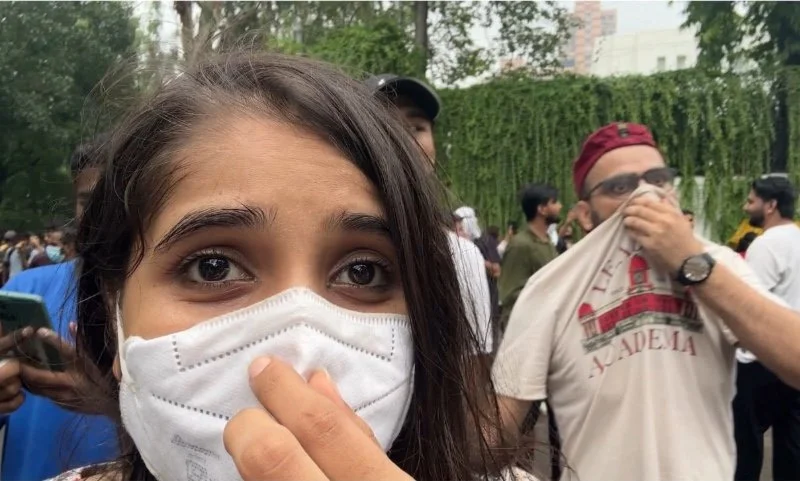
As a Woman Journalist, I Felt Safe Amid Thousands of Stranger Men at CJP Protest
Thousands of men have been filling the Cockroach Janta Party (CJP) protest ground at Jantar Mantar in Delhi for nearly a month. In the initial days, each time I walked into that crowd I expected to feel unsafe, as I always have as a woman in this city. What I soon found instead, as I covered the ongoing youth movement, is a kind of safety I had almost stopped believing was possible in a public space in the capital city, despite the area being dense with strangers.
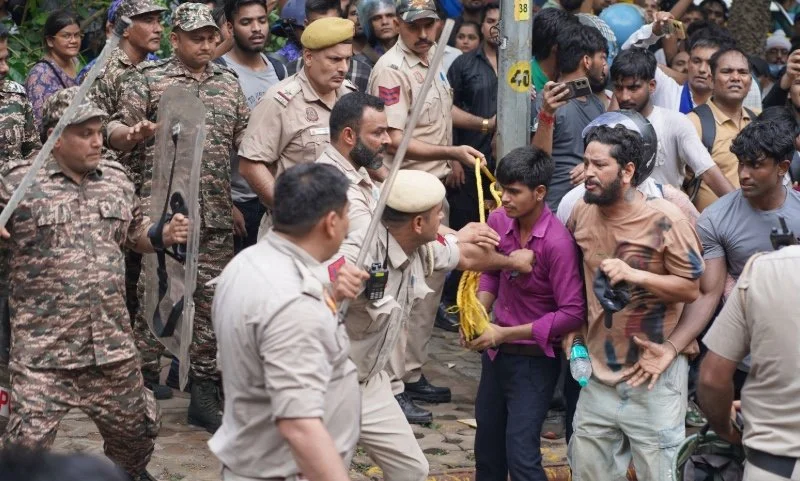
5 Forms of Unlawful, Punitive Force Delhi Police May Have Used Against CJP Protesters
Delhi Police and Rapid Action Force (RAF) personnel used batons and tear gas against thousands of protesters during the Cockroach Janta Party’s (CJP) “Chalo Sansad” march on July 20, leaving scores injured and dozens detained. Eyewitness accounts from journalists covering the protest, including those from Newsreel Asia, and videos circulating on social media point to at least five serious forms of possibly unlawful and punitive force.
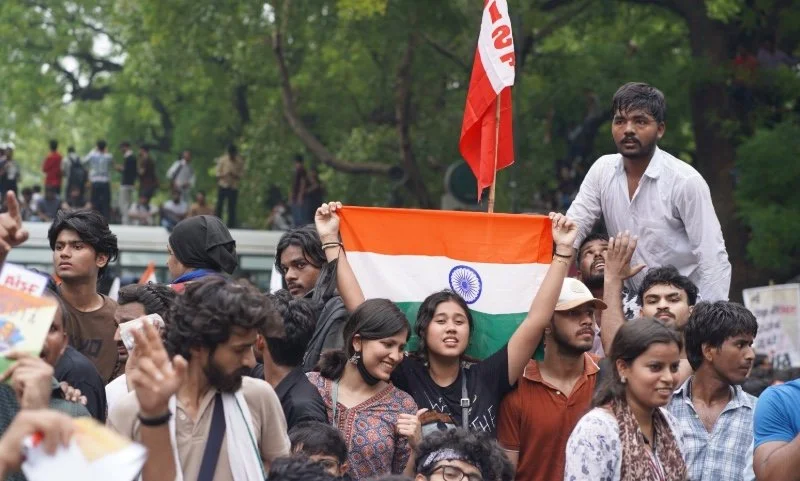
July 20 CJP Protest Defies Government Narrative of Who Dissenters Are
Tens of thousands of young people converged around Delhi’s Connaught Place area on July 20, responding to a call by the Cockroach Janta Party (CJP) for its “Chalo Sansad” march towards Parliament. Most of them belonged to no party, community or movement the government could name, and their active participation appeared to shatter its claim that dissent or grievances in India are confined to a few groups that can be conveniently bracketed into Muslims, Christians, communists, left-leaning civil society, farmers and independent journalists.
CJP’s Ideological Emptiness Is Its Most Effective (and Riskiest) Asset
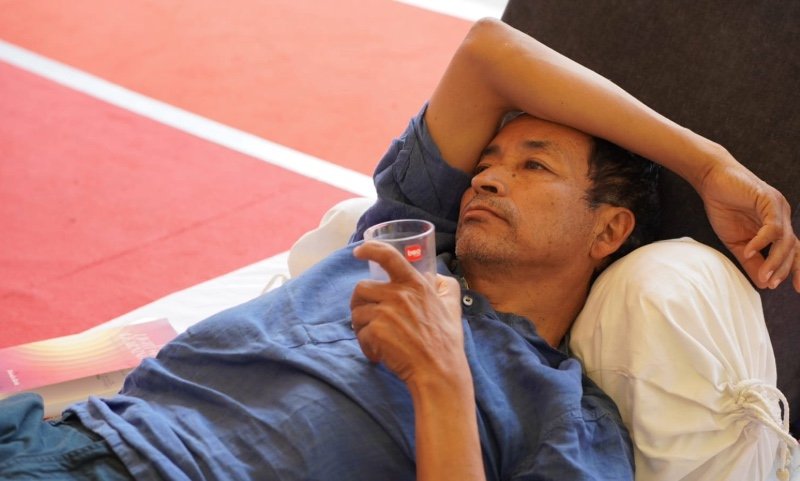
The Cockroach Janata Party’s protest at Jantar Mantar in Delhi has held together for 19 days because “cockroach” means something different to everyone under the tarpaulins, I found when I visited the site on July 16. My biggest concern now is that what could end this diverse coalition is the deteriorating condition of the fasting man on the mattress on the stage. Let me explain how.

Nepal-Led Coalition Seeks UN Endorsement for Dignified Menstruation Day
An international advocacy network is pressing the United Nations to formally endorse December 8 as International Dignified Menstruation Day, an observance it has held for seven years without official recognition from the world body.

Historic Kerala Club Fights Eviction Notice For Its Delhi Premises
The Kerala Club, an 87-year-old socio-cultural institution founded by V.P. Menon, the civil servant who helped unite India’s princely states, is fighting eviction proceedings brought by its landlord in a dispute the club says rests on a false claim that it stopped paying rent.

Obesity Rising Alongside Malnutrition in India’s Poor Urban Communities
Obesity could be emerging alongside persistent undernutrition among children in India’s poor urban communities, suggests a long-running study of one such neighbourhood, which found that a rising number of children were overweight or obese by age nine while a larger number were dangerously underweight.
Why Have We Stopped Caring About Dowry Killings? A New Study Explains
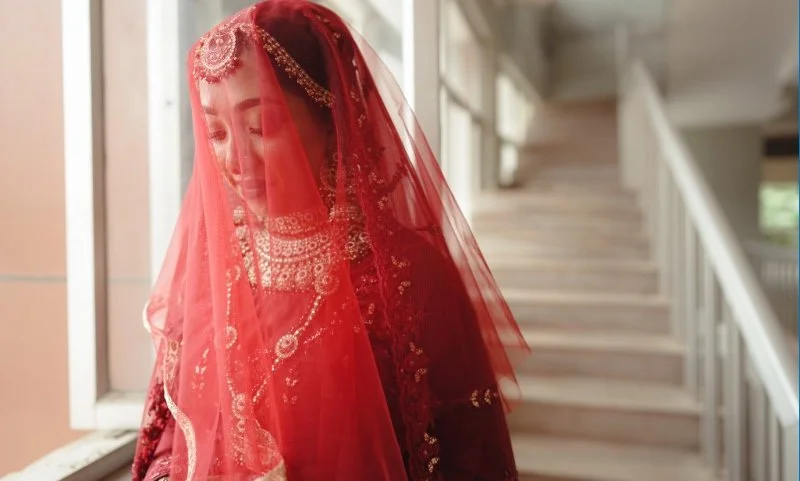
A new academic study argues that India has built an “infrastructure of inattention” around dowry killings, referring to legal and cultural processes that once made such deaths the focus of mass public protest but now allow such murders to pass with little public attention.

India’s Growing Creator Economy Is Changing Society for Better and Worse
Millions of Indians now create videos, podcasts, photographs and social media content for online audiences. A new study suggests that content creation is spreading to smaller cities, growing more professional and occupying an increasingly important place in young people's lives. This growth brings significant social benefits. It could also bring problems of mental health, misinformation and a culture increasingly driven by the pursuit of attention.

Financial Strain Tops List of Factors Affecting Urban Indians’ Well-Being: Survey
In a new survey, financial pressure has emerged as the biggest source of stress and anxiety among urban Indians, while adults aged 25 to 34 report lower overall well-being than people in their 50s despite being generally healthier, more connected to health information, more likely to use fitness apps and more exposed to modern health culture.

Why Kerala CM V.D. Satheesan’s “Menon” Oath Stirred a Caste Debate
Kerala Chief Minister V.D. Satheesan took oath as “Vadasseri Damodara Menon Satheesan,” unlike earlier occasions where he had dropped “Menon,” an upper-caste surname. Days later, he went to the Guruvayur Sri Krishna Temple and offered thulabharam (ritual weighing) with butter, a ritual in which a devotee is weighed against an offering made to the deity. Coming within a week of the formation of a Congress government, the two decisions have triggered unease in the state because the party had projected itself as secular and inclusive.

‘Careful’: A Gen Z Journalist in Nepal Writes an Open Letter to India’s ‘Cockroach’ Party
How are you doing, “cockroaches”? While you celebrate your success in gaining followers and dominating global headlines, how long can you rely on that? Do you realise you are being dismissed as a mere “meme movement” and a “page-based phenomenon”? This is a label you will likely lament, saying critics always need something to say, and this is simply what they have come up with.
Indian Youth’s ‘Cockroach’ Party Now the Biggest on Instagram; What’s Their Message?
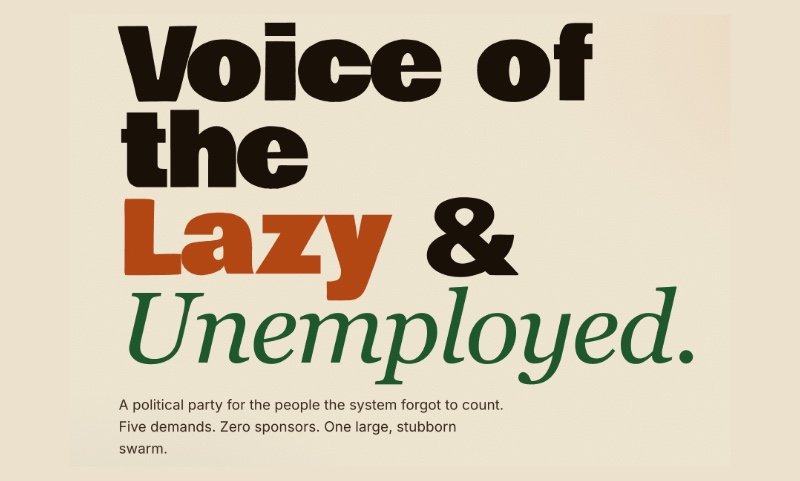
A satirical Indian political movement, called the Cockroach Janta Party (CJP) and built entirely on internet culture, has gained more than double the Instagram following of the ruling Bharatiya Janata Party (BJP), just days after being founded in response to remarks by the country’s chief justice allegedly comparing unemployed young people to insects. Its rapid rise signals the depth of frustration among a generation burdened by unemployment, exam fraud and what appears to be growing distrust toward institutions.

With Micro-Feminism, Women Are Resisting Everyday Patriarchy
Among the many social media trends that briefly pass through our screens and disappear, a few leave a deeper imprint on how people think and behave. One of them is micro-feminism, a term that quietly entered online conversations and gradually began influencing the way many women navigate everyday life.
Menstrual Discrimination Alarming Among Dalit Sanitation Workers, a Report Suggests
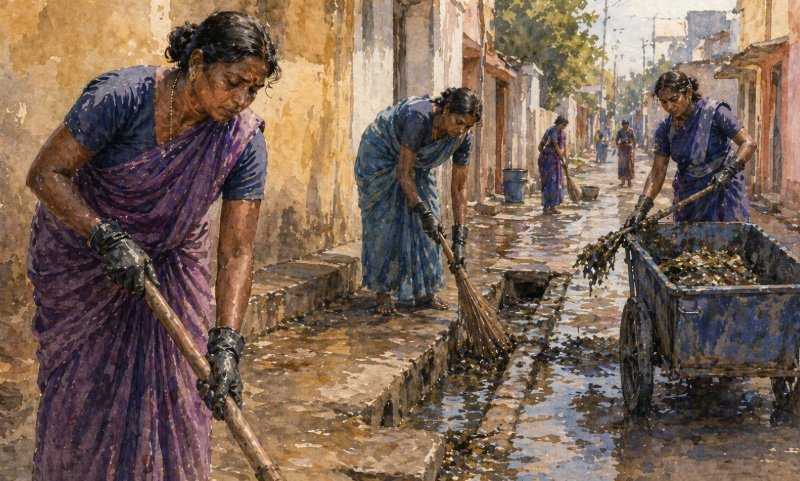
Dalit women working as manual scavengers or housemaids in Delhi face severe menstrual discrimination from their employers and within their own families, with some workers seeing their wages cut and others hiding their periods to avoid punishment at work, according to a report by the Kathmandu-based advocacy organisation Global South Coalition for Dignified Menstruation (GSCDM).

Valentine’s Day: The Politics and Psychology of Hating Love
Each year Hindu nationalist groups carry out violent crackdowns on couples in public spaces during Valentine’s Day in India. These incidents show how moral policing, group identity politics and anxiety about social change combine to justify control over private emotion and public behaviour.
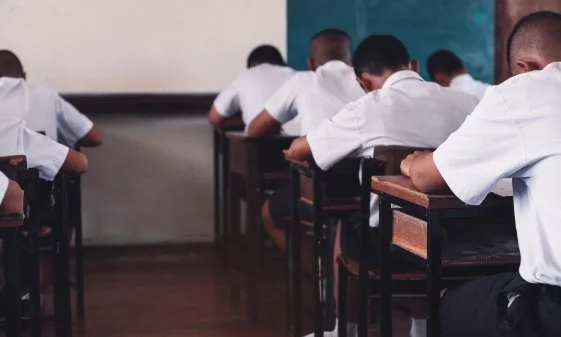
Do Teachers and Parents Really Understand What Students Go Through in School?
A new survey has revealed a consistent gap between what students across high fee private schools experience and what teachers and parents believe is happening inside classrooms and beyond. This suggests that decisions about teaching, discipline, technology use and wellbeing are being influenced by adult assumptions rather than student reality, which risks deepening stress, weakening trust and leaving schools poorly prepared for the social and technological world students already inhabit.

Emotional Distress Linked to Compulsive Pornography Use, Indian Study Finds
Over recent decades, pornography has become more available, affordable, and easier to access in private, especially through smartphones and the internet. However, a new study in India finds that people with higher levels of depression, anxiety and stress are more likely to report compulsive or problematic pornography use.