
If a Voter List Error Can Cost a Journalist His Passport, What Could It Cost Millions of Others?
From the Editor’s Desk
June 30, 2026
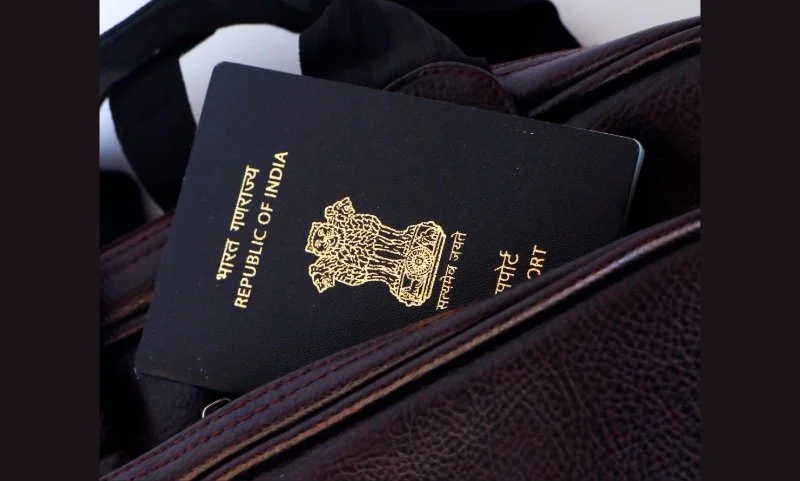
R. Rajagopal, a former editor of The Telegraph, says his passport renewal has been held up after police reported that his name had been deleted from the electoral roll during a recent Special Intensive Revision (SIR) of the voter list. Does this mean an exercise built to catch duplicate and inaccurate entries may now begin to decide, in practice, who is a citizen with standing to travel, work or have access to government services?
Rajagopal applied for passport renewal in Kolkata on 27 February, and his biometric verification went through without incident on 19 March, according to media reports. However, on 27 March, police informed him that his name had been struck off the electoral roll in the Ballygunge constituency, because the SIR could not trace either his name or his late father’s name in the 2002 voters’ list, the baseline year against which the current exercise checks every entry.
Police visited for verification in April and first asked for his voter identity card, the document normally used to generate a one-time password for such checks, then asked him to produce his matriculation certificate, his father’s death certificate, his PAN card, his Aadhaar card and his flat ownership papers once he explained that his voter card had already been deactivated. On 17 June, the regional passport office in Kolkata informed him in writing that verification had been denied because his name no longer appeared on the electoral roll.
In West Bengal as a whole, the revision removed about 9.1 million (91 lakh) names from the rolls, of which roughly 2.7 million (27 lakh) were deleted during judicial adjudication, after being placed in a category the Election Commission labelled ‘logical discrepancies’, covering spelling differences and similar mismatches between documents.
Litigation over the SIR reached the Supreme Court, which allowed the Election Commission to proceed with the revision but also directed the creation of appellate tribunals to resolve disputed exclusions. The Court also made clear that removal from the voters’ list does not by itself prove a person is not a citizen. The clarification played out in Murshidabad district’s Farakka constituency, where an appellate tribunal restored the name of Congress candidate Mohtab Sheikh after it had been deleted over a mismatch in his father’s name, despite his holding a passport, an Aadhaar card and a voter card. Sheikh went on to win the Farakka assembly seat in the 2026 West Bengal election.
In Rajagopal’s case, the deletion from the voters’ list was treated as a settled fact while his challenge against that same deletion sat unresolved before a tribunal set up under the Supreme Court’s own directions. A pending appeal ordinarily suspends the practical force of a disputed finding, because the finding itself remains open to reversal, but here a passport office acted as though the dispute had already been settled.
The Supreme Court’s distinction held that exclusion from the electoral roll says nothing about a person’s citizenship, and that authority over citizenship questions rests with the bodies set up under citizenship law. However, reports have surfaced that the West Bengal government is weighing whether to link ration benefits to voter-list status. That would threaten the distinction directly. A household’s access to subsidised food would then depend on the same error-prone matching process that deleted Rajagopal’s name over a discrepancy in records from 2002.

If one welfare scheme starts using the voter list as its gatekeeper, other departments gain reason to follow. Each would be borrowing a list compiled for one narrow purpose and treating it as a verified record of who belongs. None of them would carry the appeal window or the burden of proof that normally accompanies a decision affecting access to food, identity documents or travel.
You have just read a News Briefing, written by Newsreel Asia’s text editor, Vishal Arora, to cut through the noise and present a single story for the day that matters to you. We encourage you to read the News Briefing each day. Our objective is to help you become not just an informed citizen, but an engaged and responsible one.
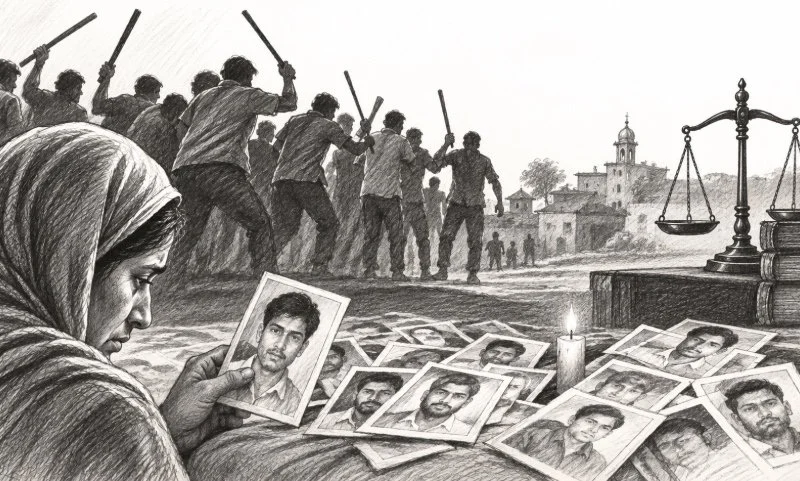
What happened in Mumbai on October 2 may have been only one day of protest, but the issues behind it are unlikely to disappear with the dispersal of the crowd. The protest was centred around concerns over the Election Commission, electoral rolls and the Special Intensive Revision (SIR) exercise, with protesters demanding accountability from Chief Election Commissioner Gyanesh Kumar. At the same time, similar mobilisation has been taking place across different parts of the country, with student groups, Opposition parties and civil society organisations raising concerns over the electoral process. Newsreel Asia spent the day at Mumbai Protest capturing the preparations, the police presence, conversations with protesters, the atmosphere on the streets and how the day unfolded. The speech of Cockroach Janta Party's leaders and sentiment of protestors seemed larger than the concerns regarding the electoral process. Will this lead to something bigger?