
June 27, 2026
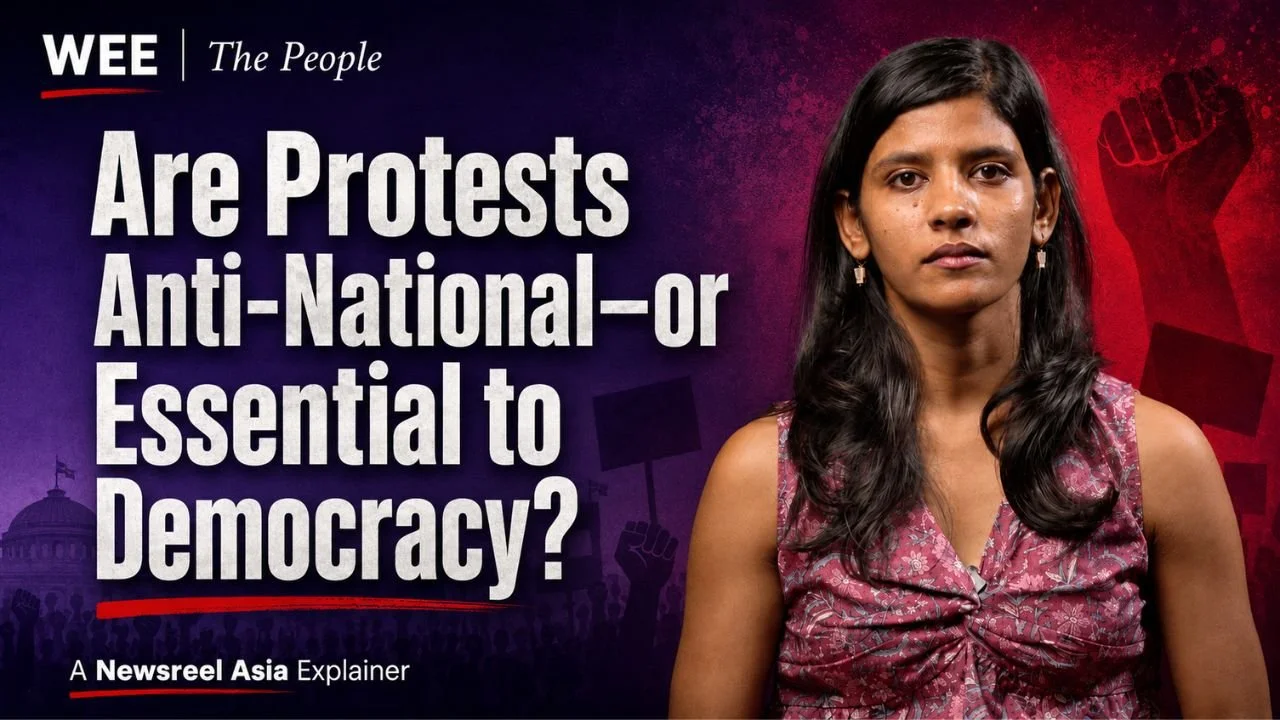
Many of the rights and freedoms we take for granted today exist because ordinary people challenged injustice and refused to remain silent. Equality before the law, the eight-hour workday, voting rights and India’s independence were not simply granted by those in power. They were won through decades of protest, resistance and collective action.
In this episode of WEE The People, we examine the history and importance of protests—from one of the earliest recorded workers’ strikes in ancient Egypt to the French Revolution, the labour movement, the struggle for universal voting rights and India’s freedom movement. We also explain how protests create change. By bringing people together, they make ignored problems visible, attract public attention, demonstrate collective strength and give people without money or institutional influence the power to negotiate with those in authority. Not every protest is necessarily right, and every protest must be judged by its demands, methods and impact.
But dismissing protesters as troublemakers—or claiming that protests are intended only to inconvenience people—ignores the central role collective action has played in building more equal and democratic societies. People rarely protest because everything is working well. They protest because they feel unheard and believe that other avenues have failed.
WEE The People stands for Wise, Empathetic and Engaged. Through this series, Newsreel Asia explains political, social and psychological concepts that can help us become more thoughtful and engaged citizens. Share this video with someone who struggles to understand why protests matter, and subscribe to Newsreel Asia for more such explainers.