
Why Scientists Think Younger Generations Are Ageing Faster
From the Editor’s Desk
June 29, 2026

People born in recent decades are biologically older than their chronological age would suggest, and that gap appears to be widening with each generation, a pattern that a new study links to rising rates of cancer in adults under 55.
For the study, published in Nature Medicine, researchers at Washington University School of Medicine in St. Louis used a biological ageing tool called PhenoAge, which has nine blood biochemistry markers to estimate how old a person’s body is relative to their actual years lived, based on mortality risk profiles.
Analysing data from more than 154,000 young adults in the United Kingdom and 10,000 participants from the United States, the study found that people born between 1965 and 1974 had a standardised biological age gap that was 23% higher than those born between 1950 and 1954, the study found. In the U.S. cohort, those born between 1990 and 1999 showed a gap 92% higher than those born in 1965 to 1969.
The study defined the “age gap” as the difference between a person’s biological profile and what would be expected for their chronological age. A larger age gap was associated with a higher risk of developing an early-onset solid cancer. Specifically, for every one-unit step up in biological aging, a person's cancer risk rose by 8%.

The link was strongest for lung cancer, where biological aging nearly doubled the risk, followed by uterine cancer, where it raised risk by about a third, and gastrointestinal and colorectal cancers, where it raised risk by roughly 14 to 17%. Cancers diagnosed after age 55 showed a weaker connection.
Those findings held up after researchers accounted for other biological ageing markers in the blood and for genetic factors that predispose people to age faster or develop cancer, suggesting that the age gap captures cancer risk over and above what genes alone would predict.
In the U.S. cohort, a one-unit step up in biological ageing was associated with a 22% higher risk of early-onset solid cancers. A separate analysis among nearly 20,000 U.K. participants used blood protein levels to assess aging in specific organs rather than the body as a whole. It found that accelerated ageing of the immune system was associated with nearly double the risk of early-onset lung cancer, and that accelerated ageing of fat tissue was associated with a 60% higher risk of early-onset colorectal cancer.
Both associations held even after accounting for overall systemic ageing, suggesting that what happens in individual organs contributes to cancer risk independently of the body’s general ageing trajectory. The authors called these organ-specific findings preliminary, saying they need further validation.
Lung cancer associations with the age gap remained statistically significant after additional adjustment for smoking and cumulative pack-years, suggesting the relationship is not fully explained by tobacco use. In the U.K., 67% of young lung cancer patients are diagnosed at stage IV. In the U.S., early-onset lung cancer incidence is now higher among women, who are mostly never-smokers.


In the U.S. cohort, non-Hispanic Black and Hispanic participants showed higher average biological age gaps than non-Hispanic white participants, though the study did not identify why.
The authors said because the study is observational, it cannot prove that accelerated biological aging causes cancer. They also acknowledged that factors they did not measure could account for some of the associations.
Early-onset cancers, generally defined as diagnoses before age 50 or 55, have become a growing public health concern. Between 1990 and 2019, cancers diagnosed in adults under 50 increased by 24% globally.
You have just read a News Briefing, written by Newsreel Asia’s text editor, Vishal Arora, to cut through the noise and present a single story for the day that matters to you. We encourage you to read the News Briefing each day. Our objective is to help you become not just an informed citizen, but an engaged and responsible one.

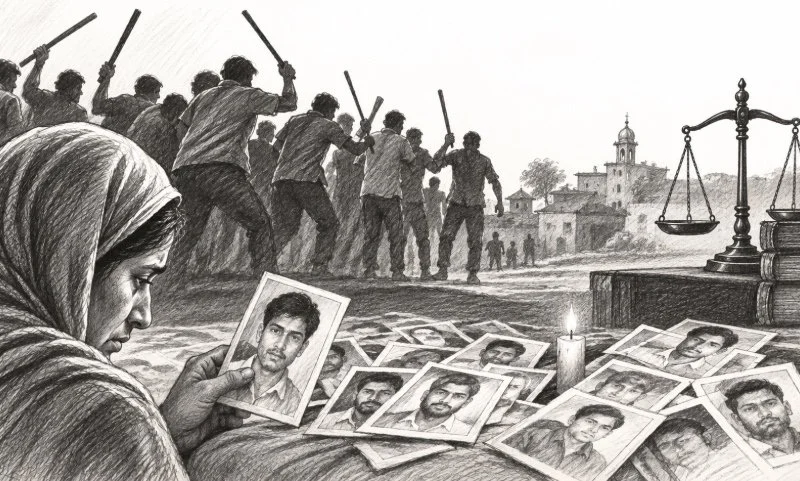
What happened in Mumbai on October 2 may have been only one day of protest, but the issues behind it are unlikely to disappear with the dispersal of the crowd. The protest was centred around concerns over the Election Commission, electoral rolls and the Special Intensive Revision (SIR) exercise, with protesters demanding accountability from Chief Election Commissioner Gyanesh Kumar. At the same time, similar mobilisation has been taking place across different parts of the country, with student groups, Opposition parties and civil society organisations raising concerns over the electoral process. Newsreel Asia spent the day at Mumbai Protest capturing the preparations, the police presence, conversations with protesters, the atmosphere on the streets and how the day unfolded. The speech of Cockroach Janta Party's leaders and sentiment of protestors seemed larger than the concerns regarding the electoral process. Will this lead to something bigger?