
India Holds Oil Reserves for Only 9.5 Days of Demand Amid Gulf Supply Risks
From the Editor’s Desk
March 26, 2026
[**Update: The Ministry of Petroleum and Natural Gas said on March 26, 2026, that crude oil supplies (not part of the reserves) had been secured for the next 60 days.]
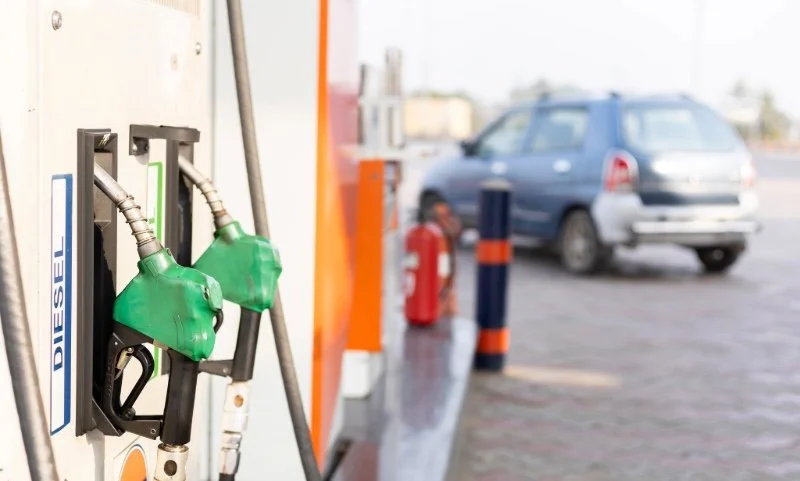
India’s strategic petroleum reserves can cover only about 9.5 days of national crude oil demand if the reserves are filled to their maximum capacity, according to a government response obtained through the Right to Information law. The disclosure places India at the lower end of energy preparedness at a time of heightened supply risks linked to the ongoing Iran war.
The RTI reply from the Ministry of Petroleum and Natural Gas states that India’s total Strategic Petroleum Reserve storage capacity is 5.33 million metric tonnes, as reported by India Today. Data presented in the Rajya Sabha on March 23 shows that the actual oil stored in these facilities currently stands at about 3.372 million metric tonnes, meaning the reserves are filled to about 64 percent of capacity. So the real buffer available to India is lower than 9.5 days of demand because the storage facilities themselves are not fully stocked.
Strategic petroleum reserves are meant to protect countries against supply disruptions or sudden price shocks, and they are released during crises so that essential sectors including transport, industry and electricity generation continue functioning even if imports are interrupted.
India imports more than 85 percent of the crude oil it consumes, and a large share of these supplies comes from West Asia. The war involving Israel and the United States on one side and Iran on the other, and its expansion across the Gulf region, has disrupted global oil supplies, particularly through the Strait of Hormuz, one of the world’s most critical energy transit routes. About one-fifth of global oil consumption and a major share of seaborne oil trade passes through this narrow waterway, making any disruption there a direct threat to energy security for import dependent economies including India.


Members of the International Energy Agency (IEA) maintain emergency oil reserves equivalent to about 90 days of net imports. India is outside the IEA reserve system, but the benchmark offers a useful measure of scale for assessing the adequacy of national oil buffers.
The situation reveals two features of Indian state capacity.
The first concerns the gap between policy announcements and operational readiness. The strategic petroleum reserve programme began in 2004 and the current facilities form the first phase of that policy. Expansion plans announced in 2021, which would add two new facilities to the existing three, show recognition within government that the present system remains limited. But the pace of building and filling reserves remains slow relative to the scale of India’s energy dependence.
The second feature relates to the logic of energy strategy in import-dependent states. Governments pursue several forms of security simultaneously. One path involves building large emergency reserves. Another involves diversifying sources of supply so that no single region controls access. A third involves maintaining strong diplomatic relationships with major producers.
India has pursued diversification in recent years by purchasing oil from a wider range of suppliers, including Russia, the United States and African producers. Policymakers appear to have treated diversification as a substitute for holding larger emergency stockpiles. The RTI disclosure has revealed this trade off. The government has pointed to diversified imports and stable diplomatic relations with suppliers while explaining the relatively modest physical reserve system.

In political science, it’s called selective capacity building. Strategic reserves, however, serve as the last line of defence during a supply crisis, which calls for stronger preparedness. Energy markets experience sharp volatility during geopolitical conflicts. And the possibility of a war in the region was foreseeable.
Further, information about national preparedness entered public debate only through an RTI request, whereas the government should have disclosed it proactively. Public awareness of the adequacy of strategic reserves is essential for informed debate about national preparedness, especially during periods of geopolitical conflict that affect global oil supplies.
You have just read a News Briefing, written by Newsreel Asia’s text editor, Vishal Arora, to cut through the noise and present a single story for the day that matters to you. We encourage you to read the News Briefing each day. Our objective is to help you become not just an informed citizen, but an engaged and responsible one.


What happened in Mumbai on October 2 may have been only one day of protest, but the issues behind it are unlikely to disappear with the dispersal of the crowd. The protest was centred around concerns over the Election Commission, electoral rolls and the Special Intensive Revision (SIR) exercise, with protesters demanding accountability from Chief Election Commissioner Gyanesh Kumar. At the same time, similar mobilisation has been taking place across different parts of the country, with student groups, Opposition parties and civil society organisations raising concerns over the electoral process. Newsreel Asia spent the day at Mumbai Protest capturing the preparations, the police presence, conversations with protesters, the atmosphere on the streets and how the day unfolded. The speech of Cockroach Janta Party's leaders and sentiment of protestors seemed larger than the concerns regarding the electoral process. Will this lead to something bigger?