
By Bal Krishna Sah in Kathmandu, Nepal*
March 15, 2026
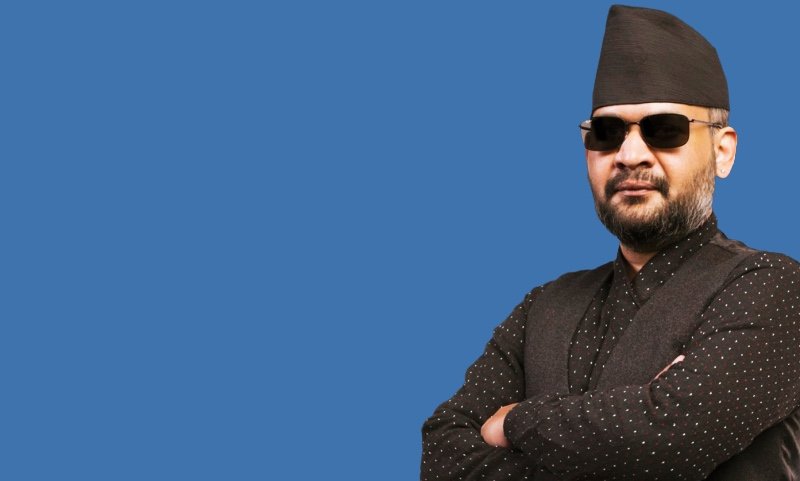
Photo by MinRv, licensed under Creative Commons
The stunning rise of the Rastriya Swatantra Party (RSP), powered by the popularity of its senior leader Balendra “Balen” Shah, has reduced the Nepali Congress and the communist parties to their smallest presence ever in Nepal’s parliamentary election history. The results of the 2026 election mark a dramatic break in a political system long dominated by these parties, but the question now is whether a new movement led by younger leaders will be able to replace the traditional forces that have shaped the country’s politics for decades.
The Nepali Congress and communist parties, including the Communist Party of Nepal-Unified Marxist and Leninist (CPN-UML) and the Nepali Communist Party (NCP), which was formed before the March 5 election by combining around 22 communist groups, have been pushed to their lowest number of seats in parliament. Until recently, these parties regularly claimed dominance in Nepal’s political system.
Before this election, the CPN-UML and the Nepali Congress had abandoned Pushpa Kamal Dahal “Prachanda” to form a new government led by K.P. Sharma Oli. That government itself collapsed amid a wave of political unrest, the Gen Z Revolution. Prachanda had earlier described the CPN (Maoist)’s 32 seats as the “magic number” required to form a government in Nepal.

The election, held after last September’s revolution, has dramatically shaken the long-standing dominance of traditional parties. Congress and the communist parties together won only 35 seats through the First Past the Post (FPTP) system. The Nepali Congress secured 18 seats, CPN-UML won nine, and the NCP won eight.
The RSP also topped the proportional representation vote. The party won 125 seats under the FPTP system and 57 proportional representation seats in the House of Representatives, according to the Election Commission of Nepal. Proportional representation seats are allocated to parties based on their share of the nationwide vote rather than victories in individual constituencies.
The Nepali Congress, which won 18 FPTP seats, secured 20 proportional seats, while CPN-UML, which won nine FPTP seats, secured 16 proportional seats. The NCP, which won eight FPTP seats, received nine proportional seats. The Shram Sanskriti Party (SSP), a relatively new political group that focuses on labour rights, workers’ dignity and social justice in Nepal’s political system and which won three FPTP seats, secured four proportional seats, while the Rastriya Prajatantra Party (RPP), which won one FPTP seat, also secured four proportional seats.
The RPP, which advocates the restoration of Nepal’s monarchy and promotes a Hindu state, has been reduced to five seats in total, compared with 14 seats in the 2022 election.
According to the Election Commission, 10.7 million votes had been counted under the proportional representation system by the morning of March 11. The RSP secured the highest number of votes, with 5.1 million. The Nepali Congress followed with 1.7 million votes, and CPN-UML received 1.4 million votes.
The NCP received 805,773 votes, the SSP secured 378,649 votes, and the RPP obtained 329,472 votes. Other parties failed to cross the three-percent threshold required to qualify for proportional representation seats.

This result has come as a shock to the so-called mainstream political parties. With 125 direct election victories and 57 proportional representation seats, the RSP has reached a total of 182 seats, only two short of the 184 required for a supermajority.
The Nepali Congress and CPN-UML, which were the first and second largest forces in the previous House of Representatives, have seen their influence decline sharply under both electoral systems. In the previous election, CPN-UML received 2.8 million proportional votes. This time, its vote total has fallen by nearly half. The Nepali Congress has also seen a decline from the 2.7 million proportional votes it secured in the 2022 election. CPN (Maoist) received 1.17 million votes in the 2022 election.
The March election has also produced symbolic defeats for traditional parties. Both Congress and communist leaders lost their constituencies to RSP candidates, many of them young newcomers who defeated political heavyweights on their own home turf.
Balen Shah defeated CPN-UML chair and four-time prime minister Oli by a margin of around 50,000 votes. Amresh Singh of the RSP defeated Nepali Congress president Gagan Thapa by around 13,000 votes. Thapa had recently become president of the Nepali Congress, ousting Sher Bahadur Deuba in a special general convention.
The Balen wave has also swept away Madhes-based parties. Madhesh is Nepal’s southern plains region along the border with India, home to a large population with strong linguistic, cultural and economic ties to northern India. Until the 2022 election, Madhes-centric parties such as the Janata Samajwadi Party-Nepal led by Upendra Yadav, the Janamat Party led by C.K. Raut, and the Rastriya Mukti Party led by Rajendra Mahato often played a decisive role in the formation of governments at the federal level. This election has disrupted their parliamentary presence and weakened identity-based political mobilisation.
Several RSP candidates defeated these leaders even in their traditional strongholds. Rajendra Mahato failed to secure even 10 percent of the vote required to retain his election deposit. Dipak Kumar Sah of the RSP defeated Sharat Singh Bhandari, a senior leader of the Janata Samajwadi Party-Nepal who has served as minister 19 times.
Rabindra Patel, an RSP candidate who defeated Prabhu Shah, chair of the Aam Janata Party, in Rautahat constituency-3, said during a conversation, “The country has got a messiah in the form of Balen, which has swept the legacy parties across the country.”
The RSP’s victory has also weakened monarchist politics. The RPP president Rajendra Linden was defeated by an RSP candidate in Jhapa-2, while another prominent RPP figure, Rabindra Mishra, lost to Ranju Darshana in Kathmandu-1. Mishra later announced his resignation from the RPP on moral grounds. These results could slow the monarchist movement and the periodic unrest organised by its supporters.
Several political analysts told me during conversations that if the RSP succeeds in delivering results in government, it could remain in power for at least two decades. Some observers believe the election may signal the decline of communist politics in Nepal. Critics argue that communist ideology has often been used by political actors for personal and electoral advantage rather than for consistent policy direction.
Last year’s Gen Z Revolution appears to have played a major role in shaping voter sentiment. Attempts by traditional parties to suppress that movement appear to have strengthened support for the RSP. Many voters turned away from established parties and gravitated toward new political alternatives.
Balen Shah’s popularity has also contributed to the party’s victory. Many supporters saw him as a potential future prime minister, and his appeal among younger voters has been particularly strong.
Similarities with India’s BJP
Some of the RSP’s campaign methods have drawn comparisons with the governing Bharatiya Janata Party (BJP) in India. The slogan “Ab Ki Bar Balen Sarkar” echoed the BJP’s famous campaign slogan used during Narendra Modi’s election campaigns.
Observers have also compared the Balen Shah and Rabi Lamichhane partnership to the political partnership between Prime Minister Narendra Modi and Home Minister Amit Shah in India.
Both the BJP and RSP use election symbols associated with Hindu religious imagery. The BJP uses the lotus, a flower linked to several Hindu deities, while the RSP’s symbol is a bell within a circle, a common object in Hindu temples. Some observers suggested that the party’s symbol might discourage Muslim voters from supporting it in an election held during the Ramadan period.
Despite these debates, the RSP has emerged as the dominant political force in Nepal following its landslide victory. However, the party still lacks the organisational network and grassroots cadre structure that long-established parties possess. Unlike the BJP in India, it does not have support from an organisation comparable to the Rashtriya Swayamsevak Sangh.
Over the next five years, the RSP will need to strengthen its organisational base if it hopes to maintain its electoral momentum.
Challenges and Chances
It may still be too early to conclude that Nepal’s traditional parties will disappear entirely. They possess long histories of political mobilisation and organisational networks built over decades.
While the RSP faces internal tensions between Rabi Lamichhane, who holds the party mandate as its president, and Balen Shah, who carries a massive popular mandate, the party will confront major challenges as soon as it assumes power next week, including the crisis in West Asia that has already begun to cause energy shortages in Nepal and is visible in India as well.
Asia has already begun affecting Nepal’s economy, particularly because the country depends heavily on remittances from Nepali workers in that region. Nepal is also facing shortages of liquefied petroleum gas, LPG. The Nepali Oil Corporation has already issued notices introducing half-cylinder distribution. Households are now receiving cylinders filled with only half the usual quantity of LPG, sold at a reduced price. Energy shortages are affecting daily life across the country, placing pressure on kitchens and households.
Nepal must also maintain delicate geopolitical balancing between India and China. The United States has also shown increasing strategic interest in Nepal, particularly through the Millennium Challenge Corporation project, a U.S. government grant programme worth about $500 million for building electricity transmission lines and improving road infrastructure in Nepal. The project faced strong opposition from China during debates over its implementation.
Nepal therefore faces economic, political and geopolitical pressures at the same time. Whether dealing with domestic governance or international diplomacy, Nepal’s political developments will remain closely watched in the coming years.
The country’s recent political upheaval, from the Gen Z Revolution to the RSP’s landslide victory over traditional parties, represents one of the most dramatic shifts in South Asian politics in recent times. However, the long-term significance of this moment will depend on whether the RSP government can address persistent problems such as unemployment, which the World Bank estimated at 23.6 percent among young people aged 15 to 24 in 2024. Nepal also faces structural challenges including economic stagnation and bureaucratic inefficiency.
If the RSP succeeds in delivering reforms and economic improvements, Nepal could become an important case study for observers who believe that politics can still deliver meaningful change.
*(Bal Krishna Sah is a political commentator and journalist based in Kathmandu, Nepal. His work includes investigations for a BBC documentary on the Gen Z Revolution, reporting for WOZ, and several articles for The Himalayan Times, Nepal’s largest-selling English daily.)
You have just read a News Briefing. News Briefings are written to cut through the noise and present a single story for the day that matters to you. We encourage you to read the News Briefing each day. Our objective is to help you become not just an informed citizen, but an engaged and responsible one.
On October 12, opposition leaders, MPs, MLAs, student organisations and political workers came together in a massive march against Chief Election Commissioner Gyanesh Kumar, raising serious concerns over the Special Intensive Revision (SIR) of electoral rolls and the alleged mass deletion of voters’ names. The march brought together a broad coalition, including the INDIA bloc, AISA, SFI and other student unions, as part of a wider nationwide mobilisation against the SIR exercise and concerns surrounding electoral integrity.