
Press Freedom Situation in India ‘Very Serious’: Reporters Without Borders
From the Editor’s Desk
May 5, 2026
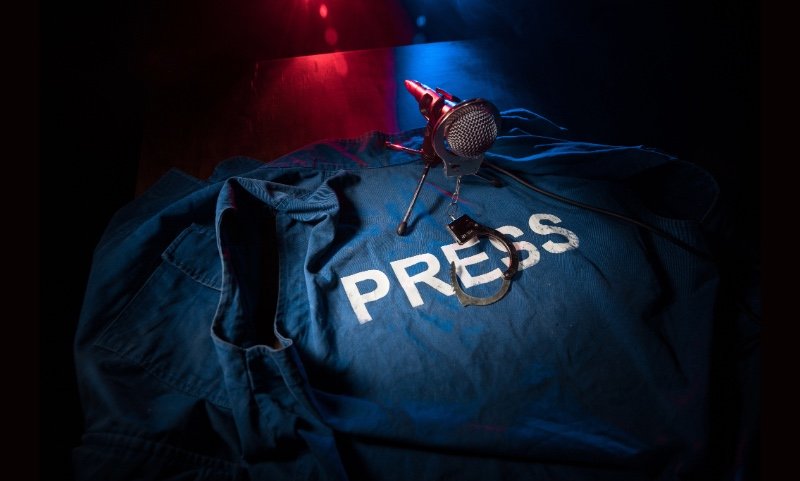
India has ranked 157th out of 180 countries and territories in the 2026 World Press Freedom Index, published by Reporters Without Borders, or RSF, which rated the country’s press freedom situation as “Very Serious,” the highest level of threat in the annual index.
The rating by the Paris-based international press freedom organisation places India near the bottom of the global ranking, below all but 23 countries.
In South Asia, the same “Very Serious” designation applies to Pakistan, Afghanistan, Bhutan and Bangladesh. Nepal, Sri Lanka and the Maldives were rated “Difficult,” one level below the highest threat category. The index uses five classifications in ascending order of severity: “Good,” “Satisfactory,” “Problematic,” “Difficult” and “Very Serious.”
RSF identified India’s Digital Personal Data Protection Act, or DPDP Act, and the accompanying rules published by the Indian government in November 2025 as a primary driver of the country’s press freedom deterioration. The report said the new legal framework has effectively overturned more than 20 years of legislation designed to protect the right to information.
India’s Right to Information Act, passed roughly 20 years ago, allowed citizens and journalists to access certain types of personal data on the condition that the “larger public interest warrants the disclosure of such information.” The DPDP Act and its rules, RSF said, directly undermine that standard by restricting access to, processing of, and publication of information that could be of public interest, including administrative documents, public archives, and material implicating public officials or institutions.
A separate provision in the rules poses a distinct threat to investigative journalism. Any journalist investigating a person is legally required under the new framework to inform that person about the information being collected or used. RSF said this requirement would seriously hinder investigative reporting and could discourage whistleblowers from coming forward.
Legal challenges to the provisions are already before the Indian Supreme Court. The Reporters’ Collective, an independent investigative journalism group based in India, filed petitions alongside civil society organisations, journalists and transparency advocates. The first hearing before the Supreme Court took place on March 23, 2026, and the next is scheduled for May 13.
Célia Mercier, head of RSF’s South Asia Desk, called on the Indian government to amend the DPDP Act’s implementing rules to ensure compatibility with press freedom and the right to information. “Processing personal data for public interest purposes must be explicitly exempted from the restrictions and penalties applicable to other uses of such information,” she said. RSF added that without those safeguards, the law risks further weakening the press and depriving Indian citizens of their fundamental right to information.
Globally, press freedom has reached its lowest point in the 25 years RSF has been tracking it. More than half of all countries surveyed, 52.2 percent, now fall into the “Difficult” or “Very Serious” categories, compared with 13.7 percent in 2002. The share of the global population living in a country rated “Good” for press freedom has collapsed from 20 percent that year to under 1 percent today.
Of the five indicators used to assess press freedom, covering the economic, legal, security, political and social environments for journalism, the legal indicator recorded the steepest decline in 2026. It deteriorated in 110 out of 180 countries between 2025 and 2026. RSF attributed the decline to the abuse of national security laws, strategic lawsuits against public participation, known as SLAPPs, and the criminalisation of journalism.
Norway held the top spot in the index for the tenth consecutive year. Eritrea ranked last, at 180th, for the third year running. The U.S. dropped seven places to 64th, a decline RSF linked partly to what it called systematic attacks on the press under President Donald Trump and to drastic cuts to the U.S. Agency for Global Media, which led to the closure, suspension and downsising of Voice of America, Radio Free Europe/Radio Liberty and Radio Free Asia.
Post-Assad Syria recorded the largest improvement of any country in the 2026 index, climbing 36 places to 141st following the fall of Bashar al-Assad’s government in December 2024. Niger recorded the steepest fall, dropping 37 places to 120th.
RSF reported that more than 220 journalists have been killed in Gaza since October 2023, including at least 70 killed while working.
In Hong Kong, independent publisher Jimmy Lai was sentenced to 20 years in prison, the heaviest sentence ever imposed on a journalist in the territory, RSF noted in the report.
Russia held 48 journalists in detention as of April 2026, RSF said, adding that Saudi Arabia’s ranking fell 14 places, partly linked to the execution of journalist Turki al-Jasser in 2025.
You have just read a News Briefing, written by Newsreel Asia’s text editor, Vishal Arora, to cut through the noise and present a single story for the day that matters to you. We encourage you to read the News Briefing each day. Our objective is to help you become not just an informed citizen, but an engaged and responsible one.
What happened in Mumbai on October 2 may have been only one day of protest, but the issues behind it are unlikely to disappear with the dispersal of the crowd. The protest was centred around concerns over the Election Commission, electoral rolls and the Special Intensive Revision (SIR) exercise, with protesters demanding accountability from Chief Election Commissioner Gyanesh Kumar. At the same time, similar mobilisation has been taking place across different parts of the country, with student groups, Opposition parties and civil society organisations raising concerns over the electoral process. Newsreel Asia spent the day at Mumbai Protest capturing the preparations, the police presence, conversations with protesters, the atmosphere on the streets and how the day unfolded. The speech of Cockroach Janta Party's leaders and sentiment of protestors seemed larger than the concerns regarding the electoral process. Will this lead to something bigger?