
From the Editor’s Desk
August 25, 2026
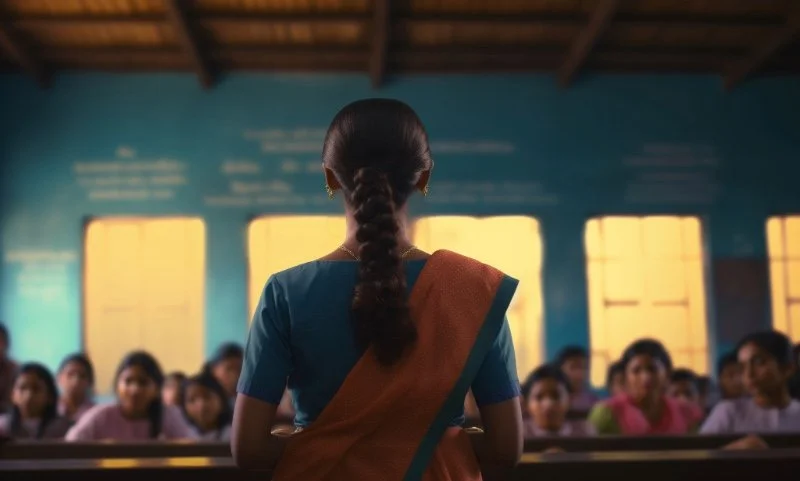
Rahul Gandhi has written to Maharashtra Chief Minister Devendra Fadnavis, demanding an end to the reported practice of requiring female Adivasi students returning after an absence to undergo pregnancy tests before being readmitted to government hostels. No student should have to prove that she is not pregnant or has not had sex to retain her accommodation and continue her education.
In a letter to Fadnavis, Gandhi said Adivasi students in Pune returning after an extended absence are required to undergo pregnancy tests and other medical tests to prove their fitness., as reported by The Tribune. He called the practice an assault on the dignity of women students. He noted had the female student been on hunger strike for more than 10 days over conditions in government hostels, and that their concerns had gone unheard. He asked the chief minister to meet representatives of the protesting students in person and resolve the issues without delay.
Many of the students affected come from remote villages and rely on government hostels to continue their education. A new rule bars anyone over the age of 30 from these hostels, which has excluded students who are still completing their studies or preparing for examinations.
Gandhi also raised the state of the hostels themselves, saying students face inadequate food, sanitation and medical care, and that some have suffered injuries and deaths, including from snakebite, with conditions for women worse still. The letter followed his visit to Pune, where he met the protesting students and received a memorandum listing their demands.
A preliminary departmental inquiry in 2025 found that no government order had authorised the tests. However, reports later raised fresh allegations and conflicting official accounts, leading to another inquiry. Another inquiry was ordered in September 2025 after the Maharashtra State Women’s Commission received accounts that students had undergone pregnancy tests. Officials then gave conflicting explanations about who had ordered the tests.
The rule raises serious concerns under Articles 14, 15 and 21 of the Constitution, which protect equality before the law, prohibit discrimination on grounds including sex, and guarantee life and personal liberty. The Supreme Court has held that personal liberty includes bodily integrity, personal autonomy and control over intimate information. Compelling women to undergo pregnancy tests as a condition for hostel accommodation violates these protections and subjects their bodies and private lives to unjustified official inspection.

The alleged pregnancy-test requirement suggests that a welfare entitlement is being turned into a form of surveillance, and directed exclusively at women. The 30-year age limit may also affect women disproportionately. An Adivasi woman may take longer to complete her studies because of marriage, childbirth or family responsibilities.
This approach has a long history. Indian institutions have often treated women’s sexuality as something that must be controlled, first by the father, then by the husband and, in this case, by the hostel warden. A woman’s body is treated as possible evidence of misconduct. Male students returning after months away face no comparable examination of their conduct. This suggests that the hostel is not merely assessing medical fitness, but passing a moral judgement on women, disguised as a medical requirement.
Gandhi’s letter notes that many of the affected students come from remote villages and have no alternative accommodation. Their dependence on government hostels means that their consent to a medical test cannot be considered freely given. Refusing the test could cost them a hostel bed and, with it, their only practical means of continuing their education. A choice made under such pressure is hardly a genuine choice. Students with access to private accommodation would be in a much stronger position to refuse.


Gandhi notes the hostels’ physical conditions, the inadequate food and sanitation, the medical care that leaves students exposed to snakebite and worse. The administration appears unable or unwilling to address these basic health and safety failures, but reportedly finds the staff, time and medical resources to test a woman’s urine before readmitting her. The problem, then, does not appear to be a lack of administrative capacity. It is a question of priorities and the administration’s willingness to leave women’s bodies alone.
The Maharashtra government should suspend the tests, publish the rules governing medical fitness for hostel residents, and appoint an independent inquiry to establish who ordered a practice that the Tribal Development Department says it never authorised.
You have just read a News Briefing, written by Newsreel Asia’s text editor, Vishal Arora, to cut through the noise and present a single story for the day that matters to you. We encourage you to read the News Briefing each day. Our objective is to help you become not just an informed citizen, but an engaged and responsible one.

Hundreds of protesters gathered at Bangla Sahib in Delhi at 1 PM on October 23 for a protest called by People Against SIR, a collective of over 100 organisations mobilising against the Election Commission of India’s Special Intensive Revision (SIR) of electoral rolls across the country. Along with detentions and use of force, security personnels are using another tactic - blowing whistles to silence the voices.