
From the Editor’s Desk
January 31, 2026
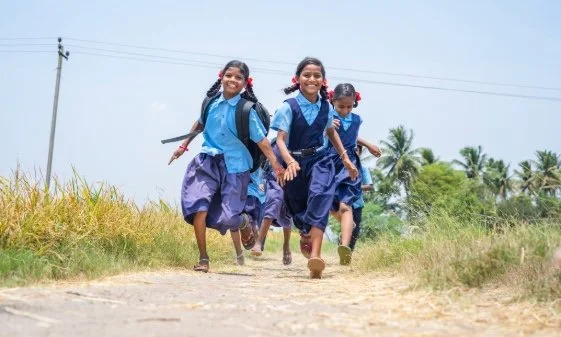
Adolescent girls in many parts of India miss several days of school each month during their periods due to lack of sanitary products, inadequate toilets and fear of public embarrassment. In response to this widespread exclusion, the Supreme Court of India has ruled that access to menstrual health is part of the fundamental right to life under Article 21 of the Constitution. The ruling affirms that denying girls the means to manage their periods in school violates their right to live with dignity, safety and equal opportunity.
Surveys in both government and private schools have consistently shown that girls across income levels face structural barriers to managing menstruation. Some girls eventually drop out altogether. Even in schools where toilets exist, they are often broken, shared with boys, or lack water, soap, or privacy. Where pads are not available, girls resort to unsafe materials such as old rags or paper, which can lead to infections.
To address this, the Court on January 30 ordered that all schools, government or private, rural or urban, must provide oxo-biodegradable sanitary napkins for free to girls from Classes 6 to 12, as reported by LiveLaw. These pads must meet safety standards and be made easily available within the school premises, ideally inside toilet facilities or a designated, accessible area. Vending machines may be used where appropriate.
Every school is also required to have clean, gender-segregated toilets with working water supply and soap. These toilets must be designed for privacy, cleanliness and accessibility, including for children with disabilities. The judgment also requires each school to maintain a menstrual hygiene management corner equipped with spare innerwear, uniforms, sanitary products and other materials to support girls in case of emergencies.
The Court further directed schools to ensure safe and regular disposal of menstrual waste in line with the Solid Waste Management Rules. Each toilet unit must have a covered bin for collection, and this bin must be cleaned and maintained regularly. These measures are to be implemented across all states and Union Territories, and apply to all schools regardless of management.
The ruling confirms that a girl’s ability to attend school cannot be separated from her ability to manage her periods safely and privately. Under Article 21, the right to life includes the right to bodily autonomy, privacy and dignity. If a girl avoids school for fear of staining her clothes, facing ridicule, or having no place to clean herself, her dignity is being compromised. If she uses unhygienic materials or suppresses her period due to lack of access, her health is being endangered.

The Court’s reasoning draws from the principle of substantive equality under Article 14. he principle means that treating everyone equally under the law is not enough if people are in very different situations. To make rights meaningful, the law must also remove the specific barriers that prevent some groups, like girls without access to menstrual hygiene, from enjoying the same freedoms as others. Treating everyone the same on paper means little if girls face exclusion because of their biology. A girl who cannot afford sanitary pads or has no toilet in school is doubly disadvantaged, first, in relation to wealthier girls, and second, in relation to boys. If the girl also has a physical or learning difficulty that affects how she moves, communicates or manages daily tasks, her disadvantage increases further, turning her exclusion into a lasting, built-in failure of the system rather than an occasional gap.
The judgment makes clear that rights are not just about stopping the State from causing harm. They also mean the State must take active steps to help people enjoy those rights. This includes providing things like buildings, supplies and rules that make access possible. Indian law has supported this idea many times, especially in matters affecting children, women and the poor.
It also strengthens the legal meaning of the right to education under Article 21A. Education, the Court explains, is a “multiplier right,” which enables the exercise of other rights such as employment, mobility and autonomy. But if a girl misses classes every month or drops out because her school lacks the means to support her during menstruation, then her education is being denied in practice. The Court insists that the State’s obligation includes creating the enabling conditions for full and equal participation.
From the perspective of democratic accountability, the ruling also clarifies institutional responsibility. If a private school does not comply with these requirements, it can be derecognised. If a government school fails, the State is held accountable. This aligns with the Court’s larger reasoning that the burden of structural inequality must rest with the system, not with individuals navigating it.
The ruling also reflects a shift in constitutional thinking towards the lived experiences of citizens. Rather than treating menstruation as a private matter, it is recognised as a public concern that shapes access to education, health and participation. In doing so, the Court moves away from a narrow, formalist view of rights and instead grounds them in everyday realities. This is consistent with democratic jurisprudence worldwide, where courts have expanded the meaning of rights by examining how they are experienced on the ground, not just how they are written in law.
You have just read a News Briefing, written by Newsreel Asia’s text editor, Vishal Arora, to cut through the noise and present a single story for the day that matters to you. We encourage you to read the News Briefing each day. Our objective is to help you become not just an informed citizen, but an engaged and responsible one.



On October 12, opposition leaders, MPs, MLAs, student organisations and political workers came together in a massive march against Chief Election Commissioner Gyanesh Kumar, raising serious concerns over the Special Intensive Revision (SIR) of electoral rolls and the alleged mass deletion of voters’ names. The march brought together a broad coalition, including the INDIA bloc, AISA, SFI and other student unions, as part of a wider nationwide mobilisation against the SIR exercise and concerns surrounding electoral integrity.