
From the Editor’s Desk
January 30, 2026
The Economic Survey 2025-26, released on January 29, presents an economy that appears strong in headline numbers, yet several of its findings raise concern for everyday life, with direct effects on households through jobs, incomes, prices, security and access to public support.
One of the most serious concerns in the Survey relates to the nature of employment.
It reports that about 562 million (56.2 crore) people aged 15 years and above were employed in the July to September quarter of 2025, with about 870,000 (8.7 lakh) new jobs added compared to the previous quarter. These figures are based on the “current weekly status” measure, which counts a person as employed if they did at least one hour of work on any one day in the seven days before the survey. Using this yardstick, the unemployment rate fell to around 5.2 percent, while labour force participation, meaning the share of people working or actively looking for work, remained broadly stable.

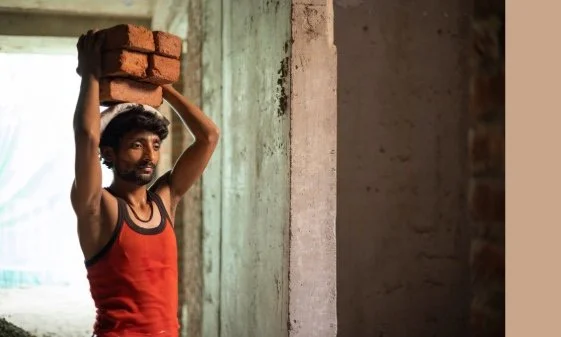
On the surface, this suggests improvement. However, the Survey’s own data show that a very large share of this employment remains informal. Using data from the Periodic Labour Force Survey, the Survey shows that in the July to September quarter of 2025, only about 22 percent of workers were in regular wage or salaried jobs. Around 41 percent were self-employed, meaning they worked on their own or ran very small family based units without hiring regular workers, such as street vendors, small shopkeepers or home-based producers. About 19 percent were casual labourers, who are paid daily or by the task and have no job security. The remaining share consists of unpaid helpers in household enterprises.
The urban picture, which often looks more secure at first glance, also reflects deep informality. The Survey notes that a substantial share of urban employment is informal, absorbing migrants and low-skilled workers in construction, sanitation, domestic work, street vending and micro services. These workers keep cities running but remain outside formal protection systems.
For households, this breakdown of employment helps explain everyday insecurity that headline job numbers fail to show. When most work is informal, incomes depend on daily activity rather than a stable monthly wage. If a worker falls ill, work stops and income stops at the same time. As people grow older, there is no pension or savings linked to employment to fall back on. Because these jobs operate outside formal systems, livelihoods can also be disrupted overnight by enforcement drives, evictions, licensing checks or sudden policy changes. So even when employment figures improve on paper, many families continue to live with the risk that their income can disappear without warning.

Another worrying finding lies in rural livelihoods and the shrinking role of employment guarantees. The Survey notes that person days generated under the Mahatma Gandhi National Rural Employment Guarantee Scheme fell sharply from about 3.89 billion (389 crore) during the pandemic peak in 2020 to about 1.84 billion (184 crore) by December 2025. This is a decline of more than 53 percent.
The Survey interprets this mainly as a sign of improving rural conditions and lower rural unemployment, which fell from 3.3 percent in 2020 to 2.5 percent in 2023 to 24. Yet for rural households, MGNREGS has functioned as a safety net that provides cash income during droughts, crop failure or job loss. A sharp fall in demand for this work, without a clear mapping of stable alternatives, raises concern because informal rural jobs also lack security. If agriculture faces shocks from climate or prices, many families may find that the fallback option has weakened just when they need it most.
The Survey also flags a deeper problem with the cost of capital, which affects people indirectly through jobs, wages and prices. Cost of capital means how expensive it is for businesses to borrow money to invest. It notes that India continues to run a current account deficit, which means the country spends more on imports of goods and services than it earns from exports and therefore depends on foreign capital to finance the gap. Because of this dependence, global investors demand higher returns to lend or invest in India.
The Survey explains this using government borrowing rates, which act as a benchmark for the entire economy. In 2025, the Indian government had to pay about 6.7 percent interest to borrow money for 10 years, while Indonesia paid about 6.3 percent for similar borrowing, even though both countries are rated equally safe by global credit rating agencies. The higher interest rate signals that investors see lending to India as slightly riskier because the country depends more on foreign money to cover what it buys from the rest of the world.
These government borrowing costs matter because they influence how much banks and lenders charge everyone else. When the government has to pay higher interest, businesses also face higher interest rates when they borrow to build factories, buy machinery or invest in infrastructure. This makes long-term investment more expensive, especially in sectors like manufacturing that create large numbers of jobs. The Survey stresses that this situation comes from a long standing gap between what India earns from exports and what it spends on imports, rather than from short-term policy choices.
Another concern comes from the imbalance between services and manufacturing. Services exports, especially IT- enabled services, have grown much faster than goods exports, with total exports growing at about 9.4 percent annually since 2020 while merchandise exports grew at only about 6.4 percent. Services exports earn foreign exchange and stabilise the economy, yet the Survey explains that they do not generate mass employment or pressure the state to improve basic infrastructure and administration in the way manufacturing does. For people, this means an economy that rewards a relatively small, skilled segment while leaving millions in low productivity informal work, widening gaps in income and opportunity.
The Survey quietly warns about state governments giving out regular cash payments to people without linking them to work, education or services. It explains that when states spend more and more money on these payouts, and at the same time borrow heavily to fund them, they are left with less money for things that improve everyday life in lasting ways, such as schools, hospitals, roads and basic public services. Simply put, money spent on monthly handouts is money that cannot be used to build classrooms, hire teachers, buy medical equipment or improve local infrastructure.
The Survey also notes that when cash support becomes a long-term substitute rather than short-term help, it can reduce the push to learn new skills or stay connected to regular work, affecting incomes and the sense of security and self-respect that comes from stable employment.
Finally, the Survey warns about risks coming from outside the country that can quickly affect everyday life at home. Even though India’s economy grew well in 2025, the value of the rupee fell because money coming in from abroad became uncertain amid global tensions and financial instability. When the rupee weakens, imported goods become more expensive. This includes fuel, medicines and many everyday products, pushing up household expenses. It also reduces the government’s room to spend freely during emergencies, because imports cost more and foreign borrowing becomes harder.
The Survey cautions that future global shocks, such as financial crises or geopolitical conflicts, could sharply reduce the flow of foreign money into India. If that happens, the government may have to tighten spending and raise interest rates to protect the economy. For households, this usually shows up as costlier loans, fewer job opportunities and cuts or delays in public support, even though the original problem begins far outside the country.
You have just read a News Briefing, written by Newsreel Asia’s text editor, Vishal Arora, to cut through the noise and present a single story for the day that matters to you. We encourage you to read the News Briefing each day. Our objective is to help you become not just an informed citizen, but an engaged and responsible one.


On October 12, opposition leaders, MPs, MLAs, student organisations and political workers came together in a massive march against Chief Election Commissioner Gyanesh Kumar, raising serious concerns over the Special Intensive Revision (SIR) of electoral rolls and the alleged mass deletion of voters’ names. The march brought together a broad coalition, including the INDIA bloc, AISA, SFI and other student unions, as part of a wider nationwide mobilisation against the SIR exercise and concerns surrounding electoral integrity.