
‘No One’ Killed This Manipur MLA, and That Defines the State’s Accountability Crisis
By Vishal Arora
February 22, 2026
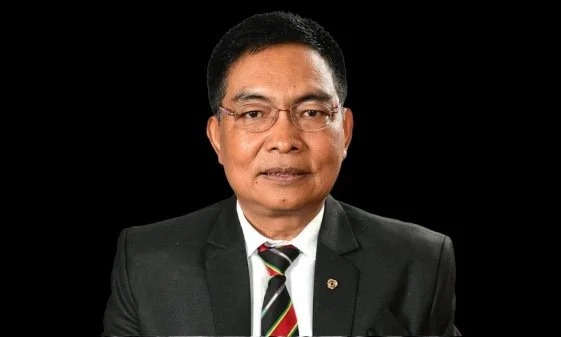
Vungzagin Valte, a Manipur MLA from the ruling Bharatiya Janata Party (BJP), died on February 21 after nearly three years of medical complications caused by a mob attack during the 2023 violence. His case remains pending and no arrests have been reported so far. The continuing absence of visible justice may further deepen the political disillusionment of the Kuki-Zo community in its relationship with the state government.
Valte, 63, who represented the Thanlon constituency in Manipur’s Churachandpur district, died after prolonged treatment at a hospital in Gurugram near Delhi, according to the Indigenous Tribal Leaders’ Forum (ITLF). Raised in financially difficult circumstances before entering public service, he belonged to the larger Kuki-Zo tribal community, whose members in the majority Meitei-dominated Imphal Valley came under attack in May 2023.
The assault on Valte took place on May 4, 2023 in Imphal’s Nagamapal area, a day after violence involving Meitei and Kuki Zo groups began. He was attacked while returning from a high-security meeting at the bungalow of then Chief Minister N. Biren Singh, where he had raised concerns about the safety and transport of stranded Kuki-Zo people fleeing Imphal. The attack left him critically injured, and his driver, Thanghoulal, died at the scene.
Valte is among at least 260 people killed since the onset of the violence, which has displaced tens of thousands. After the attack, he underwent extended treatment in New Delhi and later returned to Churachandpur, where he continued to face severe complications that left him wheelchair-bound and with difficulty speaking.
Valte’s death comes a little over a month after a Kuki-Zo woman from Churachandpur, who was abducted and gang-raped at the age of 18 during the early phase of the same violence, died in a hospital in Guwahati while still awaiting justice.
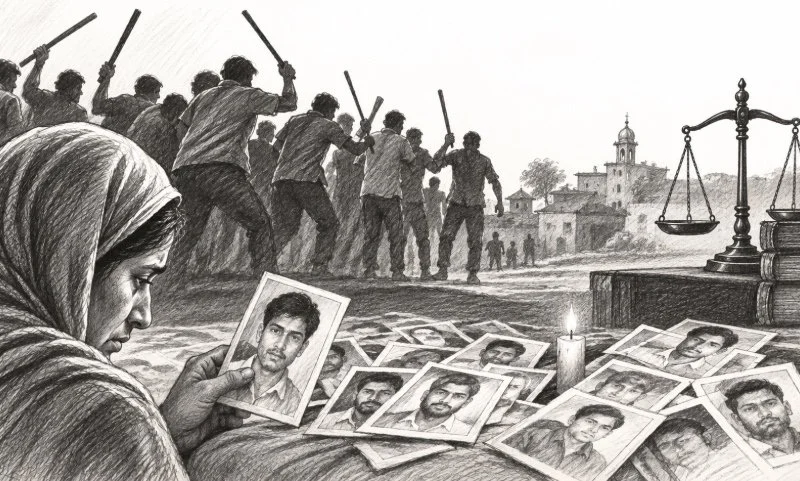
However much the families of those killed in the violence may want to know who is responsible for their agony, their stories sound hauntingly similar to those of Valte and the woman. Their stories often carry a similar refrain. “No one” killed them. What was their fault? They were simply living, earning a livelihood, serving in public office or studying in Meitei areas.
The victims had little or nothing to do with the immediate trigger for the unrest, which traces back to a Manipur High Court directive suggesting Scheduled Tribe status for the Meitei community, a move that raised fears among Kuki-Zo groups about land rights in the hill areas. Violence began after a large protest rally organised by Kuki-Zo and other tribal groups in Churachandpur.
From the standpoint of political sociology and political psychology, the most consequential concern arising from Valte’s death relates to what scholars call “perceived state abandonment.” Political scientist Margaret Levi argues that citizens maintain loyalty to the state when they believe institutions act fairly and provide protection. If communities begin to suspect selective protection, trust can erode rapidly and harden into long-term political alienation, a pattern that is already visible in the Kuki-Zo community demanding a separate administration in the form of a Union territory with a legislature.
While every life carries equal value, Valte’s case holds unusual symbolic weight for the Kuki-Zo community because he was a sitting MLA, a former cabinet minister and a key political intermediary between the hill districts and the state government.
In state theory, which is the branch of political science that examines how state institutions function and maintain authority, such figures are “linkage actors,” meaning individuals who connect marginal communities to formal state institutions. Harm to a linkage actor such as Valte often produces wider psychological effects because it signals vulnerability within the chain of political representation.
Here the key risk emerges through what political scientist David Easton described as “diffuse support,” the underlying public trust that helps political systems remain stable even during periods of crisis. Diffuse support refers to a long-term belief among citizens that the political system is legitimate and worth obeying, even when people are unhappy with specific government offices or decisions. This deeper layer of trust allows states to absorb shocks such as violence, political conflict or administrative failure without immediately losing public compliance. If members of the Kuki-Zo community interpret Valte’s death after prolonged suffering and limited visible accountability as evidence that their elected representatives cannot secure protection or justice, diffuse support for the state may weaken further.
Erosion of diffuse support often develops through everyday disruptions that are already being reported across Kuki-Zo areas. Continued displacement, reliance on distant Aizawl for medical treatment, restricted movement between Imphal and the hill districts, and alleged deaths of over 100 displaced individuals due to humanitarian reasons also create what public administration scholars call “administrative distance,” the effective gap between citizens and the services of the state. For ordinary families, this distance can translate into higher medical costs, longer travel for education and a growing perception that state institutions remain physically and administratively out of reach.
The death of an elected tribal representative, followed by prolonged suffering and contested justice, can reinforce within the community a collective belief that formal constitutional inclusion coexists with unequal protection on the ground. That perception, once embedded, tends to persist far longer than the tenure of any individual government.
You have just read a News Briefing, written by Newsreel Asia’s text editor, Vishal Arora, to cut through the noise and present a single story for the day that matters to you. We encourage you to read the News Briefing each day. Our objective is to help you become not just an informed citizen, but an engaged and responsible one.
On October 12, opposition leaders, MPs, MLAs, student organisations and political workers came together in a massive march against Chief Election Commissioner Gyanesh Kumar, raising serious concerns over the Special Intensive Revision (SIR) of electoral rolls and the alleged mass deletion of voters’ names. The march brought together a broad coalition, including the INDIA bloc, AISA, SFI and other student unions, as part of a wider nationwide mobilisation against the SIR exercise and concerns surrounding electoral integrity.