
Nepal’s Political Mood Is Becoming Religiously Charged
By Bal Krishna Sah in Kathmandu
August 19, 2026
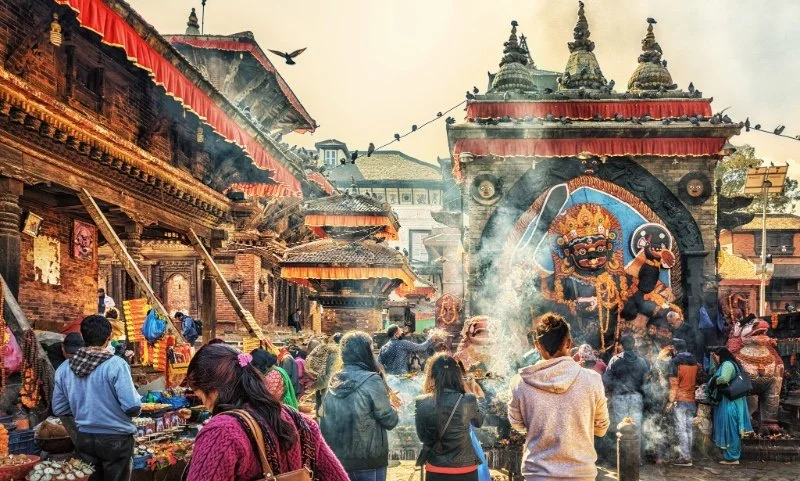
Nepal underwent an epochal political upheaval just a year ago, toppling the government in a fashion few could have imagined. An even more dramatic development followed. Voters handed a near-supermajority to the Rastriya Swatantra Party (RSP), which was founded only four years earlier. Its senior leader, Balendra Shah, became the youngest prime minister in Nepal’s history and has since been leading the country.
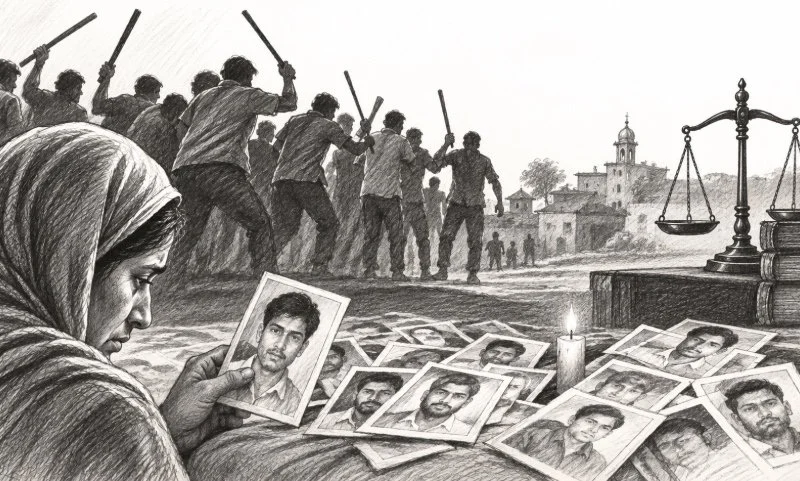
Madhes, the southern region bordering India from which Shah originally comes, has now witnessed one of the country’s ugliest recent communal clashes. Bullets fired by security personnel under his government killed four young people. The violence began with a relatively minor altercation of a kind that has occurred in the region before.
On July 26, clashes broke out between members of the Hindu and Muslim communities in Sunsari, a district of Koshi Province that is historically part of the Tarai-Madhes region. According to media reports, the violence began after some Muslims allegedly attacked Hindus preparing for the Bol Bam pilgrimage, during which devotees carry holy water from sacred rivers and offer it to Lord Shiva, one of Hinduism’s principal deities.
The conflict escalated until police opened fire, as they have repeatedly done during unrest in Madhes. Police bullets, bought with taxpayers’ money, had claimed dozens of lives during the Gen Z protests in September 2025. In July and early August 2026, they killed four more young people: Jay Prakash Mehta, Om Prakash Mehta, Rabindra Mehta and Ganesh Yadav.
Yadav was the youngest of those killed. He was only 15 when he was shot in the neck on July 30. His death prompted Prime Minister Shah to release a short video appealing for peace and communal harmony. The appeal was widely appreciated, but the Sunsari violence may not be the last such conflict. A more dangerous form of religious polarisation appears to be developing, and the stakes could be considerably higher next time.
Evidence of this emerging political climate could also be seen in the conduct of Sher Bahadur Deuba, Nepal’s five-time former prime minister and long-serving president of the Nepali Congress, the country’s oldest political party. Deuba appeared determined to make a calculated political bet on religion.
On August 16, the final day of a national gathering convened by a dissident faction of the Nepali Congress led by Deuba, the assembly adopted five resolutions. One resolution, concerning religion and culture, provoked serious discussion and ultimately caused an on-stage dispute among senior leaders. The assembly committed itself to recognising Sanatan traditions as a defining element of Nepal’s national identity.
The resolution stated: “Nepal’s traditional religion and culture since ancient times is also our national identity. Considering the duty to protect Hindu, Buddhist, Kirat and Prakriti religions... the commitment will be made to move the nation forward with Sanatan religion as the national identity.”
The gathering formally concluded, but its final session was marred by a public dispute among senior leaders over the wording of the resolution. As leader Deepak Prasad Kuikel read the draft resolutions from the rostrum, former party vice-president Bimalendra Nidhi approached the lectern to object to the wording prepared by former spokesperson Dr. Prakash Sharan Mahat. A brief physical scuffle followed as the two leaders tugged at the document. Dr. Mahat then escorted Nidhi back to his seat.
Utilisation Certificates Pending for Grants Worth 542.82 Billion The disagreement concerned specific language in the draft. Dr. Mahat’s version advocated recognising Sanatan traditions as part of Nepal’s national identity while guaranteeing people the freedom to practise the country’s historical faiths. Nidhi argued that the party should adhere strictly to its established position of “religious freedom” without adding any further qualification.
Deuba ultimately intervened and directed that Dr. Mahat’s original draft be read without alteration. Addressing the assembly, he said that although he personally identified as Hindu, he fully respected everyone’s freedom to practise their respective faiths.
“I am personally a Hindu,” Deuba told party cadres. “I have observed the Bratabandha sacred thread ceremony and married according to Hindu traditions. I visit Pashupatinath and offer prayers.” Speaking about state policy and constitutional questions concerning religion, he said that the ultimate authority rested with the people rather than with political leaders.
“However, what happens or does not happen in terms of religion in the country depends on the decision of the people,” Deuba said. “There must be religious freedom for everyone in the nation.”
This may appear to be an ordinary political development, but its significance should not be underestimated. Why is Deuba publicly asserting his religious identity after spending five months away from national politics and being brutally assaulted during the Gen Z protests?
One possible explanation is that Deuba is trying to recover from the political and personal humiliation he suffered after the attack on him on September 9, 2025. He may also be signalling to established and aspiring politicians that he is prepared to use religion in his attempt to regain power and settle political scores.
Religion may now appear to him to be the most effective political weapon available. He seems willing to compromise one of the finest principles of the Constitution that his own party helped draft: secularism.
Prime Minister Shah’s conduct during his election campaign also raises questions. His appearances at religious sites, from Janakpur to the Pathivara temple, and an oath-taking ceremony at which 108 Batuks chanted religious verses and the timing was reportedly chosen on an astrologer’s recommendation all point in the same direction. Secularism could increasingly come under pressure as religious politics gains strength in Nepal.
My own brief encounters with established and aspiring politicians preparing to launch a new campaign reinforced this impression. Some openly told me, “We would prioritise the agenda of Sanatan traditions and Hinduism in Nepal.”
After witnessing these developments within such a short period, I fear that religious politics could shake one of the foundations of modern Nepal: secularism.
(Bal Krishna Sah [Bala] is a political commentator and a senior correspondent at The Himalayan Times, Nepal’s leading English daily.)
You have just read a News Briefing, written to cut through the noise and present a single story for the day that matters to you. We encourage you to read the News Briefing each day. Our objective is to help you become not just an informed citizen, but an engaged and responsible one.
On October 12, opposition leaders, MPs, MLAs, student organisations and political workers came together in a massive march against Chief Election Commissioner Gyanesh Kumar, raising serious concerns over the Special Intensive Revision (SIR) of electoral rolls and the alleged mass deletion of voters’ names. The march brought together a broad coalition, including the INDIA bloc, AISA, SFI and other student unions, as part of a wider nationwide mobilisation against the SIR exercise and concerns surrounding electoral integrity.