
Beaten as a Dalit, Denied Protection Because He is Christian
By Adv. Robin Christopher
August 13, 2026

Generated with AI
A recent case exposes that the law has wrongly misunderstood that conversion to Christianity or Islam automatically ends the caste discrimination faced by Dalits. Chinthada Anand, a convert to Christianity, was allegedly attacked as a Dalit in Andhra Pradesh, but the Supreme Court ruled that he could not receive the protection under the SC/ST (Prevention of Atrocities) Act because he was no longer legally recognised as a Scheduled Caste. This raises the question of whether the SC/ST Act should ask what religion the victim follows or whether society, including the alleged attackers, treated that person as a Dalit.
1950 Constitution Order
Paragraph 3 of the Constitution (Scheduled Castes) Order, 1950, states, “No person who professes a religion different from the Hindu, the Sikh, or the Buddhist religion shall be deemed to be a member of a Scheduled Caste.” Sikhs were included through an amendment in 1956, and Buddhists in 1990. Christians and Muslims were not included, and 75 years after the Order was issued under Article 341 of the Constitution, they remain excluded.
At first, the clause may appear to be only a definition of who qualifies as a Scheduled Caste. But on the ground, it is a gatekeeper, a mechanism that continuously monitors what a Scheduled Caste citizen believes and automatically withdraws, without further inquiry, every statutory protection tied to her caste the moment her faith changes.
Assumption
No other constitutionally recognised status in India operates in quite this way. A Scheduled Tribe citizen who converts does not automatically lose her status; courts have long required an inquiry into the facts to determine whether she has, in practice, left her community and former religion.
The assumption, that untouchability is specifically a Hindu social institution, was never properly argued. It was accepted while the Order was being drafted and has been repeated, rather than reassessed, ever since. Therefore, a person who formally leaves Hinduism is assumed to have also left the condition that the Order seeks to remedy. Sikhism and Buddhism were later treated as sufficiently connected to that social system to be included. Christianity and Islam were treated as being outside it, and the Union government continues to make that argument in court.
Whether this assumption is true is an empirical question about how Indian society actually treats converts from Dalit backgrounds. The institutions applying the Order have never seriously tested it. They have continued to repeat it as though repetition itself were evidence.
Unresolved Issue
The Order has faced criticism during its 75 years of operation, but the issue remains unresolved.
The Ranganath Misra Commission recommended in 2007 that the Scheduled Caste status be separated from religion altogether. The Sachar Committee separately documented that caste-like social discrimination continues among converts, regardless of what their new religion formally teaches.
A constitutional challenge to Paragraph 3 has been pending before the Supreme Court since 2004, without a final hearing for more than two decades.
In 2022, the Union government appointed another commission, led by former Chief Justice K.G. Balakrishnan, specifically to assess whether Christian and Muslim Dalits should be included.
These processes could have provided the evidence needed to test the assumption behind the Order. The Ranganath Misra Commission and the Sachar Committee completed their work, but their findings did not lead to a change in the law. The Union government rejected the Misra Commission’s recommendation, while the constitutional challenge filed in 2004 remains unresolved. The K.G. Balakrishnan Commission has reportedly completed its report, but its findings have not been made public. The Order therefore remains in force not because these inquiries proved its assumption correct, but because their findings have either not been accepted, not been made public, or not resulted in a final judicial or legislative decision.
During this 20-year delay, ordinary cases have increasingly been used to address questions that the commissions and a constitutional bench were supposed to resolve. Case by case, these rulings have enforced the restriction more strictly, not less.
The practical effect can be seen in a Supreme Court judgment delivered on March 24, 2026, in an appeal unrelated to reservations or the commissions. However, Paragraph 3, which concerns Scheduled Caste status and reservations, was used to deny a person legal protection.
Denial of Protection
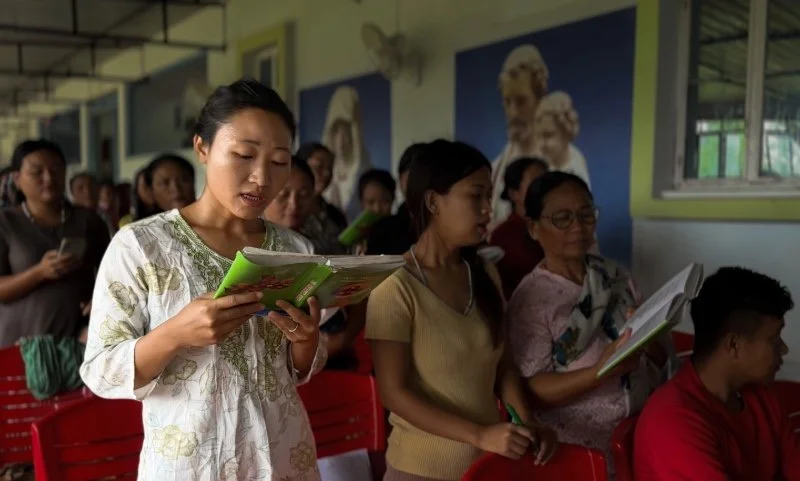
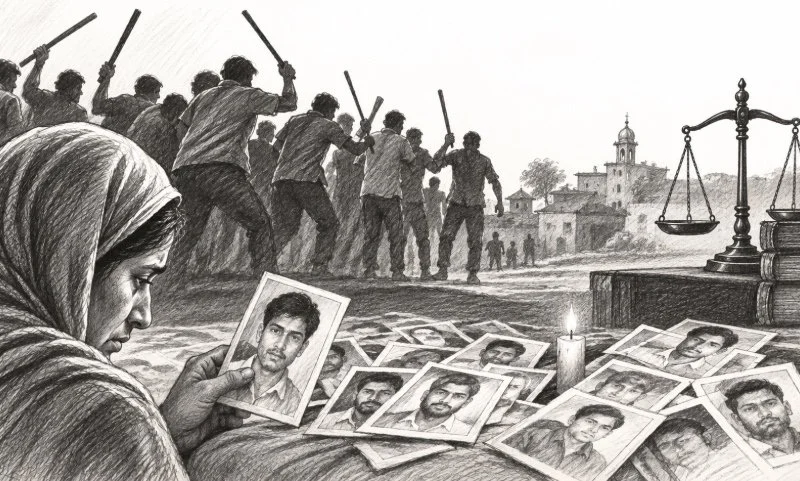
Chinthada Anand, a Madiga by birth, had served as a Christian pastor in a village in Guntur district for nearly a decade when he was allegedly assaulted and threatened with death. According to his complaint, his attackers referred to his caste and used caste-based abuse against him. He filed a case under the SC/ST Act. The case was supported by a first information report (FIR), a chargesheet, 16 witnesses, and a medical report.
The Supreme Court held that the evidence could not bring the alleged attack under the SC/ST Act. Because Anand had openly “professed” Christianity for years, Paragraph 3 meant that he was no longer legally recognised as a member of a Scheduled Caste and could not receive protection under the Act. However, records maintained by the local Tahsildar (state authority) and cited in the case had consistently identified him as “Hindu-Madiga.” One part of the state therefore continued to recognise him by his caste, but the judgment does not explain this contradiction.
After deciding which religion Anand professed, the Bench went further than the appeal required. It held that Christianity, “by its very theological foundation,” does not recognise caste and cited the Book of Galatians from the Bible in support. In doing so, the Court decided what Christianity truly teaches, even though no one had asked it to decide that question, and the appeal required it only to interpret an Order concerning caste. No party had asked the Court to decide that theological question.
The judgment also did not ask how Anand’s alleged attackers viewed his caste identity. According to his case, both the anonymous calls and the assault involved caste slurs. The men accused of attacking him therefore allegedly treated him as belonging to the same caste that the Court held the law could no longer recognise.
This was a criminal appeal, and criminal law does not ordinarily leave such a central question unexamined. Motive is crucial to offences under the Atrocities Act. An assault becomes an atrocity under the law if it is committed against a person because of her caste. A court would therefore ordinarily assess the evidence to determine whether caste motivated the assault before deciding the case. The Supreme Court did not reach that question in Anand’s case.
The Court first held that Paragraph 3 meant Anand was no longer legally recognised as a member of a Scheduled Caste. This made the accused persons’ alleged motive irrelevant before it could be tested. The chargesheet, the 16 witnesses, and the alleged caste slurs were set aside, not because a court had assessed them and found that caste-based motive was not proved, but because the decision about Anand’s legal status prevented that question from being asked.
Legal commentator V. Venkatesan noted in an analysis for Supreme Court Observer that, in a separate case, the same Bench also addressed what happens to Scheduled Tribe status after conversion. It held that conversion does not automatically end that status. Retaining it requires a “necessarily fact-specific” inquiry into whether the person continues to follow tribal customs and remains part of the tribe’s social organisation and community.
Society Still Sees Him as Dalit
Anand’s case is therefore important as evidence of a larger problem. The facts did not require the Court to rule as widely as it did. It could have decided his appeal on narrower grounds. In its judgment on Anand’s appeal, the Supreme Court set out seven principles, under the heading “Postulates,” for determining whether a person can be recognised as Scheduled Caste or Scheduled Tribe. These included three conditions that a person claiming Scheduled Caste status after reconversion must satisfy. The Court could have left these wider questions to a separate proceeding designed to collect the social evidence needed to answer them.
This was not simply a problem with the approach taken by two judges in March 2026. It reflects how the Order has operated since 1950. It determines a citizen’s relationship to caste by asking how she identifies herself, rather than what caste continues to mean in her life and how society continues to treat her.
Defenders of such rulings raise a separate and genuine concern. Extending Scheduled Caste status to Christian and Muslim converts would require an already inadequate reservation quota to be shared among a larger population. Several Dalit Hindu organisations have also expressed this concern. This is a legitimate question about how limited benefits should be distributed, and Parliament needs to answer it seriously. It could use the available data to explore a sub-quota, an income test, phased inclusion, or another carefully designed arrangement. But this concern does not justify allowing the Order to continue automatically excluding people, decades after government-appointed commissions produced findings supporting its reconsideration and more than 20 years after a constitutional challenge was filed.
Paragraph 3 was intended to identify people who suffered from untouchability so that the state could protect them. Seventy-five years later, the clause still makes that protection dependent on religious identity. It automatically withdraws protection after a change of faith without asking the question that could show whether untouchability has stopped affecting a person: How does her community, including those who attack her, continue to treat her?
Government-appointed commissions have produced findings supporting a reconsideration of the Presidential Order. A constitutional challenge has remained before the Supreme Court for more than 20 years. Unless Parliament or the Court resolves the issue, Paragraph 3 will continue to deny protection from caste atrocities in the same way it denied protection to Chinthada Anand.
You have just read a News Briefing, written to cut through the noise and present a single story for the day that matters to you. We encourage you to read the News Briefing each day. Our objective is to help you become not just an informed citizen, but an engaged and responsible one.
What happened in Mumbai on October 2 may have been only one day of protest, but the issues behind it are unlikely to disappear with the dispersal of the crowd. The protest was centred around concerns over the Election Commission, electoral rolls and the Special Intensive Revision (SIR) exercise, with protesters demanding accountability from Chief Election Commissioner Gyanesh Kumar. At the same time, similar mobilisation has been taking place across different parts of the country, with student groups, Opposition parties and civil society organisations raising concerns over the electoral process. Newsreel Asia spent the day at Mumbai Protest capturing the preparations, the police presence, conversations with protesters, the atmosphere on the streets and how the day unfolded. The speech of Cockroach Janta Party's leaders and sentiment of protestors seemed larger than the concerns regarding the electoral process. Will this lead to something bigger?