
Citizens Waited for Basic Services While Public Money Went Unspent, CAG Reports Suggest
For the Editor’s Desk
August 17, 2026

Recent reports from the Comptroller and Auditor General of India (CAG) found that authorities left large sums allocated for disaster assistance, drinking water, housing, pollution control and railway passenger amenities unspent, raising questions about why parliamentary allocations were not converted into services for citizens.
Disaster Response
More than 53% of the National Disaster Response Fund (NDRF) provision for transfers to states during severe disasters remained unspent in 2024-25, The News Minute reported. Parliament had sanctioned 114.74 billion (11,474 crore) rupees in NDRF assistance for states, but only 53.56 billion (5,356 crore) rupees was transferred, leaving 61.18 billion (6,117.97 crore) rupees recorded as savings.
Nearly 75% of the National Disaster Mitigation Fund provision for states and more than 83% of the funds set aside as special assistance to states also went unused. Of the 200 billion (20,000 crore) rupees provided for special assistance, only 33.50 billion (3,350 crore) rupees was spent. Mitigation transfers reached just 7.20 billion (719.72 crore) rupees out of an allocation of 28.68 billion (2,868 crore) rupees. A separate provision of 1 billion (100 crore) rupees for loans as advance disaster assistance to states went entirely unused.
CAG data show persistent underspending on transfers to states in 2022-23, 2023-24 and 2024-25. The unspent amounts were 678.82 billion (67,882 crore) rupees in 2022-23, 460.13 billion (46,012.89 crore) rupees in 2023-24 and 362.19 billion (36,219 crore) rupees in 2024-25. The pattern continued despite warnings in previous audit reports and a finance ministry advisory on realistic budgeting, the CAG said.
Several states have complained that the assistance approved by the Union government fell far short of their requests. Congress lawmaker Gaurav Gogoi reportedly said Assam received only 2.4% of the NDRF assistance it sought following floods. Kerala requested 22.21 billion (2,221.03 crore) rupees for recovery and reconstruction after the July 2024 Wayanad landslides, but the Union government approved 2.61 billion (260.56 crore) rupees under the National Disaster Mitigation Fund more than a year later.
The Kerala High Court intervened in a dispute over the release of further assistance, asking the state government to provide a utilisation certificate and reminding the Union government of the principles of cooperative federalism.
Karnataka approached the Supreme Court in 2024 after receiving 34.99 billion (3,499 crore) rupees against its request for 180 billion (18,000 crore) rupees in drought assistance. Tamil Nadu sought 379.07 billion (37,907.21 crore) rupees for damage caused by Cyclone Michaung but received an approval of 2.76 billion (276 crore) rupees.
The amounts requested by states are not necessarily the amounts they are entitled to receive, as the Union government assesses the damage, determines which expenses qualify under disaster-funding rules and decides the amount of assistance. However, the large differences between parliamentary provisions, state requests and actual transfers raise questions about whether needs were assessed promptly, budgets were realistic and assistance reached affected communities in time.
For citizens, money left unspent in disaster funds can mean delays in food, shelter, medical care, livelihood assistance and reconstruction during the period of greatest need. Repeated underspending over three years, despite previous CAG warnings, points to a continuing weakness in the system rather than an exceptional delay in one financial year. It can also weaken preparedness because money intended to reduce future disaster risks remained unused alongside funds provided for immediate relief.

Railway Passenger Amenities
A separate CAG audit found persistent deficiencies in passenger amenities at railway stations, according to the official audit report. A joint team of CAG and railway officials inspected 512 stations and found 458 of them, or more than 89%, deficient in one or more minimum essential amenities. These included fans, water coolers, drinking-water taps, urinals, seating, platform shelters, toilets and clocks.
Only 54 of the stations inspected had no shortfalls. The stations with deficiencies included major terminals such as Chhatrapati Shivaji Maharaj Terminus, Howrah, Sealdah, New Delhi and Mumbai Central, along with Naihati, Gaya, Bhagalpur, Bhopal and Rajkot. Similar shortfalls had been reported in CAG audits conducted in 2007, 2013 and 2016.
Underspending on passenger amenities persisted over five years, ranging from 36% to 44% of annual allocations between 2019-20 and 2023-24, including years outside the pandemic period. The annual allocation rose from 32.07 billion (3,207 crore) rupees in 2019-20 to 140.72 billion (14,072 crore) rupees in 2023-24, but substantial amounts remained unused each year.
A review of 395 passenger-amenity projects at 325 non-Amrit Bharat stations (those not selected for redevelopment under the government’s Amrit Bharat Station Scheme) found that 59% were delayed by periods ranging from one year to more than four years. The CAG attributed the persistent shortfalls to inadequate monitoring, the absence of time-bound plans, weak oversight of fund utilisation and inconsistent prioritisation by railway zones.
For millions of railway passengers, these deficiencies mean recurring discomfort and inconvenience, including platforms without adequate seating, clean toilets, drinking water, fans or protection from rain and heat. That similar problems were recorded in 2007, 2013, 2016 and again in the latest audit means passengers have waited through several audit cycles for basic facilities required under railway norms. More than a third of the money allocated for these amenities remained unspent in each of the five years reviewed, linking the deficiencies experienced by passengers to persistent failures in planning and execution.

Utilisation Certificates Pending for Grants Worth 542.82 Billion Rupees
The CAG report on Union government finances for 2024-25 also found that 33,973 utilisation certificates covering grants worth 542.82 billion (54,282.32 crore) rupees remained outstanding as of March 31, 2025. The figure was based on information supplied by only 15 of the Union government’s 54 ministries and departments.
A utilisation certificate is the prescribed confirmation that a grant was used for the purpose for which it was sanctioned. The absence of these certificates means that the government could not provide the required assurance that the grants were used for the purposes authorised by Parliament, leaving the audit trail incomplete.
The report also found substantial underspending in programmes providing essential services despite parliamentary allocations. Parliament provided 631.47 billion (63,146.62 crore) rupees under three Jal Jeevan Mission heads for rural drinking water, but 405.32 billion (40,531.57 crore) rupees, or 64.2%, remained unspent.
The Ministry of Housing and Urban Affairs left 321.91 billion (32,191 crore) rupees in revenue allocations unspent. This included 142.27 billion (14,227 crore) rupees out of a provision of 171 billion (17,100 crore) rupees under one of the principal Pradhan Mantri Awas Yojana-Urban heads.
The Ministry of Environment, Forest and Climate Change spent only 162 million (16.20 crore) rupees out of 6.23 billion (622.50 crore) rupees allocated for pollution control, leaving 97.4% unspent. This occurred as residents of many cities continued to face dangerous levels of air pollution.
Money allocated for piped water, urban housing and pollution control remained substantially unspent rather than being fully converted into services. Citizens were promised programmes backed by parliamentary allocations, but the spending figures show that the government did not implement them on the scale for which it had budgeted.
You have just read a News Briefing, written by Newsreel Asia’s text editor, Vishal Arora, to cut through the noise and present a single story for the day that matters to you. We encourage you to read the News Briefing each day. Our objective is to help you become not just an informed citizen, but an engaged and responsible one.


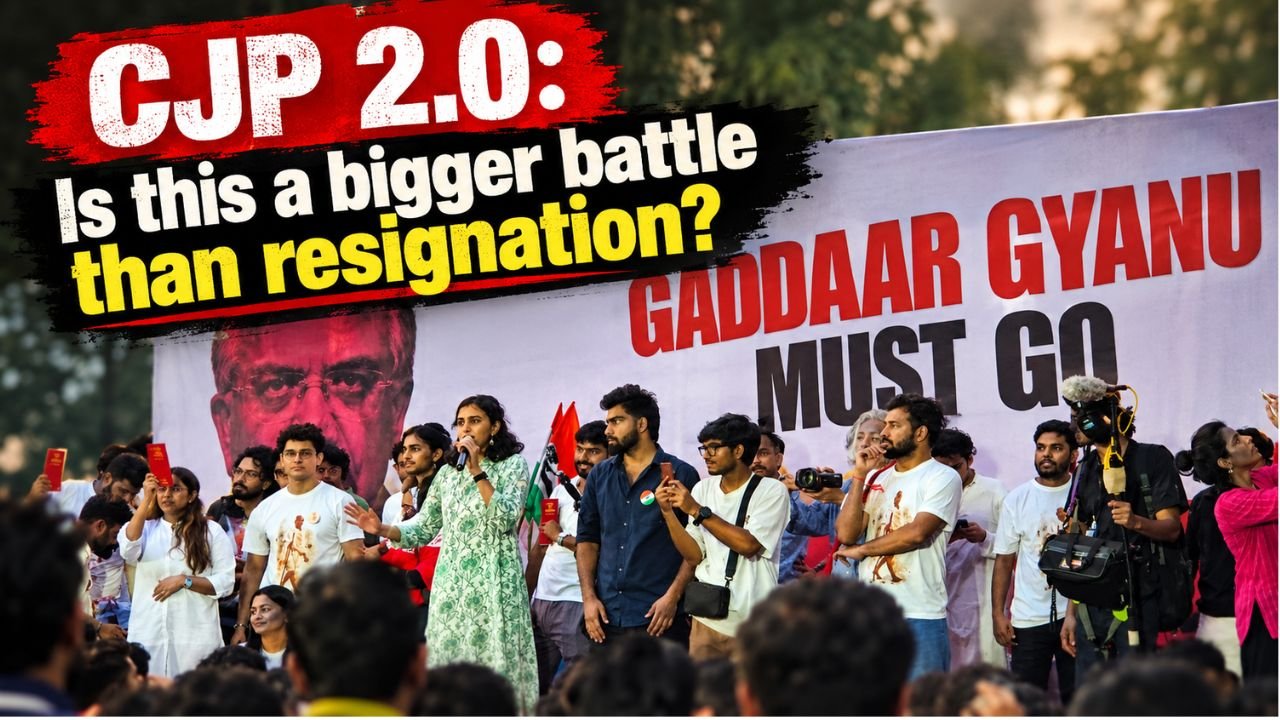
On October 12, opposition leaders, MPs, MLAs, student organisations and political workers came together in a massive march against Chief Election Commissioner Gyanesh Kumar, raising serious concerns over the Special Intensive Revision (SIR) of electoral rolls and the alleged mass deletion of voters’ names. The march brought together a broad coalition, including the INDIA bloc, AISA, SFI and other student unions, as part of a wider nationwide mobilisation against the SIR exercise and concerns surrounding electoral integrity.