

Niti Aayog Finds 87 Million Young Indians Not Studying, Working or Training
More than 87 million (8.7 crore) Indians age 15 to 29 are not studying, working or getting any training, according to report by NITI Aayog, the Indian government’s policy think tank.

Why Governments Feel Threatened by Women Protesters
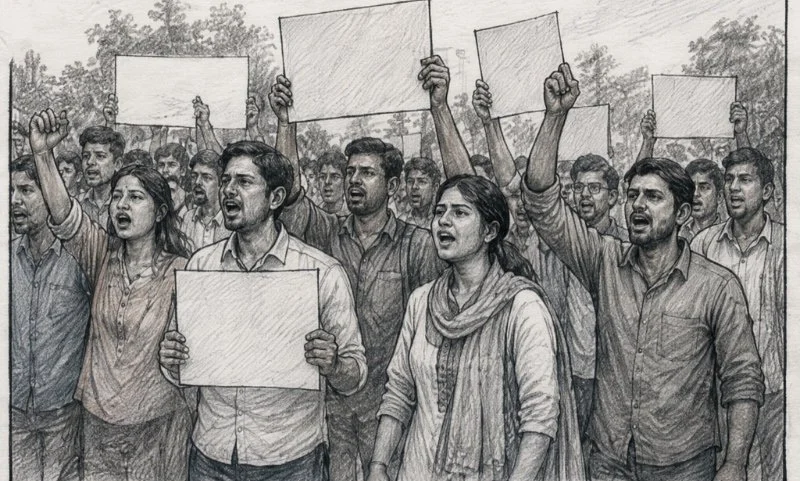
After the Cockroach Janta Party (CJP) protests ended in Delhi’s Jantar Mantar on July 25 following Education Minister Dharmendra Pradhan’s resignation, women and girls who had participated publicly and visibly in the agitation became the principal targets of a doxxing and harassment campaign. The campaign reveals that those behind it see women protesters as a threat and want to push them into roles defined by their own patriarchal beliefs.
See Jharkhand Protests From Students’ Perspective, Not Politicians’
While government-job aspirants without party affiliations appear to constitute the principal base of the ongoing protests in Ranchi, Jharkhand, the agitation is not organisationally unified. This distinction is important because attempts by political groups to influence the protests risk diverting attention from young people’s genuine concerns about education, recruitment and institutional reform, and from their attempt to raise these concerns democratically.

Work From Home, Not AI, Driving Rise in Graduate Unemployment: Study
While public discussion has increasingly focused on generative AI as the force threatening entry-level white-collar jobs, researchers now argue that a much older “technology”, remote work, offers a better explanation for what has happened since the pandemic. They say remote workplaces make it harder to train, supervise and mentor new employees, leading many employers to favour experienced hires instead.