
From the Editor’s Desk
January 28, 2026
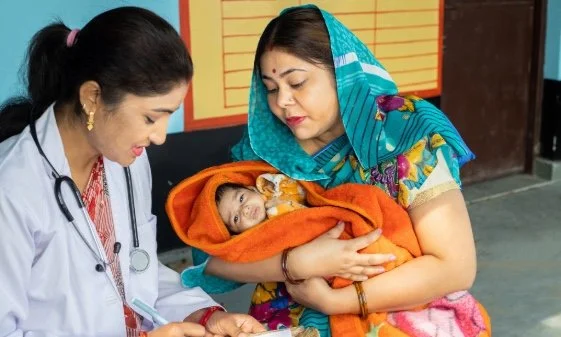
A new study, which analysed healthcare spending in India from 1991 to 2023, has shown that when the government spends less on healthcare, families are forced to cover more of their medical costs on their own, often pushing them into debt or leading them to delay or skip treatment. This means every funding decision by the government directly affects whether healthcare becomes more accessible or turns into a financial burden for the majority of the citizens.
The study, titled “Impact of Determinants of Healthcare Expenditure in India,” worked with two sets of figures: total healthcare spending per person (which includes government funding as well as private costs) and out-of-pocket spending per person (which refers only to what people pay directly, without any help from the government or insurance). Using economic tools that can track both short-term changes and long-term trends, the study found that these two forms of spending are tightly linked.
When the government increases its health budget, people spend less from their own income. But when people are made to pay more on their own, due to gaps in public provision or rising costs, government spending often increases later. This delayed rise in public expenditure may happen because of growing public demand, political pressure, or a visible decline in health outcomes that forces the state to act.

Income influences how health costs are shared. As people’s incomes rise, government health spending tends to rise too, likely because higher income levels mean greater tax revenue and more demand for better services. At the same time, individuals with higher incomes often end up spending less from their own pockets, possibly because they have access to health insurance or make better use of subsidised public care. Inflation, on the other hand, creates pressure in both directions. As prices rise, the government is often forced to spend more to keep services running, while individuals may reduce their own spending because healthcare becomes harder to afford.
The study also found a strong link between life expectancy and how healthcare is financed. As people live longer, they end up paying more for their own healthcare. But government spending doesn’t rise alongside them. Over time, it actually tends to fall. This suggests that public health services are not keeping up with the medical needs of an ageing population, so older people are left to manage more of the costs themselves. In the short term, though, when life expectancy increases, government spending does rise, likely because longer lives mean more immediate demand for care, and the state responds by putting more money into the system to deal with that pressure. But that response doesn’t last, and the long-term gap between need and support remains.
Further, the study shows that education and urbanisation have opposite effects on public and private spending. When more people enrol in secondary education, they tend to spend less of their own money on health but use public services more, resulting in higher public spending. Similarly, as more people live in urban areas, they rely less on private spending and more on government services. These trends suggest that better education and urban access help shift the burden of healthcare from individuals to the state.

One surprising result is that the number of hospital beds, a common way to measure healthcare infrastructure, does not significantly affect either public or private spending in the long term. This suggests that simply adding more beds or hospitals won’t solve the problem. What matters more is how the services are delivered, whether they’re affordable, and whether people can actually access them when they need to.
Over periods of a few years, both government spending on healthcare and what people pay from their own pockets usually follow the same patterns without major changes. This happens even when the cost of healthcare rises or people’s incomes fall. Economists call this slow adjustment “fiscal inertia.” It means that budgets, both public and household, don’t respond quickly to changing conditions. So, when healthcare becomes more expensive or harder to afford, people may continue spending the same amount simply because they have no choice, as they avoid treatment, cut down on other expenses or go into debt. The system doesn’t adjust fast enough to reduce the pressure on them.
The study suggests that the government needs to spend more on healthcare, but not just by increasing the total budget. What matters is how the money is used. Public spending should focus on services that actually lower the costs people face directly, like maternal and child healthcare, vaccination programmes and local health clinics. These are the areas that give the most value for money and reach the widest number of people.
The study also shows that investing in education and improving healthcare access in cities helps reduce how much people have to pay out of their own pockets. Better awareness and easier access to public services mean fewer families are pushed into financial stress when they fall ill.
When people have to pay for healthcare directly, without public support or insurance, it leaves them vulnerable. A sudden illness can mean debt, skipped treatment, or even the loss of income or schooling for an entire household. That’s why it becomes a structural issue with long-term consequences for public health, productivity and inequality.
Healthcare is a public good. Like clean water or public safety, it benefits everyone, not just the person receiving care. Preventing disease and treating illness early reduces the spread of infections, keeps the workforce healthy and lowers future costs.
Healthcare markets are structurally unfair. Unlike other markets, where people can take time to compare prices or judge quality before deciding what to buy, healthcare rarely offers that choice. Illnesses are unpredictable, and treatment decisions are often urgent. Most people do not have the medical knowledge to assess what care they need or whether a treatment is worth the cost. This leaves patients dependent on providers and vulnerable to overcharging or unnecessary procedures. The power lies with the seller, not the buyer, and that imbalance cannot be fixed by private markets alone. Economists have long recognised this as a failure that calls for public action, through regulation, public provision or financial protection.
On top of that, people can’t predict when they’ll get sick or how serious it will be. Unlike choosing to buy a phone or a car, no one chooses when to need surgery or cancer treatment. That makes healthcare a risky and often unavoidable expense. And in emergencies, people don’t have the luxury of comparing hospitals or waiting for better deals; they go wherever is closest or available, even if it’s expensive or low-quality.
Because of these conditions, private healthcare systems, where access depends on ability to pay, leave many people behind. Those with money can afford good care, while others delay treatment, rely on informal care, or go without. That leads to worse health outcomes, rising inequality, and even higher costs in the long run, as untreated problems become more serious.
This is why governments across the world intervene.
The study was conducted by M. Ramachandran and Sreelakshmi C. K., both affiliated with the National Institute of Public Finance and Policy (NIPFP), which is an autonomous research institute under the Ministry of Finance, Government of India.
You have just read a News Briefing, written by Newsreel Asia’s text editor, Vishal Arora, to cut through the noise and present a single story for the day that matters to you. We encourage you to read the News Briefing each day. Our objective is to help you become not just an informed citizen, but an engaged and responsible one.



On October 12, opposition leaders, MPs, MLAs, student organisations and political workers came together in a massive march against Chief Election Commissioner Gyanesh Kumar, raising serious concerns over the Special Intensive Revision (SIR) of electoral rolls and the alleged mass deletion of voters’ names. The march brought together a broad coalition, including the INDIA bloc, AISA, SFI and other student unions, as part of a wider nationwide mobilisation against the SIR exercise and concerns surrounding electoral integrity.